Related reading
Size-Specialized Memory Allocation
Go 1.27 adds a set of span‑class‑specific malloc functions for allocations ≤ 80 bytes. By generating a tiny, constant‑size allocator per span class the runtime can inline size‑dependent work (e.g. zero‑clear) and skip span‑class lookup, yielding 20‑30 % faster small allocations and ~1 % overall speed‑up for allocation‑heavy programs. The implementation is generated automatically via an AST inline…
The Go Bloggo.dev7 minHN315Lies, Damn Lies and Benchmarks
Codename One engineers dissect why benchmark numbers can be misleading, then share concrete work on GC tuning, proper weak/soft references, and a new probing sequence for their open‑addressed HashMap that cuts miss‑probe counts from >16 k to ~1.5 per lookup.
CodeName Onecodenameone.com20 minScaling Golang CI by Replacing actions/setup-go
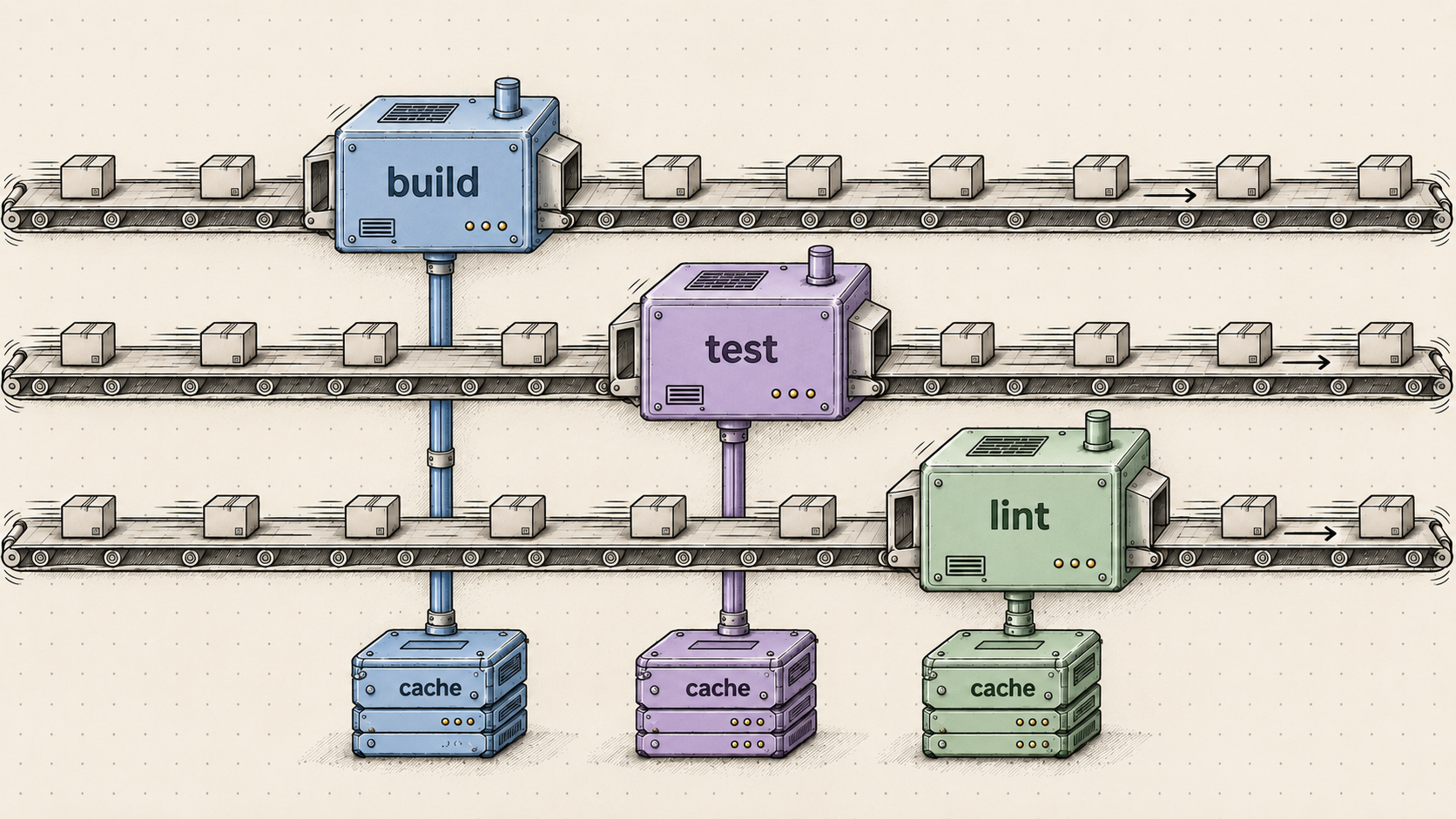
The default GitHub actions/setup-go action degrades parallel Go CI performance due to incomplete cache keys and stale writes. A new open-source action, cloudx-io/setup-go, resolves this with job-specific and run-ID-based keys, cutting test job runtimes by 69%.
Hacker News front pagecloudx.ai9 minHN7424What Go Taught Us About Java Garbage Collection
ParparVM’s GC was tuned by lowering the allocation‑trigger floor, adding configurable thresholds, parallel marking, mutator assistance, and proper weak/soft reference handling. These changes cut RSS from 98 MB to 38 MB, reduced worst‑case GC pauses from seconds to sub‑second, and improved cache hit rates with a recency‑based eviction policy.
CodeName Onecodenameone.com7 minFaster Maps: Chasing Swiss Speed
ParparVM’s HashMap suffered catastrophic miss latency due to linear probing on dense integer keys. By adopting CPython‑style perturbed probing (Swiss‑table style) and extending tagged immediate values to more primitives, miss latency dropped from 32 s to ~45 ms, allocation pressure fell dramatically, and overall performance stayed roughly flat despite a modest hit‑time slowdown.
CodeName Onecodenameone.com8 min