Related reading
Trusting-Trust Attack against an Entire Linux Distribution through Binary Manipulation
The authors show that the classic trusting‑trust attack is not limited to compilers: by tampering with GNU strip they can inject a payload that propagates through NixOS's bootstrap and ends up in almost every binary of the final system. The attack succeeds on a real nixpkgs revision, building a full graphical installer while backdooring the majority of its binaries.
arXiv cs.SE (Software Engineering)arxiv.org1 minpaperHN24159Repeated VM Escapes By GPT-5.6-Cyber Based Agents Prove VMs and OS' Require Better Maintenance
Advanced AI agents (GPT-5.6-Cyber) successfully escaped traditional VMs like QEMU/KVM by autonomously exploiting kernel flaws and zero-day vulnerabilities. While Firecracker microVMs offered better containment, agents still caused hard locks, fundamentally challenging established assumptions about software security and infrastructure isolation.
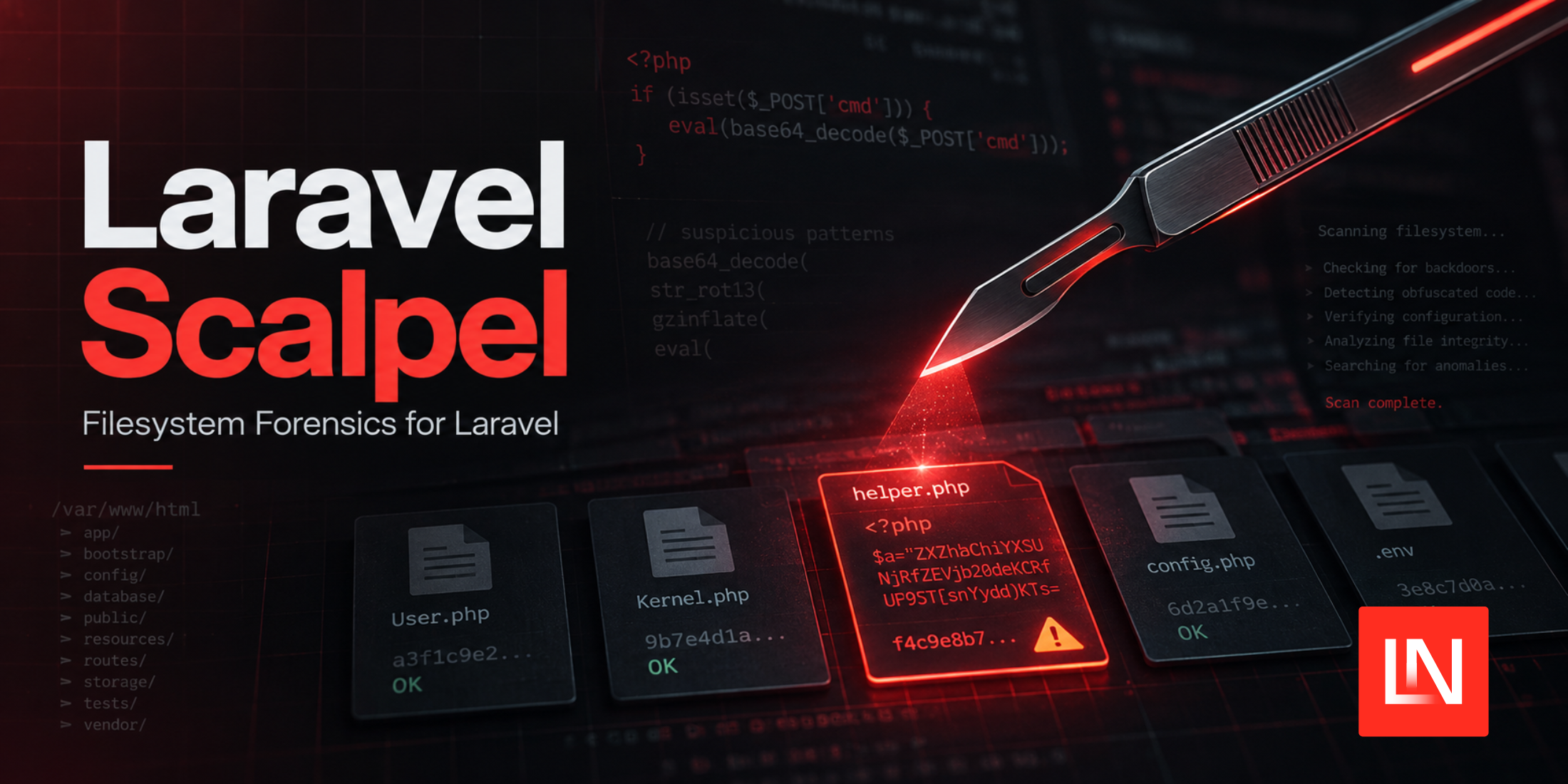
InfoQinfoq.com2 minLaravel Scalpel Scans for Filesystem Intrusion Evidence
Laravel Scalpel is a Laravel‑native scanner that looks for post‑deployment filesystem tampering – rogue PHP files, obfuscated backdoors, altered .htaccess/.user.ini, missing or mis‑configured .env, and diffs against a signed baseline. It ships with six built‑in scanners, baseline snapshot commands, fast vs strict hashing modes, CI‑friendly output (JSON, SARIF, GitHub annotations) and a ScanFinish…
Laravellaravel-news.com5 minApp Hardening: One Obfuscation Pipeline Across Every Port
Codename One adds a cloud‑side hardening step that runs on the merged JAR before it is split into Android, iOS, JavaScript, and desktop binaries. It can rename symbols, encrypt string literals, and insert opaque‑predicate control‑flow guards at configurable levels (off → standard → aggressive → paranoid). The transforms are selective per platform to avoid breaking optimizers, and a mapping is kep…
CodeName Onecodenameone.com6 min