Related reading
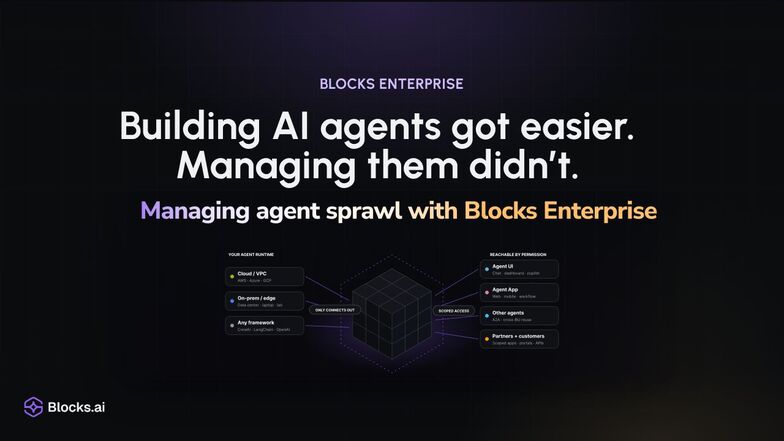
Building AI Agents got easier; managing them didn’t: Managing agent sprawl with Blocks Enterprise
Building AI agents is now easy, but as deployments grow into dozens or hundreds, companies lose visibility into ownership, usage, and cost—a problem called agent sprawl. Blocks Enterprise offers a private network that lets heterogeneous agents be discovered, permissioned, and audited across clouds without forcing a single framework.
PubNub:pubnub.com4 minGraphSkillEvo: Evolutionary Optimization of Graph-Structured Agent Skills
GraphSkillEvo encodes LLM agent skills as directed graphs and applies population‑based evolution (mutation, crossover) to optimise them. Across five benchmarks it beats the SkillOpt baseline, gaining up to 4% accuracy on GPT‑5.4‑nano.
Hugging Face Daily Papersarxiv.org1 minpaperWhy we taught agents to break distributed safety properties
The post introduces an Antithesis skill that lets AI agents perform mutation testing on distributed systems, injecting subtle bugs to check whether generated test suites can falsify safety properties. Using rqlite, the agents ran ~24 hours of tests, falsified 11 of 13 properties, and uncovered three real upstream bugs, demonstrating the technique’s practical value.
Antithesisantithesis.com7 minHN3Build zero-trust AI agents that judge intent, not just syntax
Google's Gemini Enterprise Agent Platform adds three managed runtime controls—Model Armor, Semantic Governance Policies, and Agent Anomaly Detection—to protect LLM agents from prompt injection, social‑engineering refunds, and multi‑turn abuse, moving enforcement out of agent code.
Google Developersgoogleblog.com10 min