Lerner Consulting BlogReuven Lerner1 min readintermediate
Python in operator: How __contains__ speeds up membership tests
Summary
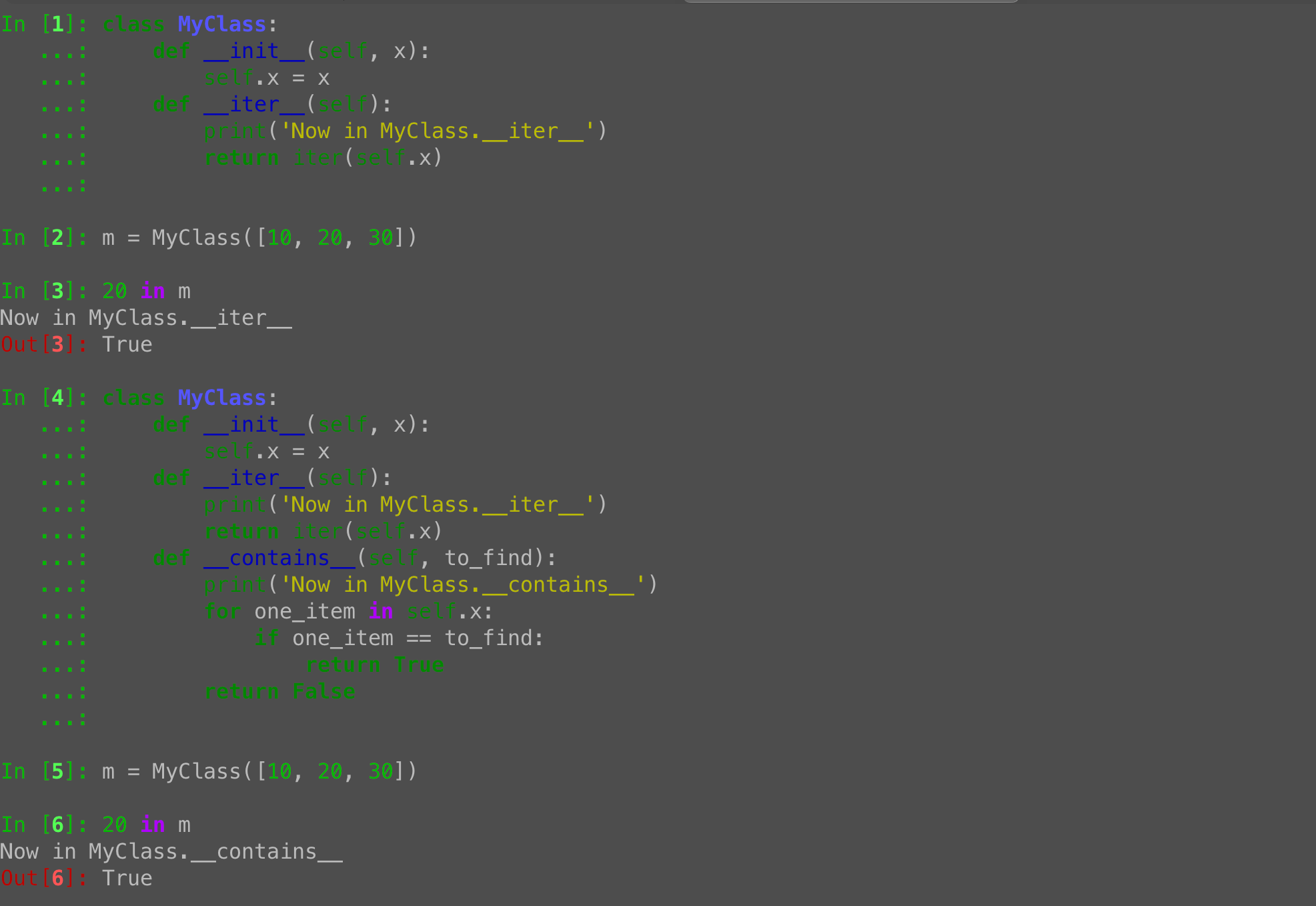
The post explains that Python’s `in` operator first looks for a `__contains__` method on the object and uses its boolean result; if absent it falls back to iterating via `__iter__`. Implementing `__contains__` can make membership checks faster, especially for large collections, by avoiding full iteration.
- `in` → `obj.__contains__(item)` if defined, else `for x in obj: if x == item`.
- Custom containers can gain O(1)‑ish membership checks by providing an efficient `__contains__` (e.g., a hash‑based lookup).
- Built‑in containers like `set` and `dict` already implement fast `__contains__` and are preferred when frequent membership tests are needed.
- If you only need iteration, you can skip `__contains__`; but adding it is cheap and improves performance for callers that use `in`.
Membership tests are common in Python code; using a container with an efficient `__contains__` can cut runtime dramatically for large data sets, and the behavior is part of the language contract that developers should be aware of when designing custom collections.
4/10