proomt

Search

Search posts, papers, and topics

All posts

Hacker News front page2 min readintermediate

Second Circuit Allows Government to Search Electronic Devices at the Border

Summary

The 2nd U.S. Circuit Court upheld the border-search exception, allowing agents to seize and examine travelers’ phones without a warrant, rejecting amicus arguments that First and Fourth Amendment rights require a warrant.

  • The court ruled that the border-search exception applies to electronic devices, meaning no suspicion or warrant is needed.
  • Amicus briefs from the Knight First Amendment Institute and the Reporters Committee argued for First/ Fourth Amendment protections, but were rejected.
  • The decision impacts journalists and any traveler, as phones can contain sensitive personal and source information.

Engineers building apps that handle personal data must consider that data on devices can be accessed by border agents without judicial oversight, influencing threat models and data‑minimization strategies.

3/10

Related reading

  1. Note on 18th September 2026

    This entry is a brief, sponsored blurb that offers a vague opinion on using LLMs for security scanning, without any concrete data or analysis. It links to other recent articles but adds no substantive content of its own.

    Simon Willisonsimonwillison.net1 min
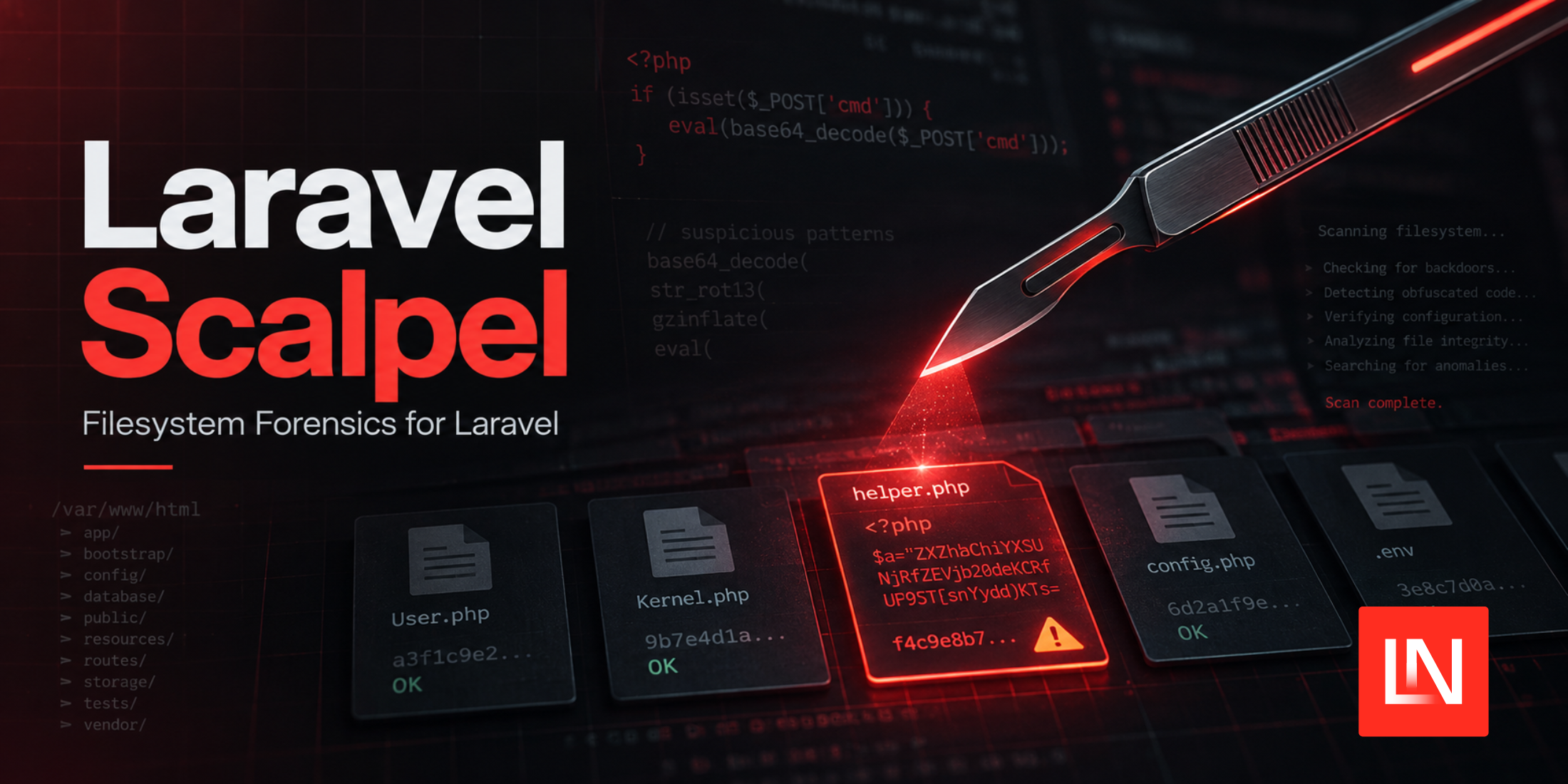
  2. Laravel Scalpel Scans for Filesystem Intrusion Evidence

    Laravel Scalpel is a Laravel‑native scanner that looks for post‑deployment filesystem tampering – rogue PHP files, obfuscated backdoors, altered .htaccess/.user.ini, missing or mis‑configured .env, and diffs against a signed baseline. It ships with six built‑in scanners, baseline snapshot commands, fast vs strict hashing modes, CI‑friendly output (JSON, SARIF, GitHub annotations) and a ScanFinish…

    Laravellaravel-news.com5 min
  3. Korea raises data breach fines to 10% of revenue

    South Korea’s privacy regulator will fine companies up to 10 % of revenue for large‑scale data breaches, a jump from the previous 3 % cap. The rule applies to intentional or grossly negligent leaks affecting 10 M+ people, with reductions for proactive security investments and rapid breach response. Companies must also notify users within 72 hours of a high‑risk exposure.

    Hacker News front pagekoreajoongangdaily.com3 minHN335113
  4. TeleAntiFraud 2.0: A Refreshable, Profile-Grounded, and Audio-Based Benchmark for Telecom Fraud Detection

    The paper introduces TeleAntiFraud 2.0, a monthly refreshed, frozen audio benchmark of 900 Chinese telecom calls (600 fraud, 300 near‑domain non‑fraud) built with a Mixed‑Tree generation pipeline. Experiments show models that score perfectly on unrelated negatives fall to ~0.66 Macro‑F1 on near‑domain cases, exposing shortcut learning and prediction collapse.

    Hugging Face Daily Papersarxiv.org1 minpaper
  5. CloudBees vs Harness: Why Migration Isn't the Fix

    The article argues that Harness’s “free migration” offer hides significant downstream costs (training, pipeline rebuilds, compliance recertification) and that even after migration you still lack unified governance across heterogeneous CI/CD tools. CloudBees positions its Unify control plane as a tool‑agnostic layer that adds visibility, continuous governance, AI‑driven test selection, and hybrid…

    Codeshipcloudbees.com5 min