proomt

Search

Search posts, papers, and topics

All posts

NvidiaRiccardo Mariani5 min readintermediate
Why Deploying Physical AI at Scale Demands Safety at Every Layer

Summary

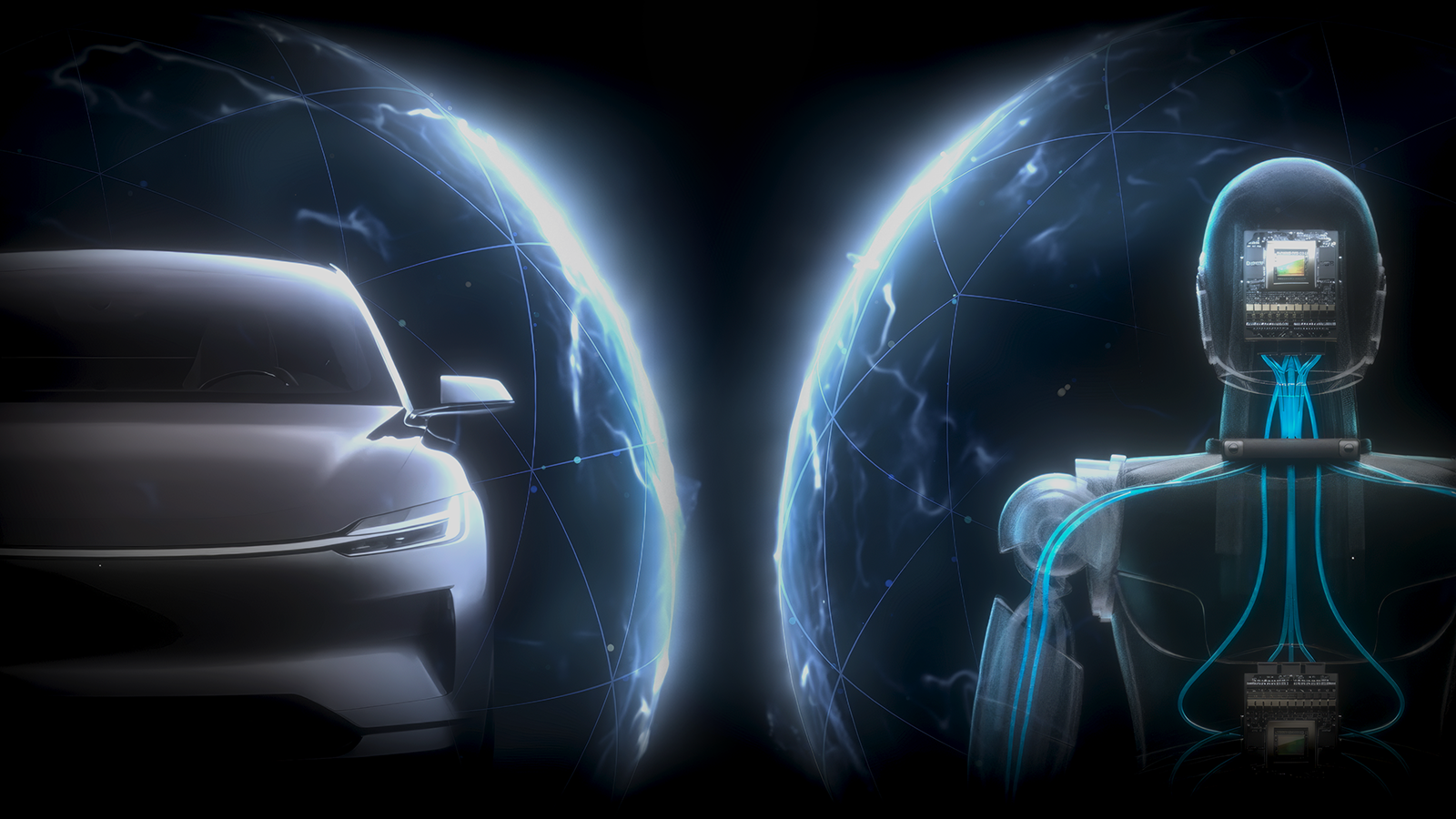
NVIDIA’s Halos platform is a full‑stack safety system for physical AI (autonomous vehicles and industrial robots). It bundles safety‑engineered hardware (DRIVE AGX Thor, IGX Thor), an ASIL‑D certified OS (Halos OS), middleware for isolation and monitoring, AI models for explainability (Alpamayo), and simulation/validation tools (Isaac Lab, Omniverse). The blog argues that scaling physical AI requ…

  • Physical AI safety must be continuous across design, deployment, and validation, not a one‑off check.
  • NVIDIA’s Halos stack provides safety‑engineered compute (DRIVE AGX Thor, IGX Thor), an ASIL‑D OS, middleware, AI explainability models, and simulation pipelines.
  • Compliance with functional‑safety standards (ISO 26262, IEC 61508) and emerging AI‑specific standards (ISO/IEC TS 22440) is built into the stack and verified by TÜV and ANAB.
  • Partner ecosystem includes OEMs (Geely, Nissan), mobility services (Uber, Lyft), and robotics firms (Advantech, Agility) that integrate Halos for certification readiness.

As autonomous vehicles and industrial robots move from pilots to billions of units, regulators and insurers will demand provable safety across hardware, software, and AI. A unified safety stack like Halos could lower the barrier for OEMs to meet functional‑safety certifications and accelerate large…

4/10
Related reading

  1. AI Security Is an Engineering Problem — How to Solve It at Every Layer of the Agent Stack

    Nvidia frames AI security as an engineering discipline, outlining required controls across the AI agent stack (model, harness, runtime) and advocating for enforceable boundaries, traceable identities, and evidence‑based testing. It highlights OpenShell as a sandboxed runtime, the Open Secure AI Alliance, and several vendor tools for testing and red‑team exercises.

    Nvidianvidia.com4 min
  2. From Megawatts to Tokens: How NVIDIA Maximizes AI Factory Production

    NVIDIA’s DSX platform lets AI data‑centers shift workloads in response to grid signals, squeezing ~24% more token throughput (4 M→5 M tps) and ~23% better performance‑per‑watt on a fixed megawatt budget. The first production demo used Emerald AI’s Conductor to drop a 4 MW load to 3 MW in under a minute without interrupting high‑priority jobs. DSX MaxLPS reallocates headroom across HGX B200 server…

    Nvidianvidia.com5 min
  3. 5 Companies Using NVIDIA AI for Clean Energy

    Nvidia’s blog spotlights five companies that are using Nvidia AI platforms to accelerate clean‑energy projects—from grid interconnection and nuclear plant operations to off‑grid AI data‑center power, advanced reactors, and fusion tokamaks. The article is a marketing summary and provides few technical details.

    Nvidianvidia.com4 min
  4. NVIDIA Vera Rubin NVL72 Delivers Leading Performance in MLPerf Inference v6.1 Debut

    NVIDIA’s Vera Rubin NVL72 AI inference system shows up to 3.7× higher throughput than the prior GB300 NVL72 on MLPerf v6.1 benchmarks (Qwen3‑VL, DeepSeek‑R1), achieves 99% scaling efficiency across 288 GPUs, and benefits from software optimizations (NVFP4 precision, kernel fusion, disaggregated serving). The post is a product announcement with concrete benchmark numbers but limited technical dept…

    Nvidianvidia.com4 min