proomt

Search

Search posts, papers, and topics

All posts

Simon Willison1 min readrelease notesintro

datasette-explain 0.2.2

Summary

datasette-explain 0.2.2 is a minor update for a Datasette plugin that provides SQL query explanation and validation. The primary enhancement is enabling explain plans on read-only stored-query pages.

  • Explain plans now function on read-only stored-query pages within Datasette.

3/10

Related reading

  1. datasette 0.65.5

    Datasette 0.65.5 releases with a security fix: a trailing newline in a table name could bypass permissions and expose private rows (GHSA‑h547‑rmjf‑5m2m).

    Simon Willisonsimonwillison.net1 minrelease
  2. datasette 1.0a40

    Datasette 1.0a40 adds a background‑task API (datasette.add_background_task()), switches the internal HTTP client to httpx2, and ships a batch of bug fixes aimed at stabilising the upcoming 1.0 release. The security fix mirrors that of 0.65.5.

    Simon Willisonsimonwillison.net1 minrelease
  3. datasette-auth-github 1.0

    The datasette-auth-github plugin now reaches 1.0, fixing a bug where cookies lacked a Max‑Age attribute and thus expired at session end. The fix ensures longer‑lasting sessions and the release is tested against recent Datasette versions.

    Simon Willisonsimonwillison.net1 minrelease
  4. Article: Your Next DSL Author Is a Language Model

    Typed Domain Grounding (TDG) embeds a DSL inside a mainstream language the LLM already knows (e.g., Kotlin) and uses the host compiler as an oracle. The author describes five building blocks—embedding, choosing a host language with high training‑data frequency, compiler‑driven type safety, a generate‑compile‑repair loop, and an on‑demand teaching tool—and shows measured results from kUML, a Kotli…

    InfoQinfoq.com18 min
  5. "Regex for Rows": Simplifying Pattern Detection in SQL with MATCH_RECOGNIZE

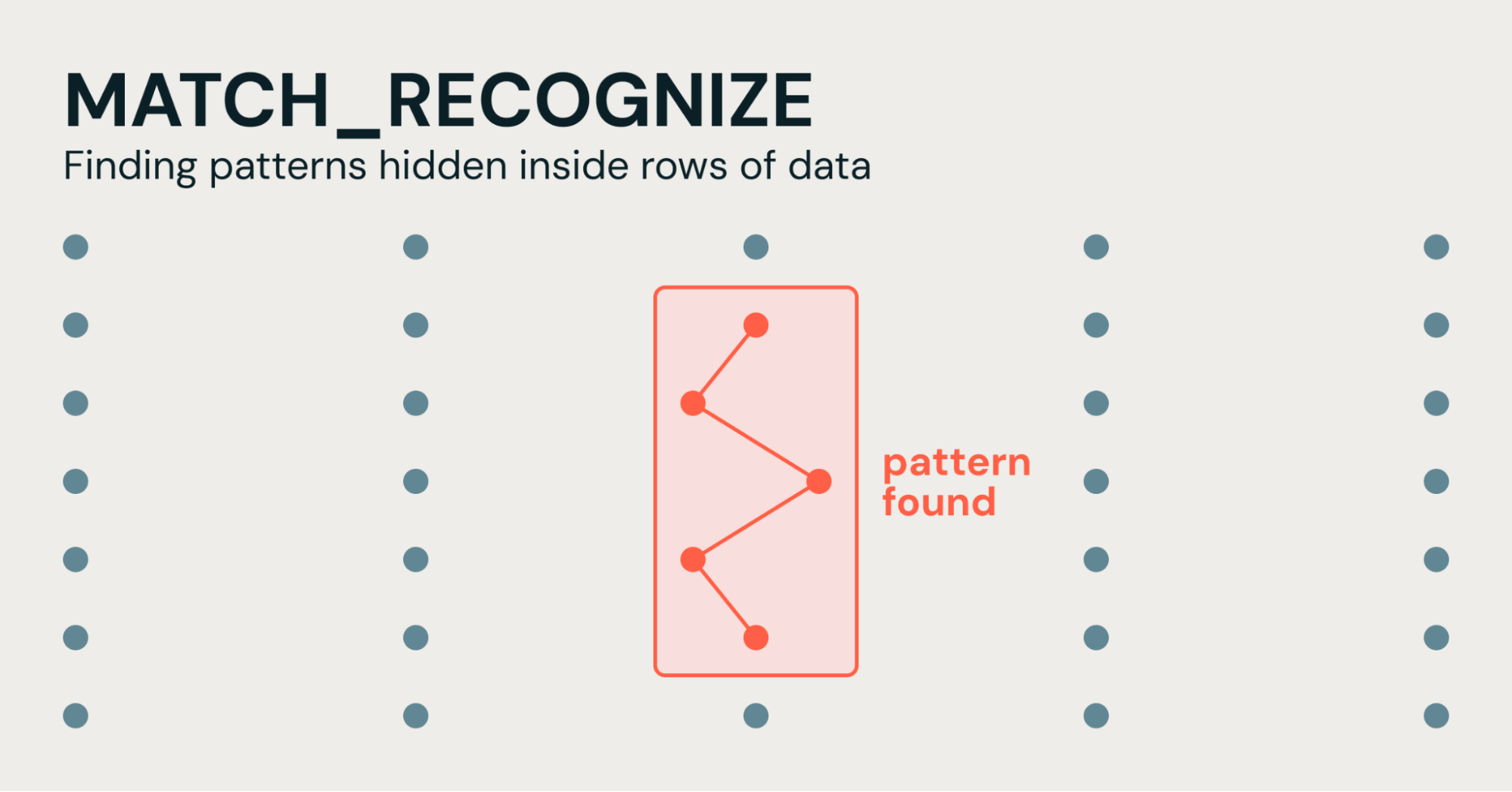
    Databricks announces MATCH_RECOGNIZE, a preview‑only SQL clause that lets you write regex‑style patterns over ordered rows. The post walks through four industry‑level use cases (security login‑failure sequences, V‑shaped stock trends, e‑commerce cart abandonment, IoT sensor‑driven failure prediction) and claims the operator replaces complex CTEs, window functions, and self‑joins. No actual syntax…

    Databricksdatabricks.com5 min
  6. Introducing TIN: full-text search for Postgres

    PlanetScale’s TIN is a new PostgreSQL extension that implements a full‑text search index supporting Boolean, phrase, span, fuzzy, wildcard, regex, case/accent folding, COUNT(*) and BM25 top‑k queries. In a suite of benchmarks on an i7i.8xlarge EC2 instance (8 vCPU, 32 GB RAM), TIN built in 8 min 10 s (50.7 GB index) and outperformed ParadeDB, pg_textsearch and the built‑in GIN index by large marg…

    PlanetScaleplanetscale.com15 minHN20175