proomt

Search

Search posts, papers, and topics

All posts

NeonNikita Shamgunov3 min readintro
Electric is joining team Neon at Databricks

Summary

Databricks announced that the Electric team, creators of the WASM‑compiled Postgres engine PGlite and a real‑time sync layer, is joining Neon. The integration adds an embedded Postgres database and continuous sync primitive to Neon’s platform, aiming to lower compute costs for small, agent‑driven apps.

  • PGlite is a full Postgres compiled to WebAssembly that runs inside browsers, serverless functions, and sandboxed agents.
  • Weekly downloads of PGlite grew from 1 M to 13 M in the past year, showing rapid adoption.
  • Electric’s sync engine continuously synchronizes a central Postgres database with client environments like browser tabs, mobile apps, and sandboxed agents.
  • The integration adds these primitives to Neon alongside Lakebase Postgres, Auth, Storage, Functions, and the AI Gateway.

Engineers building serverless, edge, or agent‑driven applications should care because the combined Neon‑Electric stack offers an embedded WASM Postgres and real‑time sync primitive that reduces infrastructure overhead.

5/10

Related reading

  1. Introducing Neon Labs

    Neon Labs is a new experimental web app (Next.js + TypeScript) that offers two PostgreSQL upgrade tools: a live‑catalog Upgrade Assessment that flags version‑specific blockers, and a Migration Assistant that auto‑generates import, pg_dump/restore, or logical‑replication pipelines based on DB size and downtime needs. The tools run read‑only against a Neon project, never expose connection strings,…

    Neonneon.com6 minrelease
  2. Neon is now available in Grok Bot

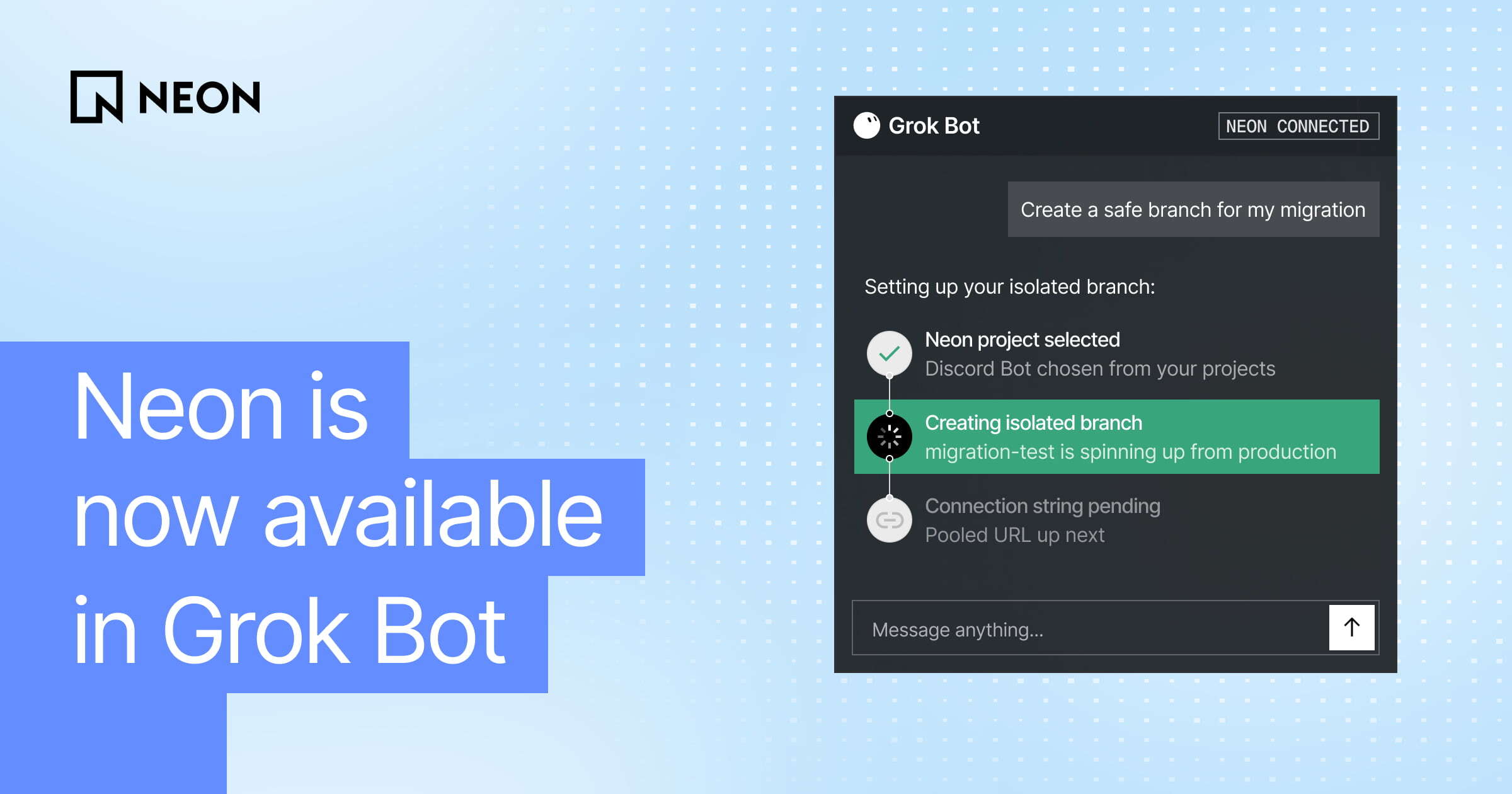
    Neon released a Grok Bot plugin that lets the AI assistant manage Neon PostgreSQL databases. After a one‑time auth, the bot can create projects, spin up isolated branches, run SQL, list databases, and set up usage‑summary routines directly from chat.

    Neonneon.com1 min
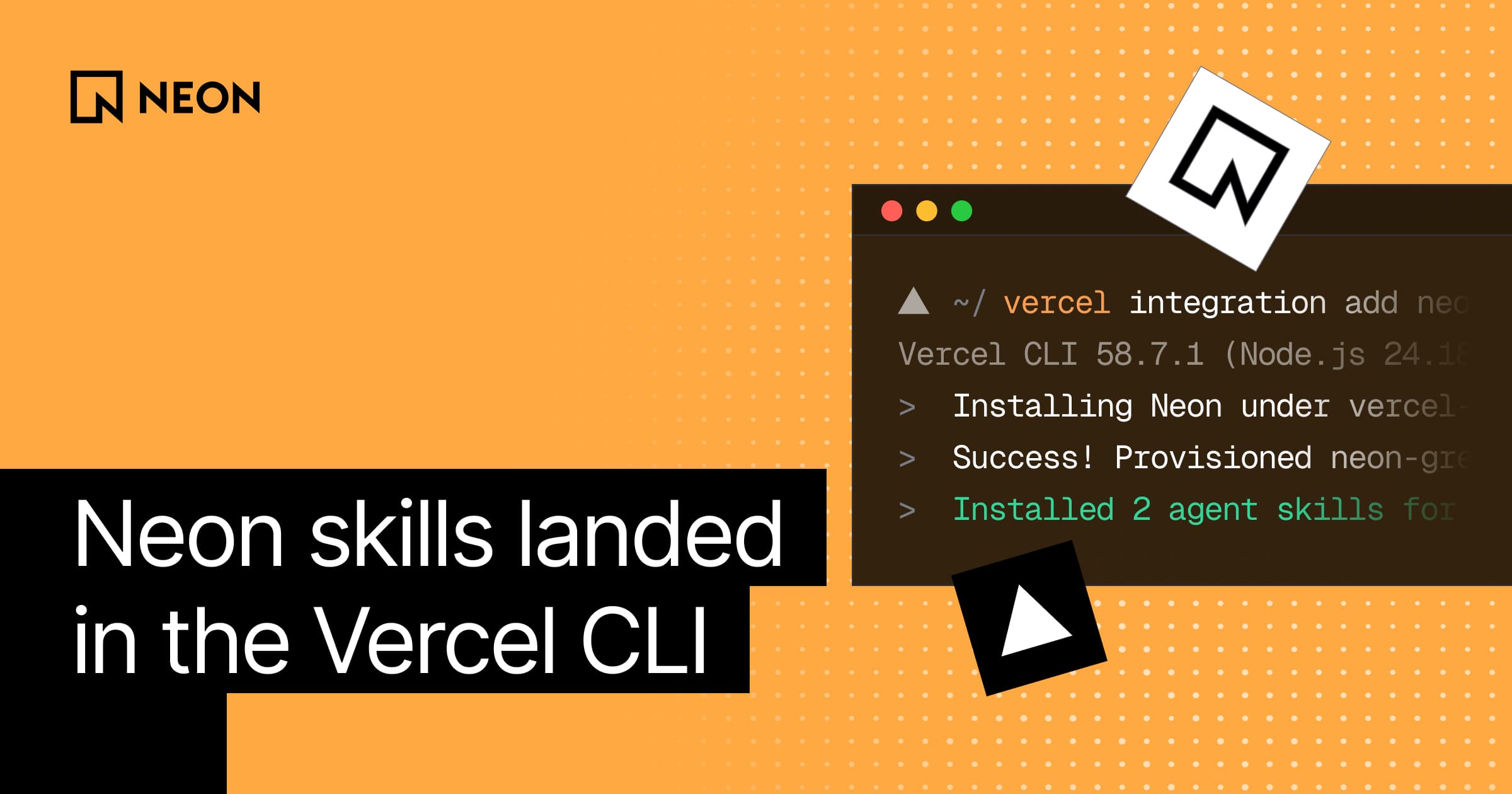
  3. Neon skills landed in the Vercel CLI

    Vercel CLI now integrates Neon, allowing users to provision a Neon database and install its agent skills with a single command. This streamlines database setup for Vercel projects, including automatic isolated branches for preview deployments.

    Neonneon.com4 minrelease
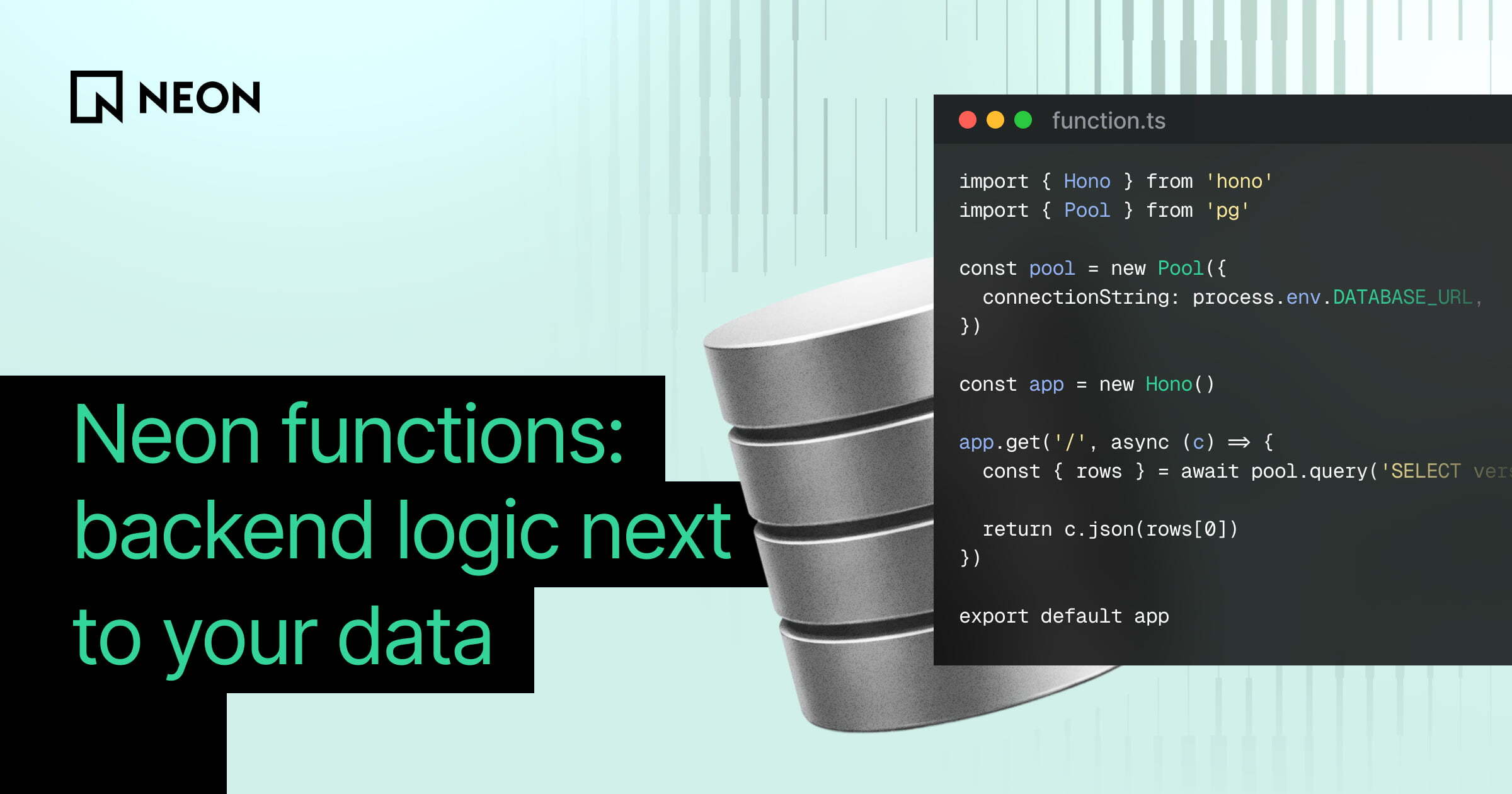
  4. Neon Functions: backend logic next to your data

    Neon Functions are server‑less Node.js 24 compute that run on the same branch and region as Neon’s Lakebase Postgres, giving low‑latency DB access, long‑running connections for agents/WebSockets, automatic credential injection, and branch‑aware deployment via neon.ts. They’re meant for data‑adjacent backend logic, not full‑stack hosting, and future plans include native cron and event triggers.

    Neonneon.com5 min
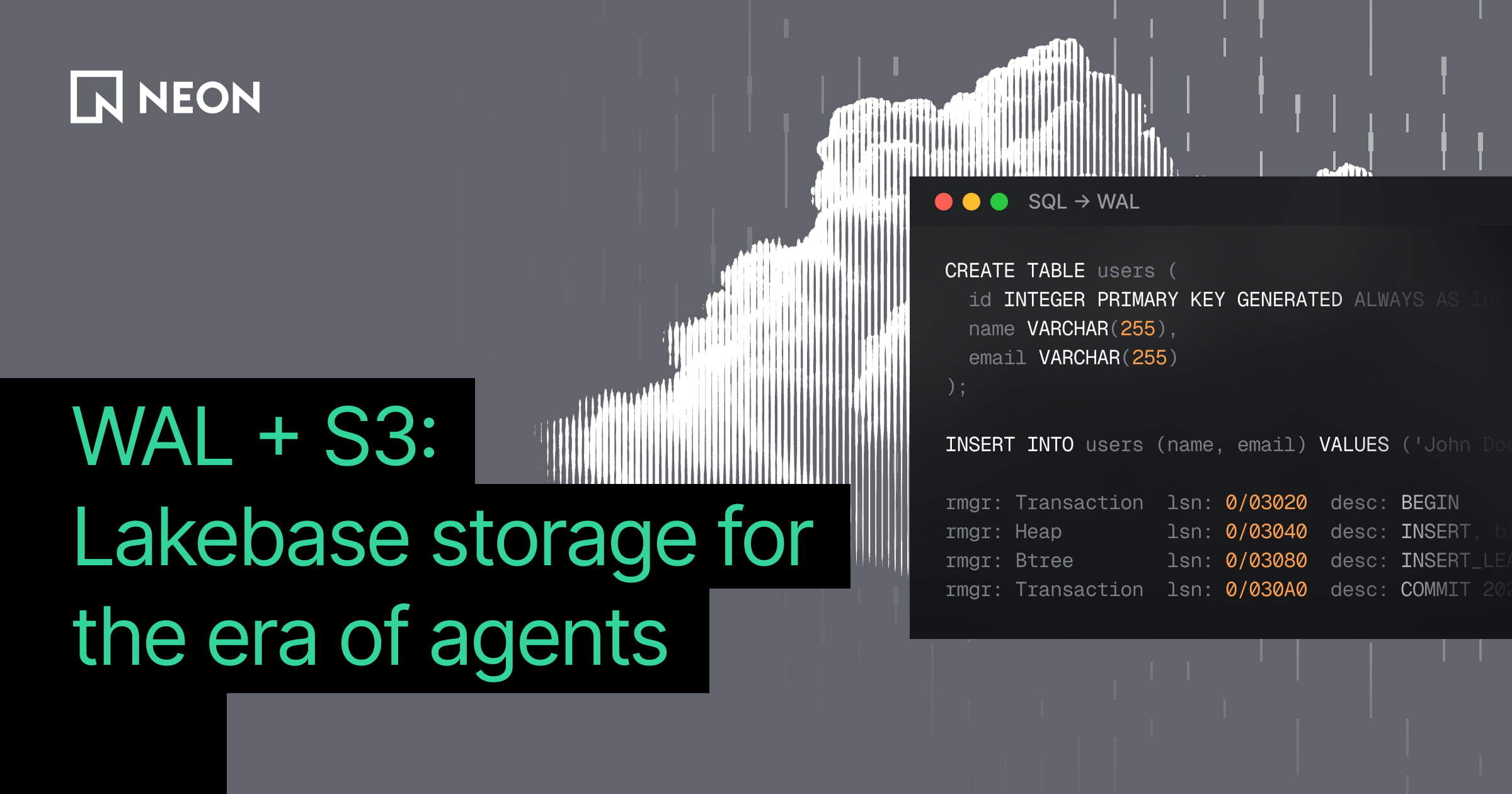
  5. WAL + S3: Lakebase storage for the era of agents

    Neon's Lakebase Postgres redefines database storage by making the WAL the source of truth, stored on S3, rather than data files. This transaction-centric approach enables instant branching, time travel, and scalable, decoupled compute and storage for Postgres.

    Neonneon.com14 minHN4
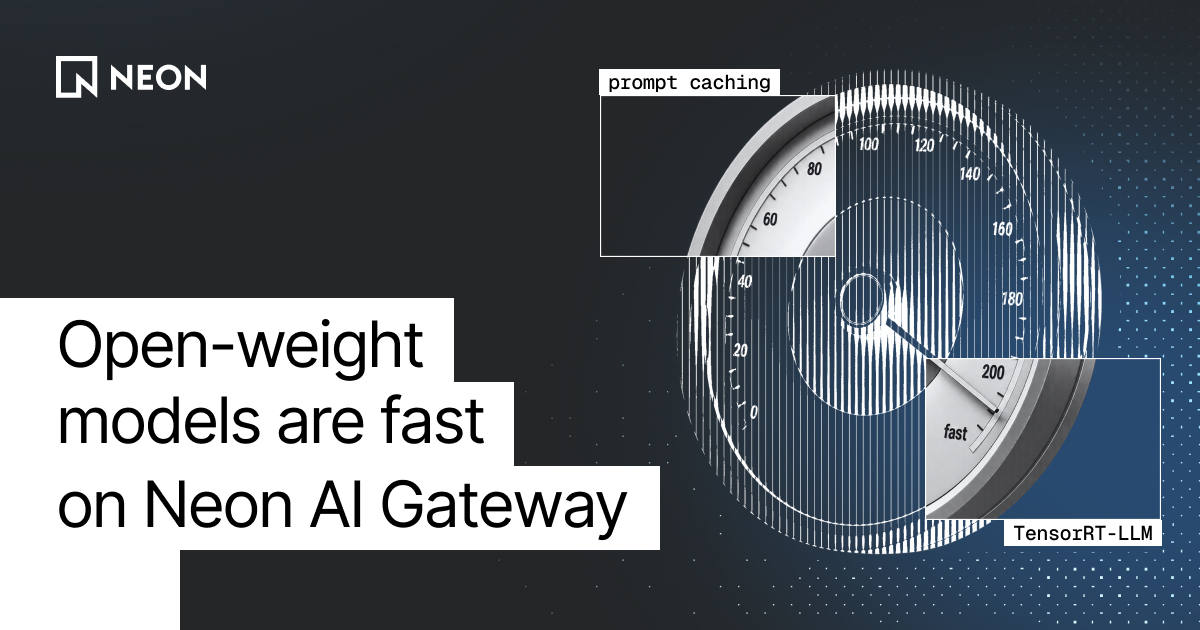
  6. Open-weight models are fast on Neon AI Gateway. Here's why

    Neon AI Gateway provides fast inference for open-weight LLMs by utilizing Databricks' optimized serving stack. This stack incorporates techniques like prompt caching, continuous batching with KV-cache paging, and a TensorRT-LLM backend, leading to significant improvements in throughput and latency.

    Neonneon.com6 min