NeonCarlota Soto6 min readintermediate
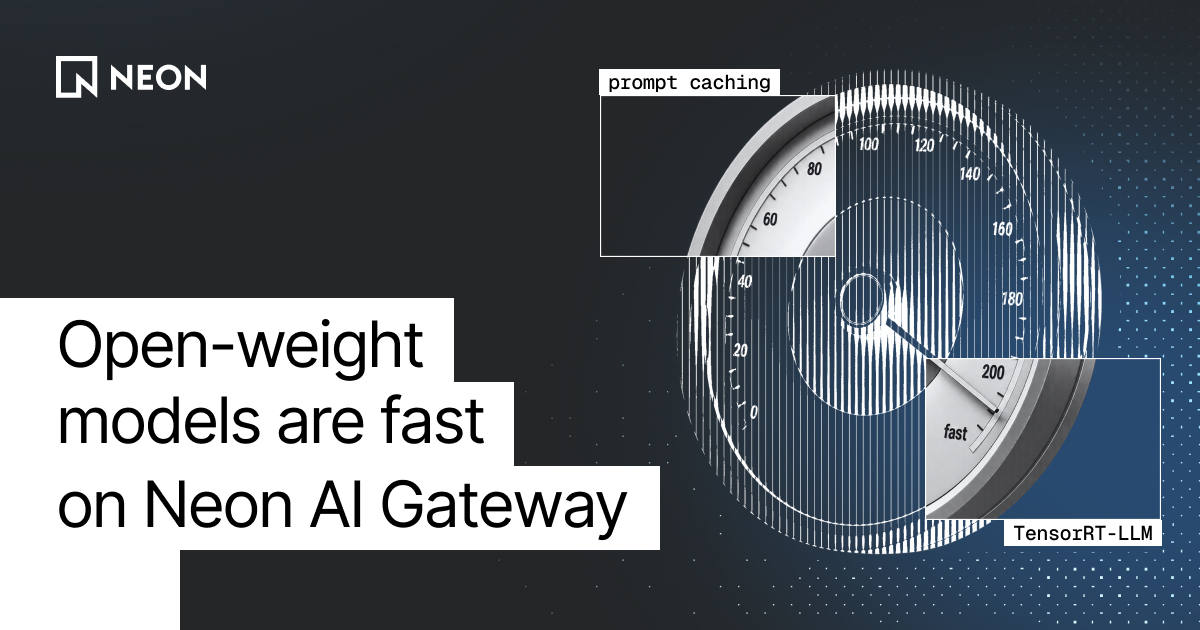
Open-weight models are fast on Neon AI Gateway. Here's why
Summary
Neon AI Gateway provides fast inference for open-weight LLMs by utilizing Databricks' optimized serving stack. This stack incorporates techniques like prompt caching, continuous batching with KV-cache paging, and a TensorRT-LLM backend, leading to significant improvements in throughput and latency.
- Prompt caching boosts input-token throughput by 2.5x and reduces P50 latency by 3x for agent-like workloads with repeated prefixes.
- Continuous batching with PagedAttention-style KV-cache paging maximizes GPU utilization and reduces time-to-first-token by efficiently managing requests.
- A TensorRT-LLM-era backend with custom kernels provides 1.5-1.7x faster execution by fusing GPU operations and optimizing sparse matrix multiplies.
- Quantization (e.g., FP8) can double max batch size and throughput on H100s with minimal quality degradation.
Engineers building LLM applications, particularly those with agentic or multi-step workflows, should care about these optimizations as they directly improve the performance and cost-efficiency of open-weight models.
7/10