proomt

Search

Search posts, papers, and topics

All posts

Hacker News front pageJohn Novak27 min readintermediate

Grand MS-DOS Gaming General MIDI Showdown

Summary

The author records 46 classic DOS game soundtracks on seven MIDI modules (Roland SC‑55, SC‑VA, Yamaha MU80, S‑YXG50, etc.), shares 322 lossless recordings plus REAPER project files, and documents a repeatable workflow for extracting MIDI from DOSBox, cleaning it, and rendering audio on hardware and software synths.

  • Capturing game MIDI via DOSBox Staging + loopMIDI yields a deterministic 0.52 ms quantisation (120 BPM, 960 PPQ).
  • Insert a GS Reset SysEx at the start of each track to ensure consistent GS‑compatible playback across modules.
  • Manual post‑processing is needed for volume fades, stray CC/Program‑Change data, and to strip non‑musical effects (e.g., intro SFX in LS 6).
  • Hardware modules (SC‑55, MU80) and their software recreations (SC‑VA, S‑YXG50) can be benchmarked side‑by‑side using the same MIDI files, exposing differences in GS handling, reverb/chorus, and instrument mapping.

Provides a rigorously documented, reproducible method for evaluating legacy MIDI hardware and software, useful for retro‑gaming audio preservation, sound design research, and anyone needing a ground‑truth dataset of GM/GS playback across devices.

6/10
Related reading

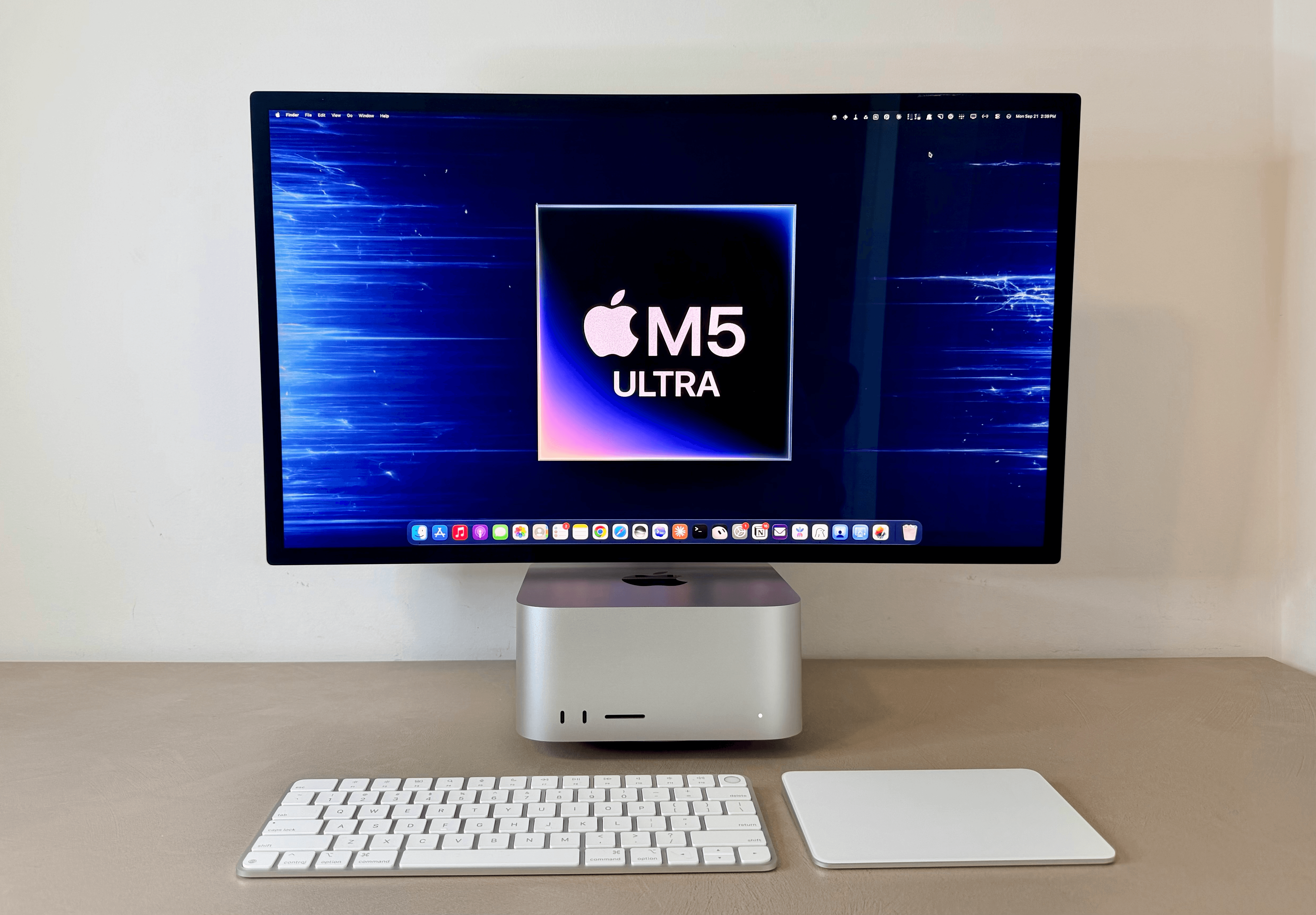
  1. M5 Ultra Mac Studio Review

    The M5 Ultra Mac Studio (256 GB RAM) uses a quad‑die M5 Max architecture with an 80‑core GPU and 1.2 TB/s memory bandwidth, delivering ~70 % faster prompt‑to‑first‑token and token‑generation rates than the M3 Ultra. In the author’s tests Qwen3.8‑Flash‑Next hits 100 tokens/s on short prompts and 60‑85 tokens/s with 64‑256 KB context, making local AI agents (Open Minis, Hermes, Codex) feel snappy a…

    Hacker News front pagemacstories.net39 minHN191174
  2. A custom virtual machine for the Stars! 4X game

    Stars!VM is a 32‑bit Windows executable that embeds a custom 80286 emulator and a Win16‑to‑Win32 bridge to run the 1995 4X game Stars! without any external emulators. The author adds differential fuzzing, hot‑routine patching, I/O buffering and asset compression, achieving about a 2× speedup in turn generation.

    Chris Wellonsnullprogram.com5 minHN8422
  3. ProgramDistill: From Interactive Web Apps to Verifiable Reference-Guided SWE Tasks

    ProgramDistill is a new benchmark that automatically extracts 1,975 replay‑verified feature behaviors from 26 real web apps, builds 4,063 coding‑agent tasks, and measures how well state‑of‑the‑art agents (e.g., GPT‑6 Astra, Claude Opus 5) can reconstruct full or partial applications, revealing steep drops in success as restoration depth grows.

    Hugging Face Daily Papersarxiv.org1 minpaper
  4. SiliconBench: Speed, Memory, and Fidelity for LLM Serving on Unified-Memory Desktops

    SiliconBench benchmarks nine Apple‑Silicon LLM serving engines on unified‑memory desktops, measuring speed, memory usage, and output fidelity across Qwen3, Qwen3.5, and Gemma‑4 models. It finds vllm‑metal doubles throughput at modest concurrency, memory budgets often fail to preserve headroom, and only three stacks satisfy all fidelity and model‑coverage requirements, with tensor‑parallel scaling…

    Hugging Face Daily Papersarxiv.org1 minpaper
  5. Some things Veloren does differently

    Veloren’s engine uses a custom ECS, a novel ‘chonks’ voxel storage, full‑world pre‑generation, physically‑based erosion, and a scalable real‑time simulation (rtsim) that keeps tens of thousands of NPCs active, achieving ~50% CPU usage on a 48‑core server with 500+ players.

    Lobstersjsbarretto.com8 minHN5lobste.rs70