proomt

Search

Search posts, papers, and topics

All posts

SitePointVasyl Popovych16 min readtutorialintermediate
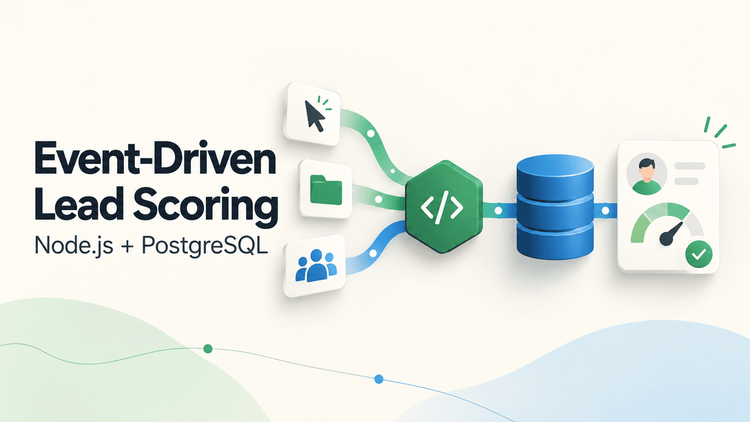
How to Build an Event-Driven Lead Scoring Pipeline with Node.js and PostgreSQL

Summary

This tutorial demonstrates building an event-driven lead scoring pipeline using Node.js and PostgreSQL. It focuses on robust design patterns like idempotency, secure webhook processing, and transactional consistency with a transactional outbox.

  • Implement a transactional outbox pattern to ensure atomic updates and reliable delivery of downstream messages.
  • Use PostgreSQL partial unique indexes to prevent re-scoring for the same lead milestone event.
  • Verify webhook signatures with HMAC-SHA256 and a timestamp window to mitigate replay attacks.
  • Keep scoring rules server-side and strictly validate incoming event data, rejecting caller-supplied scores.

Engineers building robust event-driven systems or marketing automation will find practical patterns for idempotency, data consistency, and secure webhook processing.

7/10

Related reading

  1. Postgres week in the Netherlands: PGDay Lowlands & Percona Live 2026

    The author recaps two Dutch conferences where they presented ClickHouse‑Postgres extensions and discussed PostgreSQL 19 monitoring enhancements. The post explains how pg_clickhouse provides transparent query push‑down to ClickHouse and how pg_stat_ch streams per‑query metrics, plus new logging defaults and system views in PG 19.

    ClickHouseclickhouse.com7 min
  2. From support ticket to GitHub issue: Building a reliable escalation workflow

    A step‑by‑step guide for turning support tickets into well‑structured GitHub issues. It defines escalation criteria, outlines a decision table for support, specifies required fields, and provides a minimal Node.js 24 adapter that validates input, builds a markdown issue body, and calls the GitHub Issues API with proper error handling and security considerations.

    SitePointsitepoint.com11 min
  3. One Java Model from the App to PostgreSQL

    Codename One introduces a backend runtime allowing a single Java model to define entities and validation rules for both client applications and the server. This approach aims to reduce duplication and ensure consistent data rules from the app to PostgreSQL.

    CodeName Onecodenameone.com7 min
  4. pgAssistant 3.8.0 : continuous improvement loop for Postgres

    pgAssistant 3.8.0 expands from a tuning advisor to a continuous PostgreSQL improvement platform, adding a Collector that records historical workload and environment data. It lets teams run an Observe‑Diagnose‑Prioritize‑Plan‑Implement‑Measure loop, compare consecutive snapshots, and measure the impact of applied recommendations.

    PostgreSQLpostgresql.org1 minrelease