proomt

Search

Search posts, papers, and topics

All posts

CodeshipErik Francis5 min readintro

Merge Conflict: Everything You Need to Know

Summary

This article explains what Git merge conflicts are, why they occur when merging different changes to the same file locations, and how they manifest differently in standard merges versus rebases. It provides a strategy for resolving rebase conflicts in feature branches before merging them into a main branch.

  • Merge conflicts occur in the destination branch during a merge operation.
  • Conflicts arise when two branches modify the same lines in the same file differently.
  • Rebasing applies commits sequentially, which can expose conflicts differently than a standard three-way merge.
  • To minimize rebase conflicts, pull changes from the destination branch into your feature branch with rebase, resolve conflicts locally, then push.
4/10

Related reading

  1. Reinventing issue tracking: Local-first and Git-native

    A devlog describing how Manganin’s issue tracker stores issues in a dedicated Git repo as plain files, after rejecting earlier approaches that tried to embed issue data in the code tree or Git refs. The author explains the pitfalls of using refs for issue storage, shows the low‑level Git commands needed for that approach, and then outlines the final design: a hidden sister repository where each i…

    Lobstersmanganin.dev6 minHN1lobste.rs27
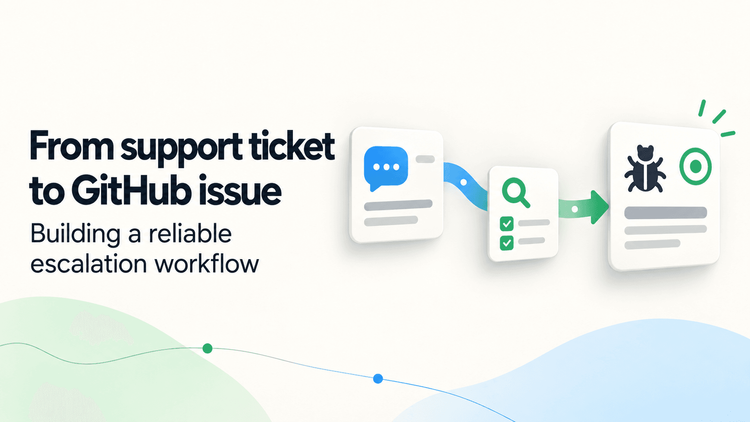
  2. From support ticket to GitHub issue: Building a reliable escalation workflow

    A step‑by‑step guide for turning support tickets into well‑structured GitHub issues. It defines escalation criteria, outlines a decision table for support, specifies required fields, and provides a minimal Node.js 24 adapter that validates input, builds a markdown issue body, and calls the GitHub Issues API with proper error handling and security considerations.

    SitePointsitepoint.com11 min
  3. Five CI Tools, One Control Plane: Finally Answer “What’s Going On?”

    CloudBees Unify is a control‑plane overlay that connects existing CI tools (GitHub Actions, Jenkins, GitLab, Bitbucket, CloudBees CI) to provide a single dashboard, centralized policy enforcement, audit trails, and artifact lineage without requiring migration of pipelines. The post outlines a 30‑60‑90‑day rollout plan and the expected benefits for platform teams.

    Codeshipcloudbees.com3 min