proomt

Search

Search posts, papers, and topics

All posts

Marcelo Rinesi5 min readintermediate

Relative superintelligence and competitive dynamics: between collapse, progress, and breakthroughs

Summary

This article models how AI impacts competitive dynamics by categorizing markets (platform, baseline, unbounded) and producers (generic, expert, augmented) based on their information density capabilities. It shows AI can lead to price collapse in low-complexity markets or enable breakthroughs in high-complexity, unbounded markets.

  • AI's economic impact varies significantly based on market demand for information complexity and producer capabilities.
  • "Superintelligence" is defined as output complexity exceeding a given market's ability to evaluate and reward it.
  • In "platform markets" (low complexity demand), AI drives a price collapse without increasing output complexity.
  • In "unbounded markets" (high complexity demand), AI allows "augmented producers" to achieve unprecedented, rewarded information complexity.

Business leaders and strategists should care to understand how AI will reshape competitive landscapes and inform their organizational and market positioning.

7/10

Related reading

  1. Modernizing the Trade Lifecycle With Governed Data and AI

    Databricks argues that modernizing the trade lifecycle now hinges on building a governed, real‑time data foundation that spans research, trading, risk, ops and compliance, rather than isolated AI pilots. Starting with a few high‑value questions—execution cost, shock risk, exception rates—and using Unity Catalog and Agent Bricks lets firms achieve measurable speed and auditability gains before sca…

    Databricksdatabricks.com5 min
  2. SaaS platforms are surging despite the SaaSpocalypse

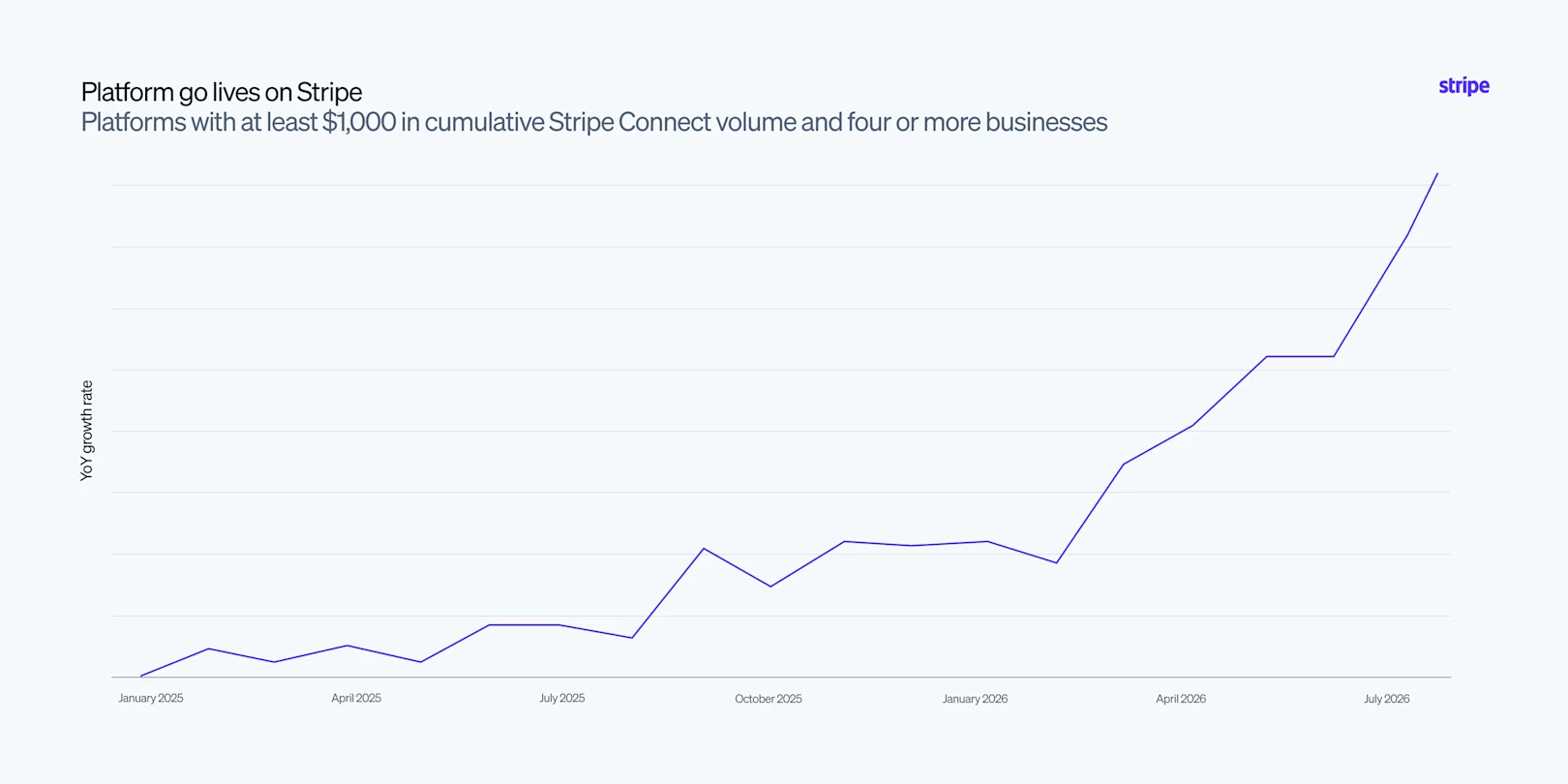
    New SaaS platforms are experiencing a significant boom on Stripe, with new businesses up over 180% year-over-year, defying earlier market fears of a 'SaaSpocalypse'. These platforms differentiate by embedding deep industry knowledge and integrating core workflows, with AI accelerating their development and enhancing offerings.

    Stripestripe.com3 min
  3. Taking advantage of the next acceleration curve

    The post argues that agentic AI can compress the Discovery and Alpha phases of agile delivery from 12‑20 weeks to 8‑12 weeks by automating research synthesis, documentation, and prototyping. However, the real challenge becomes organizational governance and decision‑making, which must evolve to keep pace with the faster technical output.

    Made Techmadetech.com4 min
  4. AI vs. automation: What's the difference?

    This article clarifies the distinctions between automation (fixed rules), AI (data-driven decisions), and agentic AI (adaptive multi-step planning). It demonstrates how integrating AI with automation creates more intelligent and cost-effective workflows by applying AI only where judgment is required.

    Zapier Engineeringzapier.com10 min