proomt

Search

Search posts, papers, and topics

All posts

Hacker News front page28 min readrelease notesintermediate
Show HN: Scry, programmable internet search w/ congestion pricing

Summary

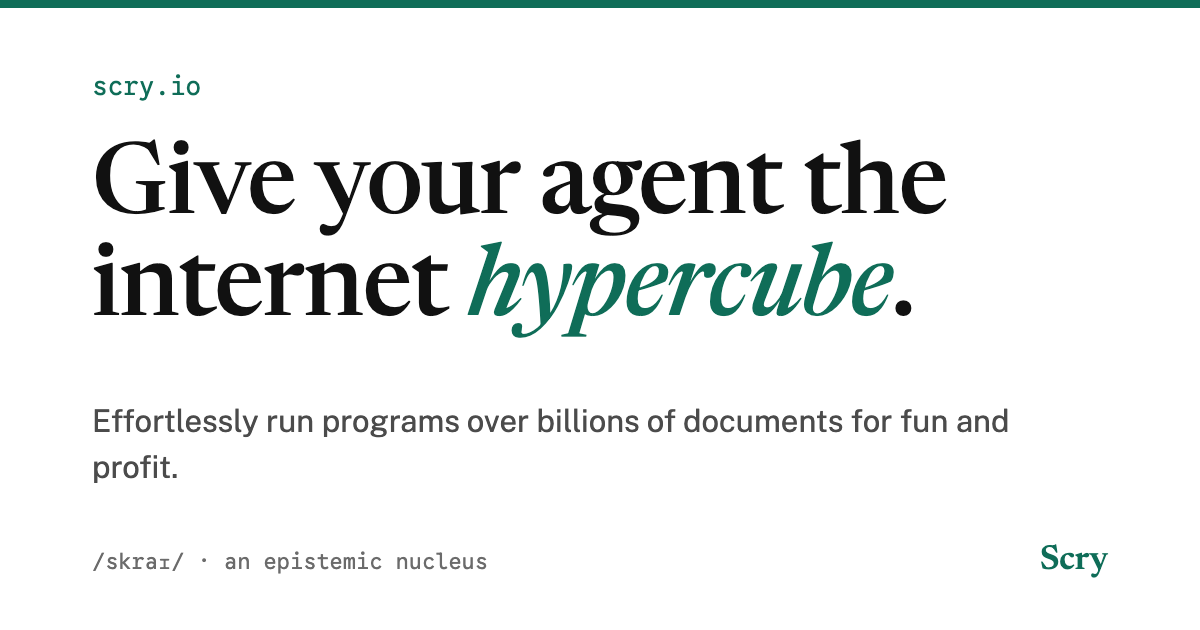
Scry is a read‑only, SQL‑like search service that lets LLM agents query billions of public‑web records (e.g. Reddit, Hacker News, academic papers) via a single MCP or HTTP endpoint. It enforces per‑query limits (deadline, memory, row cap), offers schema discovery, explain, rerank, and compile APIs, and reports freshness per source (e.g. Hacker News <15 min). In a DeepSearchQA benchmark Scry‑enabl…

  • Programmable search via Scry SQL lets agents express complex filters, joins, time windows, and vector composition in a single request.
  • Query limits (deadline, memory, row cap) and an `explain` header let users predict cost before execution.
  • MCP integration requires only the server URL; no local installation. HTTP API mirrors the same functionality with bearer‑token auth.
  • Performance: a 111‑iteration recursive query returns in ~100 ms; per‑source freshness is advertised (e.g., Hacker News <15 min).

LLM agents need reliable, up‑to‑date, and queryable web evidence without building their own crawlers. Scry’s unified, bounded query interface reduces latency, cost, and engineering effort, while providing provenance and freshness guarantees needed for trustworthy AI‑driven research and automation.

6/10
Related reading

  1. Introducing TIN: full-text search for Postgres

    PlanetScale’s TIN is a new PostgreSQL extension that implements a full‑text search index supporting Boolean, phrase, span, fuzzy, wildcard, regex, case/accent folding, COUNT(*) and BM25 top‑k queries. In a suite of benchmarks on an i7i.8xlarge EC2 instance (8 vCPU, 32 GB RAM), TIN built in 8 min 10 s (50.7 GB index) and outperformed ParadeDB, pg_textsearch and the built‑in GIN index by large marg…

    PlanetScaleplanetscale.com15 minHN20175
  2. The Web Search Your Agent Inherited Isn't Good Enough

    Omnigent is a unified agent definition layer that lets you write an LLM‑agent once and run it on any harness (Claude Code, Codex, raw API). By plugging Nimble’s specialized web‑search API into the Omnigent web_search builtin, you get consistent, deeper, and cheaper web results – benchmark accuracy jumps from 46 % to 71 % and search cost halves. All model calls go through Databricks Foundation Mod…

    Databricksdatabricks.com7 min
  3. Elastic announces GA of cross-project search on Serverless, enabling teams to query across all linked projects without moving a byte

    Elastic Cloud Serverless now offers General Availability of Cross‑Project Search (CPS), letting you run a single query across up to 100 linked projects (any region, cloud, or solution type) without moving data. Setup is UI‑driven, permissions are evaluated per‑project, and costs are $0.009 / GB retained plus $0.05 / GB egress. CPS works for Observability, Security, Search, vector DB, and ML jobs,…

    Elasticelastic.co6 minrelease
  4. Replica-aware routing public beta

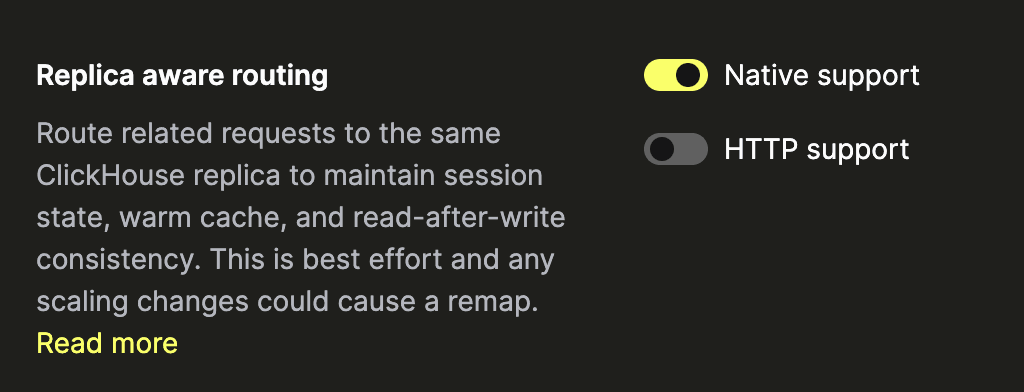
    Replica‑aware routing (public beta) lets ClickHouse Cloud users pin a query stream to a specific replica by sending a custom header (HTTP) or overriding the TLS SNI (native). The proxy (Envoy) hashes the tag and consistently forwards all requests with the same tag to that replica, giving read‑after‑write consistency for temporary tables, session objects, and warm replica caches. Stickiness is bes…

    ClickHouseclickhouse.com6 min
  5. How LLMs Can Find a Needle in a Haystack

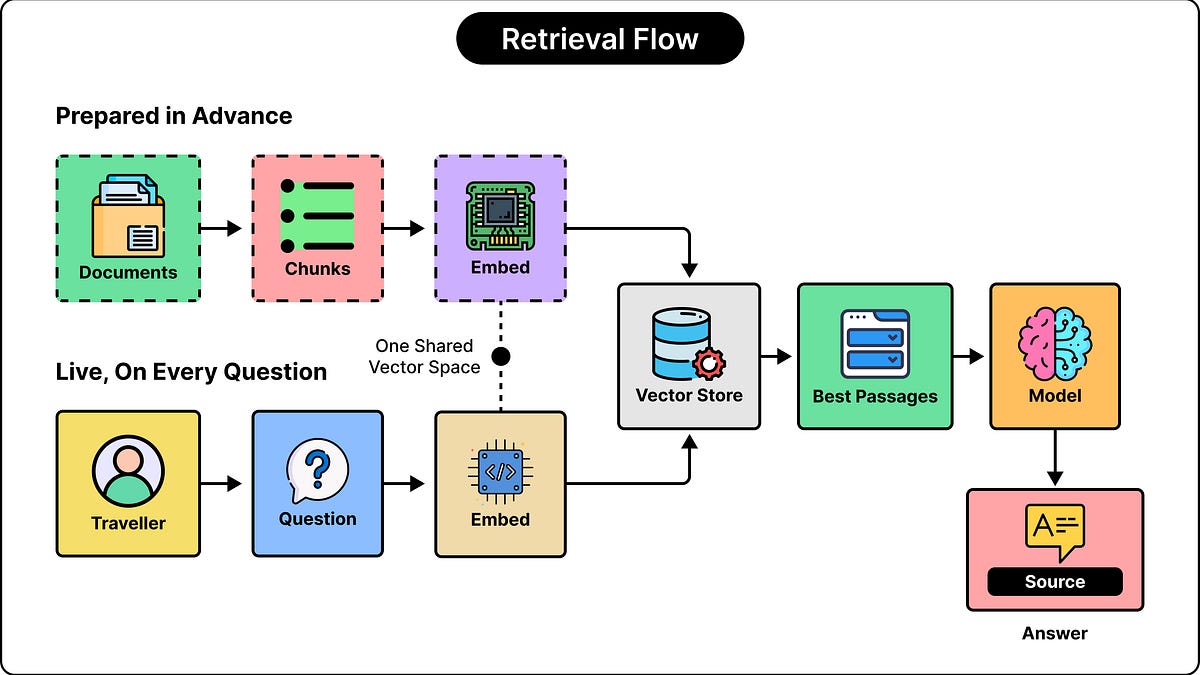
    The post explains how retrieval‑augmented generation (RAG) lets LLM‑based assistants answer questions from private corpora. It covers chunking documents into passages, embedding queries and chunks, similarity metrics, and the trade‑offs of different vector indexes (flat, IVF, HNSW). The focus is on practical design choices rather than new research.

    ByteByteGobytebytego.com12 min
  6. Shared Selective Persistent Memory for Agentic LLM Systems

    Apple proposes a memory architecture for agentic LLMs that selectively persists reusable context (specs, schemas, configs, constraints) across sessions and users. Shared workspaces with role‑based access and a zero‑token data‑refresh mechanism cut token usage by 97×, reduce task time by 14×, and raise task‑completion rates to 96% versus 71%‑79% for baselines.

    Apple Machine Learning Researchapple.com1 minpaper