proomt

Search

Search posts, papers, and topics

All posts

Apple Machine Learning Research1 min readpaperadvanced

Shared Selective Persistent Memory for Agentic LLM Systems

Summary

Apple proposes a memory architecture for agentic LLMs that selectively persists reusable context (specs, schemas, configs, constraints) across sessions and users. Shared workspaces with role‑based access and a zero‑token data‑refresh mechanism cut token usage by 97×, reduce task time by 14×, and raise task‑completion rates to 96% versus 71%‑79% for baselines.

  • Selective persistent memory stores only four reusable context categories—task specifications, data schemas, tool configurations, and output constraints—while discarding session‑specific reasoning traces.
  • Memory is shared across users via role‑based access, enabling collaborative reuse of context without re‑specifying it for each session.
  • A zero‑token data‑refresh mechanism decouples generated code from runtime data, allowing artifacts to be updated without re‑invoking the LLM.
  • In three enterprise deployments, the approach achieved 96% task completion (vs. 79% without memory, 71% with full‑history persistence).

Agentic LLM workflows suffer from context bloat and repeated specification overhead. By persisting only high‑value context and sharing it across users, the system dramatically improves efficiency and reliability, making LLM‑driven code generation viable for larger, collaborative, production‑grade e…

8/10
Related reading

  1. Do LLMs Have the Memory of a Goldfish?

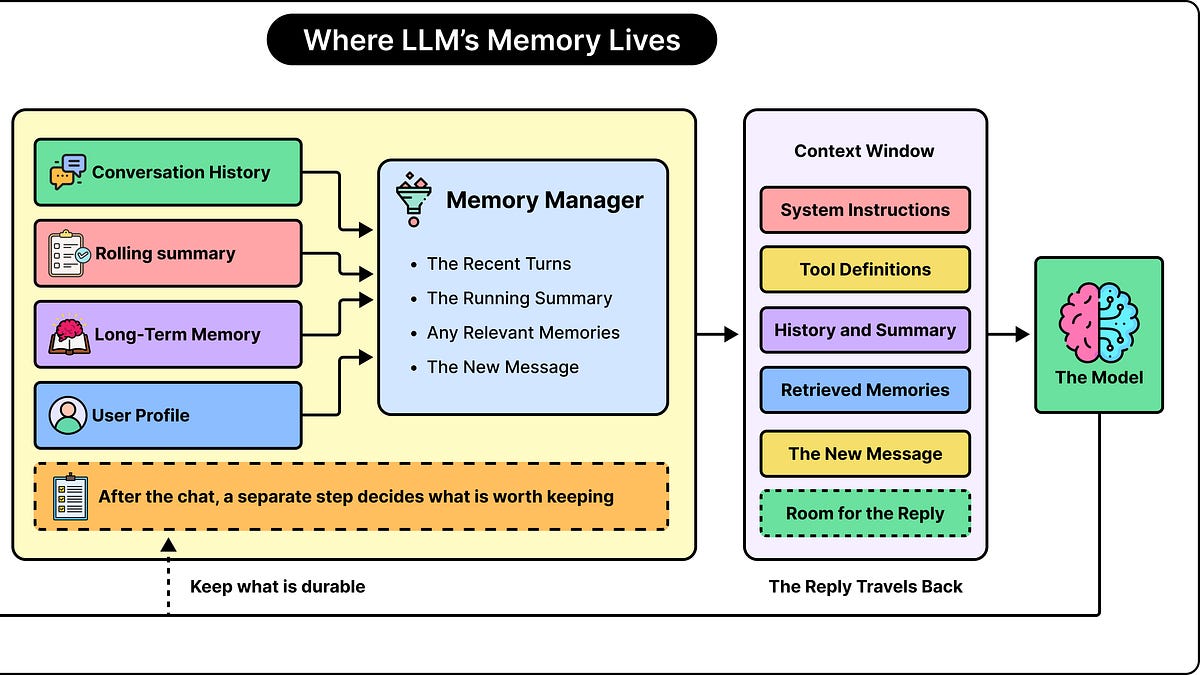
    The article explains that LLMs don’t have persistent personal memory; all “memory” is supplied by the surrounding application via the context window, summaries, or external storage. It outlines the distinction between trained weights, working‑memory (token context), and persistent application memory, shows how to construct API calls to preserve conversation state, and discusses the cost and laten…

    ByteByteGobytebytego.com12 min
  2. SiliconBench: Speed, Memory, and Fidelity for LLM Serving on Unified-Memory Desktops

    SiliconBench benchmarks nine Apple‑Silicon LLM serving engines on unified‑memory desktops, measuring speed, memory usage, and output fidelity across Qwen3, Qwen3.5, and Gemma‑4 models. It finds vllm‑metal doubles throughput at modest concurrency, memory budgets often fail to preserve headroom, and only three stacks satisfy all fidelity and model‑coverage requirements, with tensor‑parallel scaling…

    Hugging Face Daily Papersarxiv.org1 minpaper
  3. Designer-RSI: Evolving Procedural Memory from User Traffic for Agentic Graphic Design

    The paper introduces Designer‑RSI, a continual‑adaptation system that couples a frozen design‑software‑controlling LLM with an external procedural memory of natural‑language design skills. Over five adaptation rounds on real user briefs, the memory grows from 76 to 139 procedures and lifts execution success from 72.7% to 99.3%, showing that skill accumulation and selective replay can dramatically…

    Hugging Face Daily Papersarxiv.org1 minpaper
  4. M5 Ultra Mac Studio Review

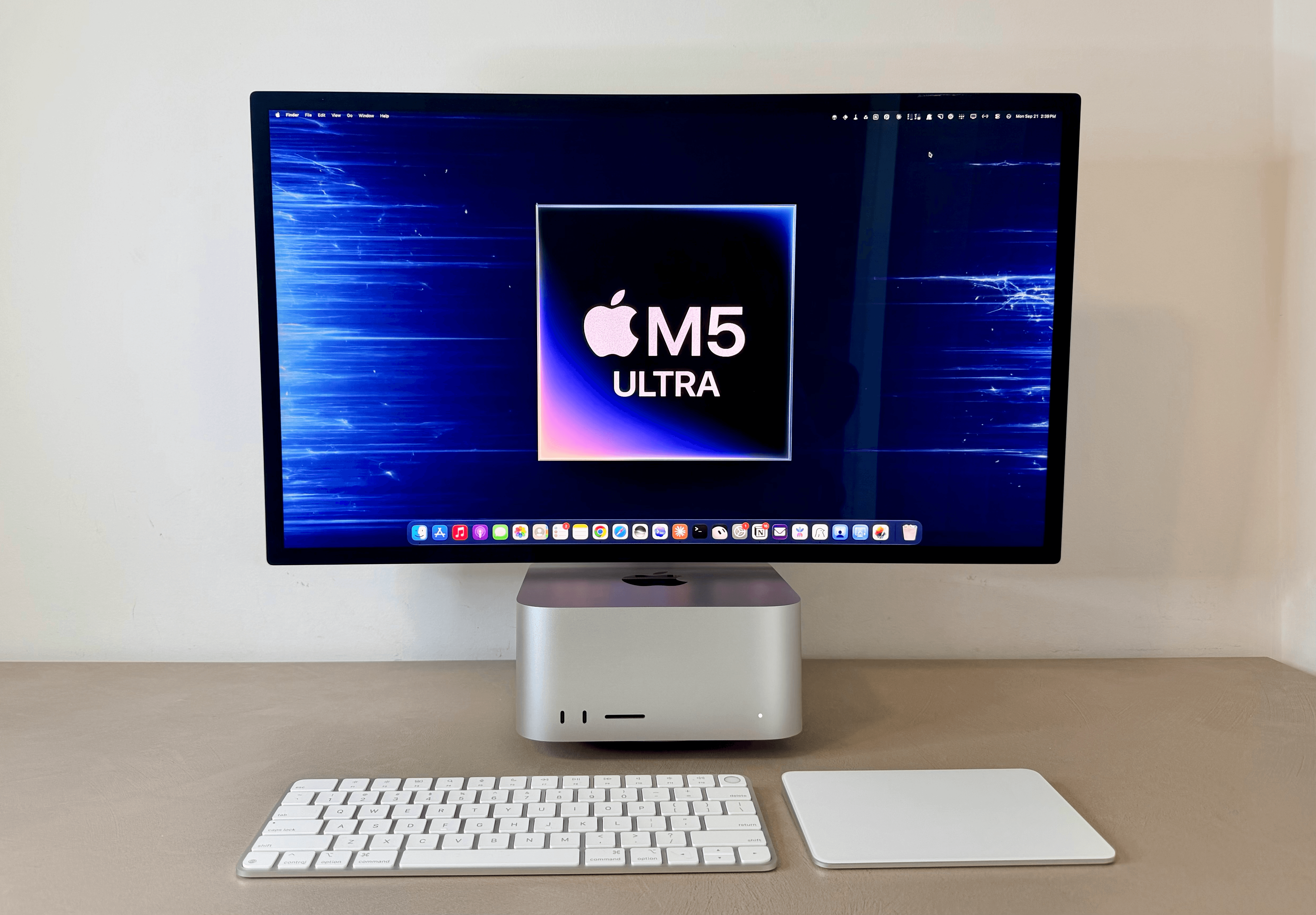
    The M5 Ultra Mac Studio (256 GB RAM) uses a quad‑die M5 Max architecture with an 80‑core GPU and 1.2 TB/s memory bandwidth, delivering ~70 % faster prompt‑to‑first‑token and token‑generation rates than the M3 Ultra. In the author’s tests Qwen3.8‑Flash‑Next hits 100 tokens/s on short prompts and 60‑85 tokens/s with 64‑256 KB context, making local AI agents (Open Minis, Hermes, Codex) feel snappy a…

    Hacker News front pagemacstories.net39 minHN191174
  5. Building Deterministic Multi-Agent State Machines in TypeScript

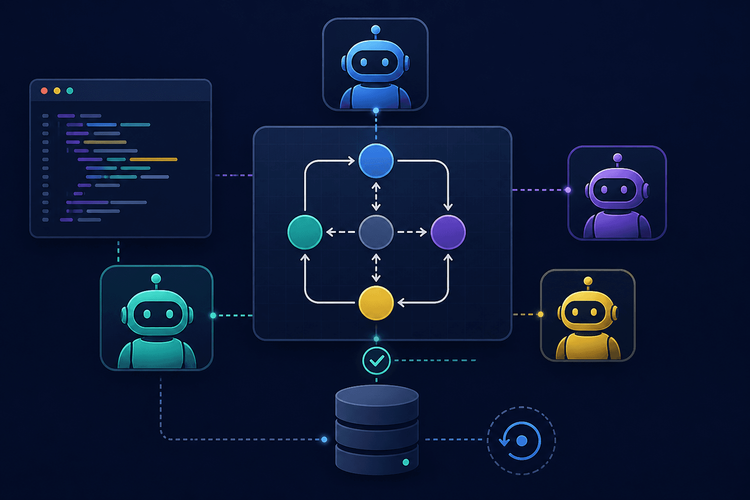
    The article shows how to build a deterministic, checkpoint‑backed finite state machine engine in TypeScript for orchestrating multi‑agent AI workflows. It uses Zod for schema validation, better‑sqlite3 for atomic persistence, and a pure transition function to make workflows traceable and recoverable in serverless environments.

    SitePointsitepoint.com18 min
  6. RecreationWorld: Scalable and Verifiable Environments for Hybrid Computer-Use Agents

    The paper presents RecreationWorld, a five‑platform framework that lets hybrid computer‑use agents learn by recreating the behavior of a running reference, and introduces RecreationBench, a 250‑task benchmark with programmatic and visual assertions. Experiments show GPT‑6 Astra reaches 58.1% overall but struggles with deeper programmatic tests, highlighting gaps in current agents.

    Hugging Face Daily Papersarxiv.org2 minpaper