Related reading
September 16, 2026 security incident: how we responded to a LiteSpeed zero-day attack
Hostinger detected a zero‑day exploit in LiteSpeed Web Server on a Brazil server on Sep 16 2026, giving the attacker root access and compromising 399 accounts. The team isolated the server, coordinated with LiteSpeed to patch the vulnerability, rolled out the fix fleet‑wide, and restored affected sites from backups within the same day.
Hostingerhostinger.com2 minpostmortemCan we stop with the uptime percentages?
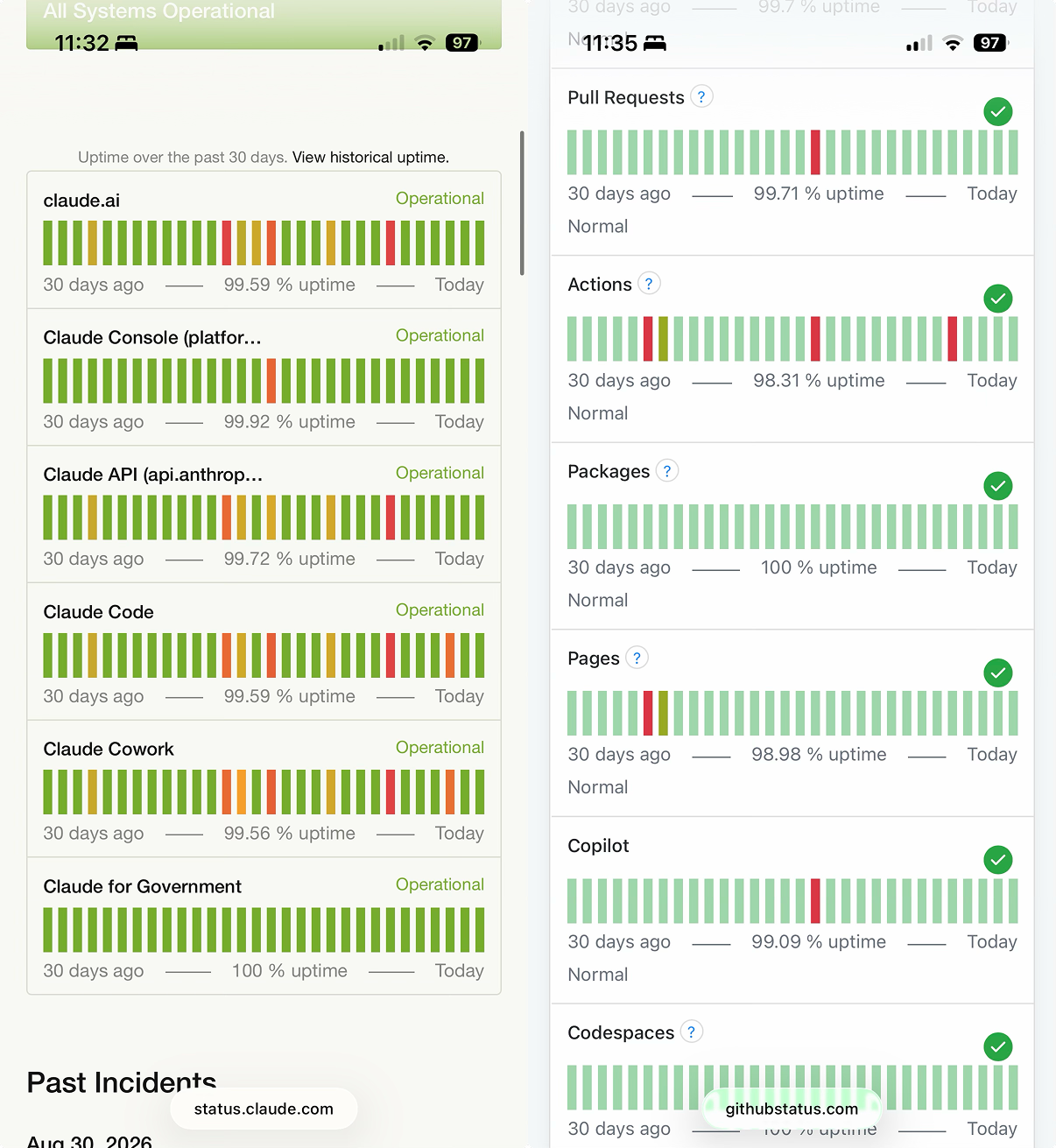
This article argues that uptime percentages are a poor public interface for communicating service reliability because their non-linear nature is not intuitive to non-infrastructure people. It proposes showing absolute downtime (e.g., hours affected) alongside percentages for better clarity for a general audience.
Hacker News front pagejim-nielsen.com2 minHN144112The Weakest Leg
A life insurance company, TruStage, suffered a severe cybersecurity incident in July 2026, leading to months-long operational paralysis, inability to process payments, and policy lapses. This failure cascaded through its partner network, culminating in a public humiliation of a partner's representative at an industry conference.
The Daily WTFthedailywtf.com4 minTeleAntiFraud 2.0: A Refreshable, Profile-Grounded, and Audio-Based Benchmark for Telecom Fraud Detection
The paper introduces TeleAntiFraud 2.0, a monthly refreshed, frozen audio benchmark of 900 Chinese telecom calls (600 fraud, 300 near‑domain non‑fraud) built with a Mixed‑Tree generation pipeline. Experiments show models that score perfectly on unrelated negatives fall to ~0.66 Macro‑F1 on near‑domain cases, exposing shortcut learning and prediction collapse.
Hugging Face Daily Papersarxiv.org1 minpaper