proomt

Search

Search posts, papers, and topics

All posts

Freek Van der Herten1 min readintermediate
We Became Editors-in-Chief, and Nobody Trained Us

Summary

This essay argues that AI-assisted development is transforming engineers into full-time reviewers, evaluating AI-generated diffs instead of writing code. This shift introduces new cognitive fatigue and may exacerbate the skill gap between senior and junior engineers.

  • AI-assisted development shifts the primary engineering task from writing code to reviewing AI-generated diffs.
  • This new role as 'editor-in-chief' can lead to a distinct form of cognitive fatigue.
  • The change in workflow may widen the existing gap between senior and junior engineers.

Engineers and engineering leaders should consider how AI tools are fundamentally changing daily work, impacting productivity, skill development, and team dynamics.

4/10
Related reading

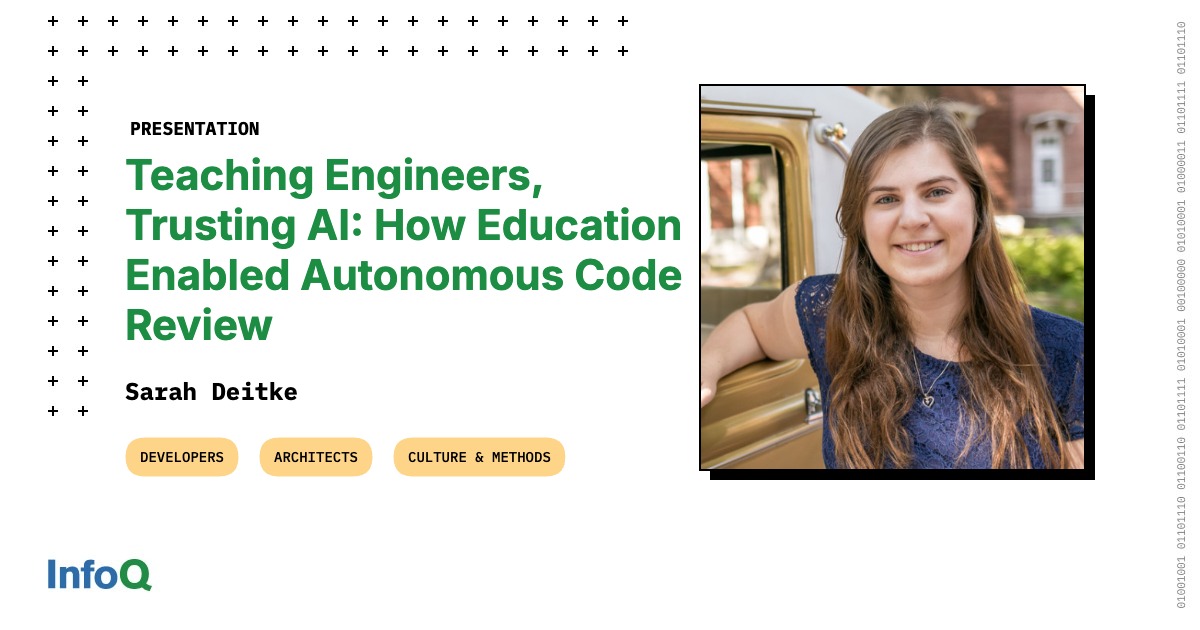
  1. Presentation: Teaching Engineers, Trusting AI: How Education Enabled Autonomous Code Review

    Duolingo’s DevEx AI team built a program of AI‑literacy workshops, observability dashboards, office‑hours, and vendor partnerships to get engineers comfortable with LLM‑based tools. With that foundation they launched a PR‑risk‑assessment bot that auto‑approves low‑risk pull requests, cutting review bottlenecks while keeping defect rates flat.

    InfoQinfoq.com24 mintalk
  2. Everybody's Lost Their Minds

    The author argues that the AI hype wave is draining engineering resources without improving security, and that basic practices like inventory and automated patching are far more valuable. He warns that over‑reliance on AI‑generated code erodes understanding and makes debugging harder.

    Lobstersnetmeister.org6 minHN368338lobste.rs193
  3. From Individual Experiments to a Shared AI Practice: How Avant Scaled AI-Assisted Engineering

    Avant replaced many personal AI‑assistant setups with a single, organization‑wide Claude Code configuration that embeds the company’s coding standards, project‑tracking links, and documentation. Treated as an internal product, the setup is versioned, owned by delivery engineers, and iteratively improved. The shared tool speeds routine tasks (scaffolding, tests, migrations, docs) and enforces cons…

    Moove-itqubika.com2 min
  4. Should you read the code, is RAG dead, and did Skills kill MCP?

    The article debunks five common AI‑tool hot takes, arguing you still must read AI‑generated code, AI fluency matters in hiring, MCP and Skills serve different purposes, RAG remains useful, and needing fine‑tuning signals a messy codebase. It offers concrete rules for reviewing generated code and integrating AI components responsibly.

    GitHub Oldgithub.blog5 minHN3
  5. Agentic Skill Decay

    Addy Osmani warns that AI agents can short‑circuit the hands‑on practice (“reps”) that builds deep expertise and judgment. He recommends deliberately inserting hypothesis‑forming, “why” questioning, diff inspection, failure prediction, and occasional manual coding into the workflow, especially for junior engineers. A 2026 Anthropic study showed junior developers using AI scored 17 % lower on a fo…

    Addy Osmaniaddyosmani.com16 min
  6. Quoting voxium

    A new engineer observes that a big company's reliance on AI for all artifacts (code, specs, tickets) leads to human bottlenecks. Despite AI generating everything, engineers work long hours because nobody understands the output, making the team slow.

    Simon Willisonsimonwillison.net1 min