proomt

Search

Search posts, papers, and topics

All posts

Google Cloud BlogAndrés Lagar-Cavilla4 min readintermediate
Changing the game: How Google uses agentic AI to secure hundreds of millions of lines of code

Summary

Google’s AI & Infrastructure team built an agentic pipeline (Mantis) that runs pre‑submit AI‑driven scans on every code check‑in, validates findings with a fast triage agent (AST + call‑graph analysis) achieving >92% precision in <1 min, then auto‑generates fixes via a bug‑fix agent. Localized threat models and a two‑step scan cut false‑positives to ~3% and prevent hundreds of vulnerabilities eac…

  • Pre‑submit AI scanning replaces slow, one‑off scans; it runs on each check‑in with low latency.
  • Mantis harness ties AI agents to live, package‑level threat models and call‑graph metadata, boosting precision.
  • A lightweight triage agent validates AI findings using deterministic AST and domain rules, achieving >92% precision in under a minute.
  • An automated bug‑fix agent creates code fixes that are submitted for human review, closing the detection‑to‑remediation loop.

Embedding AI‑driven, continuous security checks into the SDLC catches bugs before they ship, dramatically reducing exposure risk at scale (hundreds of millions of LOC) while keeping developer velocity high.

6/10
Related reading

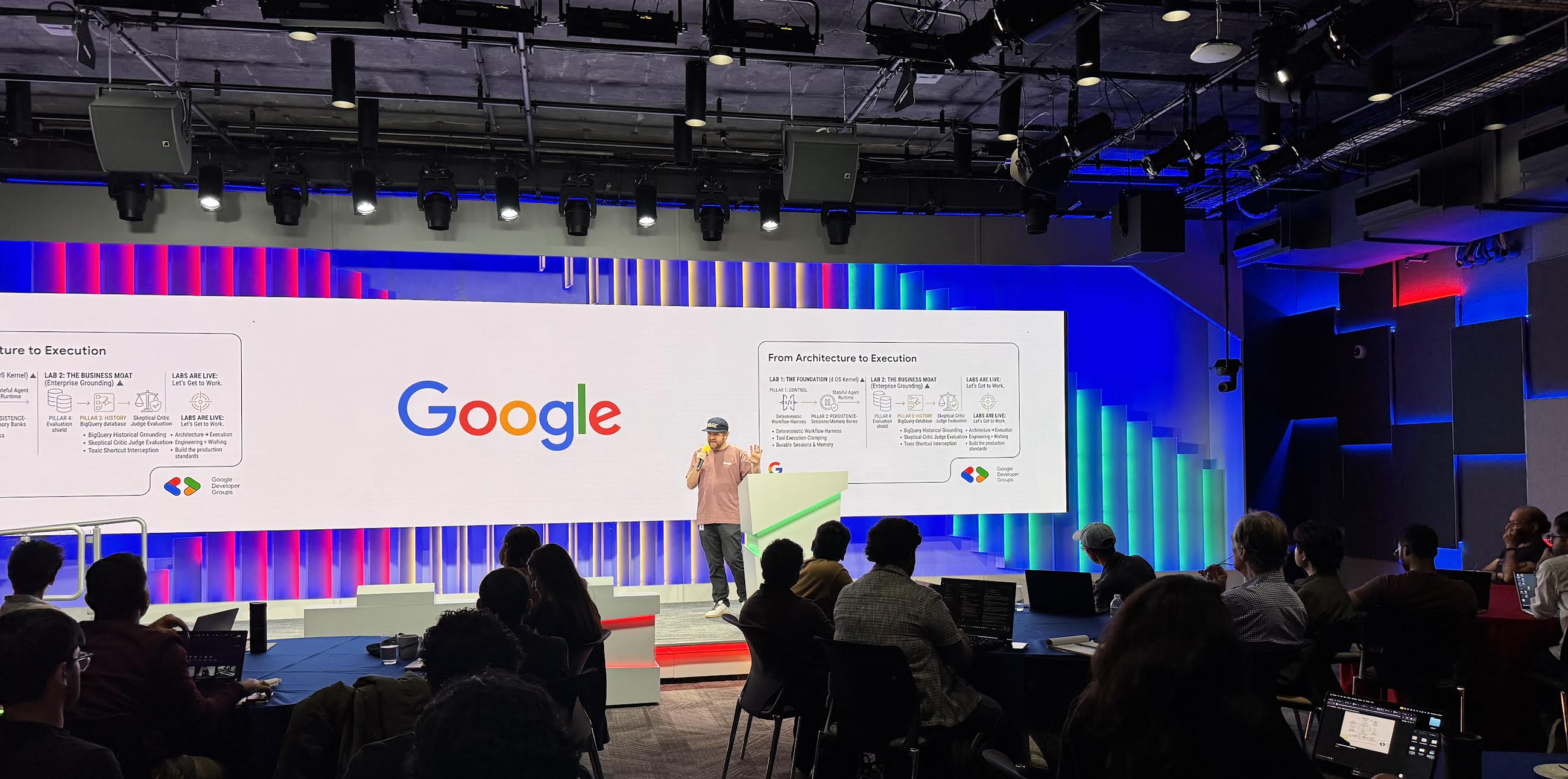
  1. The DevFest Community Workshop Experience: Building Real Agents Together

    Google’s DevFest Community Workshop introduced a “Workbench” format that emphasizes architectural mental models over copy‑paste code, guiding engineers to build long‑running, self‑evolving multi‑agent systems with the Agent Development Kit and Gemini Enterprise platforms. Attendees learned state‑separation, workflow pausing, and self‑patching pipelines, and the series will continue in five more c…

    Google Cloud Bloggoogle.com2 min
  2. Agentic coding in the enterprise: Is your pipeline ready?

    Agentic coding lets AI agents write, test, and submit code autonomously, shifting the bottleneck from writing to governing code in production. Enterprises face rising failures, unclear ownership, growing costs, and weakened controls, which require a unified pipeline visibility layer.

    Codeshipcloudbees.com6 min
  3. Agent Anomaly Detection, now in Private Preview on the Gemini Enterprise Agent Platform

    Google’s Gemini Enterprise Agent Platform now offers a private‑preview Agent Anomaly Detection service that asynchronously analyzes agents’ OpenTelemetry traces and logs to flag risky behavior (e.g., tool misuse, privilege abuse) without adding latency, surfacing findings in Security Command Center and via an API for automated mitigation.

    Google Developersgoogleblog.com4 min
  4. Towards Self-Driving Codebases

    The post argues that AI agents could eventually handle low‑level engineering tasks—bug fixing, debugging, UI consistency, growth experiments—if the dev toolchain is made “agent‑legible”. It outlines missing primitives (global memory, code‑base rot prevention, better dev environments) and proposes a bootstrapping process to measure and improve a repo’s “agent readiness”. The piece is largely specu…

    Hacker News front pagedetail.dev9 minHN12099
  5. Reimagining service delivery in the agentic era with Google Public Sector

    Google Public Sector’s blog post outlines how several U.S. state and local agencies are using Google Cloud’s AI services (BigQuery, Gemini, document‑analysis models) to replace manual data‑entry pipelines, consolidate data silos, and accelerate specific projects. Reported outcomes include mapping 52 k parcels in <1 yr vs. a 33.5‑yr estimate (UT DOT), $1.3 M cost savings for real‑time translation…

    Google Cloud Bloggoogle.com4 min
  6. Cloud CISO Perspectives: How Google monitors AI threats and advances AI defenses

    Google’s Threat Intelligence team outlines three AI‑driven shifts—software build changes, expanded attack surface, and enhanced threat capabilities—then describes their multi‑model, graph‑based defense stack (AI Threat Tracker, in‑editor “spellcheck”, Wiz Security Graph, Gemini‑powered AI Threat Defense) and concrete threat examples like supply‑chain poisoning, LLMJacking, and AI‑orchestrated cre…

    Google Cloud Bloggoogle.com11 min