proomt

Search

Search posts, papers, and topics

Google Cloud Blog

18 posts

  1. Announcing Native BM25 Ranking in AlloyDB and Cloud SQL

    Google Cloud adds native BM25 ranking to AlloyDB and Cloud SQL (PostgreSQL 17+) via the open‑source pg_textsearch extension, letting you run keyword‑based full‑text search inside the database. This removes the need for a separate search backend and, on AlloyDB, speeds up vector queries up to 10×.

    Google Cloud Bloggoogle.com2 min
  2. How to upskill enterprise AI builders by using daily micro habits

    Google Cloud Consulting proposes a four‑pillar micro‑learning framework for enterprise AI upskilling: 5‑minute browser‑based exercises, pre‑configured sandboxes, daily streaks, and delivering runnable code each session. A pilot (Advent of Agents) showed >150k participants, 859k code runs, and a 31% daily return rate, suggesting short, frictionless tasks improve engagement versus traditional bootc…

    Google Cloud Bloggoogle.com3 min
  3. Accelerating the borderless Lakehouse: Announcing preview of cross-cloud caching

    Google Cloud previewed cross‑cloud caching for its Borderless Lakehouse. The feature caches sub‑file Parquet blocks in Google Cloud, encrypts them with GMEK, isolates cache per tenant/region, and validates freshness via metadata checks. In tests it can reduce cross‑cloud data transfer to <5% of the original size, lowering query latency and cost for Iceberg tables stored in other clouds. BigQuery…

    Google Cloud Bloggoogle.com3 minrelease
  4. Changing the game: How Google uses agentic AI to secure hundreds of millions of lines of code

    Google’s AI & Infrastructure team built an agentic pipeline (Mantis) that runs pre‑submit AI‑driven scans on every code check‑in, validates findings with a fast triage agent (AST + call‑graph analysis) achieving >92% precision in <1 min, then auto‑generates fixes via a bug‑fix agent. Localized threat models and a two‑step scan cut false‑positives to ~3% and prevent hundreds of vulnerabilities eac…

    Google Cloud Bloggoogle.com4 min
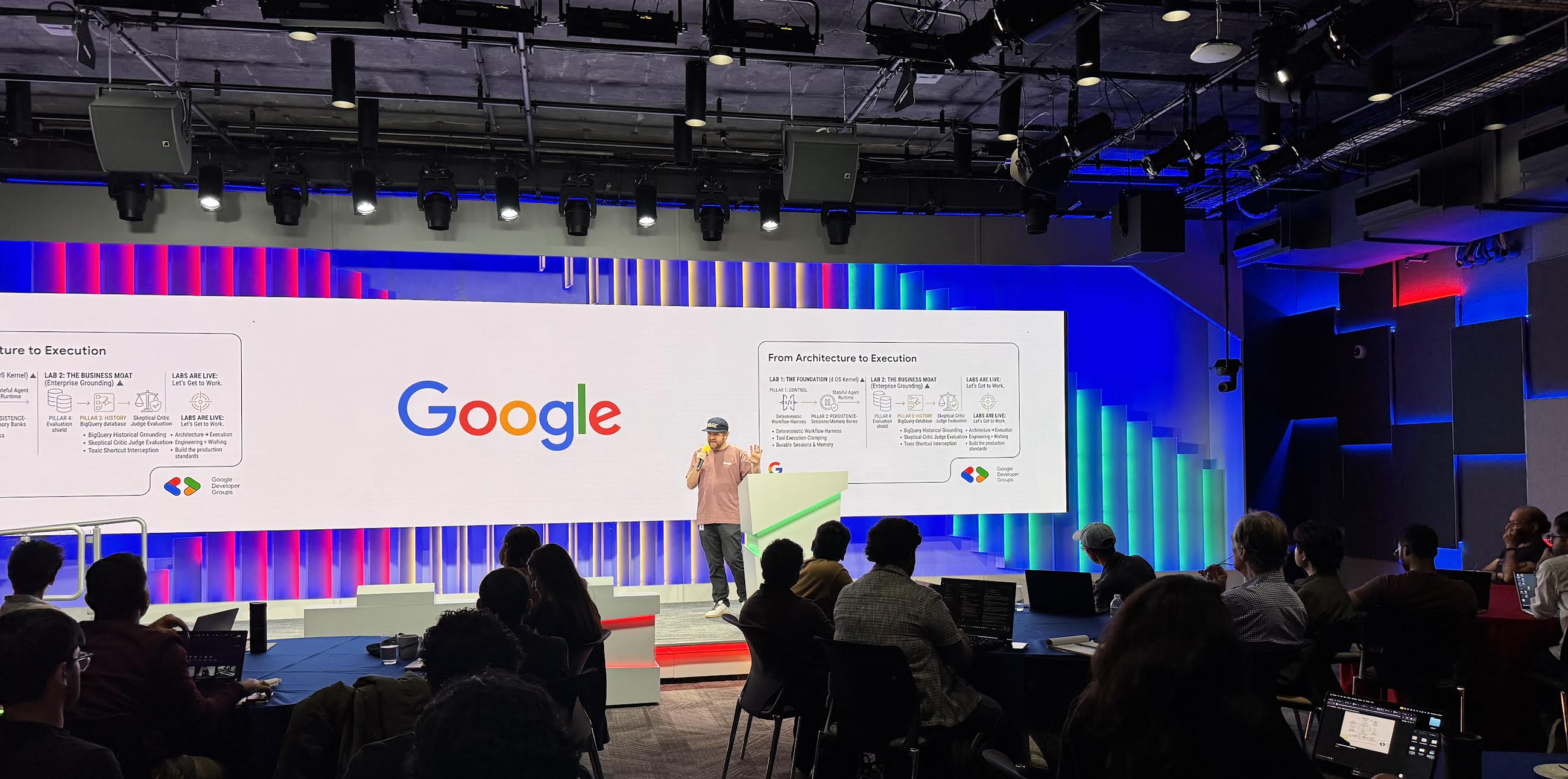
  5. The DevFest Community Workshop Experience: Building Real Agents Together

    Google’s DevFest Community Workshop introduced a “Workbench” format that emphasizes architectural mental models over copy‑paste code, guiding engineers to build long‑running, self‑evolving multi‑agent systems with the Agent Development Kit and Gemini Enterprise platforms. Attendees learned state‑separation, workflow pausing, and self‑patching pipelines, and the series will continue in five more c…

    Google Cloud Bloggoogle.com2 min
  6. Reimagining service delivery in the agentic era with Google Public Sector

    Google Public Sector’s blog post outlines how several U.S. state and local agencies are using Google Cloud’s AI services (BigQuery, Gemini, document‑analysis models) to replace manual data‑entry pipelines, consolidate data silos, and accelerate specific projects. Reported outcomes include mapping 52 k parcels in <1 yr vs. a 33.5‑yr estimate (UT DOT), $1.3 M cost savings for real‑time translation…

    Google Cloud Bloggoogle.com4 min
  7. For SeaVerse, GKE Agent Sandbox reduces infrastructure costs by 60%

    SeaVerse uses GKE Agent Sandbox (Kata Containers + Cloudhypervisor or gVisor) to run isolated AI sandboxes at scale, achieving 300 allocations / s per cluster (90% ≤ 200 ms) and cutting infrastructure spend by up to 60% via flexible VM sizing and per‑sandbox persistent storage, while gaining native Cloud observability.

    Google Cloud Bloggoogle.com5 min
  8. How Orange uses agents to make FinOps everyone's responsibility

    Orange created a FinOps Community of Practice and runs ‘Clean Days’—protected, gamified sessions that get engineers actively optimizing cloud spend. They then scale this culture with AI agents that surface cost data, suggest quick‑win fixes, and automate reporting, extending responsibility across thousands of engineers.

    Google Cloud Bloggoogle.com4 min
  9. Cloud CISO Perspectives: How Google monitors AI threats and advances AI defenses

    Google’s Threat Intelligence team outlines three AI‑driven shifts—software build changes, expanded attack surface, and enhanced threat capabilities—then describes their multi‑model, graph‑based defense stack (AI Threat Tracker, in‑editor “spellcheck”, Wiz Security Graph, Gemini‑powered AI Threat Defense) and concrete threat examples like supply‑chain poisoning, LLMJacking, and AI‑orchestrated cre…

    Google Cloud Bloggoogle.com11 min
  10. M4N VM family, now GA: Highest per-core IOPS and throughput for I/O and memory-bound workloads

    Google Cloud’s GA‑available M4N VM family pairs 5th‑gen Intel Xeon CPUs with Google’s custom Titanium offload to deliver up to 1 M IOPS, 25 GiB/s block‑storage throughput, 400 Gbps VM‑to‑VM bandwidth, and a 26 GB/vCPU memory ratio (up to 5.9 TiB RAM). The design targets memory‑bound, I/O‑intensive workloads (Oracle, SAP HANA, vector search, real‑time analytics) and claims >20 % TCO reduction for…

    Google Cloud Bloggoogle.com5 min
  11. Introducing Filestore agent volumes: fully managed storage for agent workspaces

    Google Cloud adds Filestore agent volumes, a fully‑managed, elastic file‑system that automatically provisions isolated POSIX workspaces for GKE‑based AI agent sandboxes. Volumes attach in milliseconds, support RWX with file‑level locking, and charge only for used capacity with automatic tiering, aiming to cut cold‑start latency and storage waste for large‑scale agent fleets.

    Google Cloud Bloggoogle.com4 min
  12. Scaling Telco Autonomy: Leveraging GNNs with Distributed GraphFlow

    Google Cloud’s blog introduces Distributed GraphFlow (DGF), an open‑source Python library for building and scaling Graph Neural Networks (GNNs) on a Spanner‑backed digital twin of telecom networks. The post outlines the three‑layer architecture (digital twin on Spanner Graph, ML layer with DGF, AI agents) and highlights DGF’s high‑level API (5‑line example) and low‑level primitives, but provides…

    Google Cloud Bloggoogle.com3 min
  13. Agent Substrate brings high-density, scalable, trusted infrastructure to GKE

    Agent Substrate is an open‑source runtime for AI agents that runs on GKE. It uses Cloud Hypervisor microVMs or gVisor sandboxes to give kernel‑level isolation, a custom control‑ and data‑plane that can suspend/resume agents in <500 ms, and a “zero‑idle” model that packs >1 000 dormant agents per host (≈10× density vs. containers). GKE integration adds custom ComputeClasses, spot/on‑demand pools,…

    Google Cloud Bloggoogle.com6 min
  14. Best practices for handling cloud reliability incidents

    The article outlines a structured Verify→Investigate→Report→Resolve→Review workflow for GCP reliability incidents and stresses pre‑incident preparation across design, data, playbooks, and training. It lists concrete tools (Cloud Logging, Service Health, Gemini Assist) and reporting steps to help engineers reduce outage impact.

    Google Cloud Bloggoogle.com11 min