Related reading
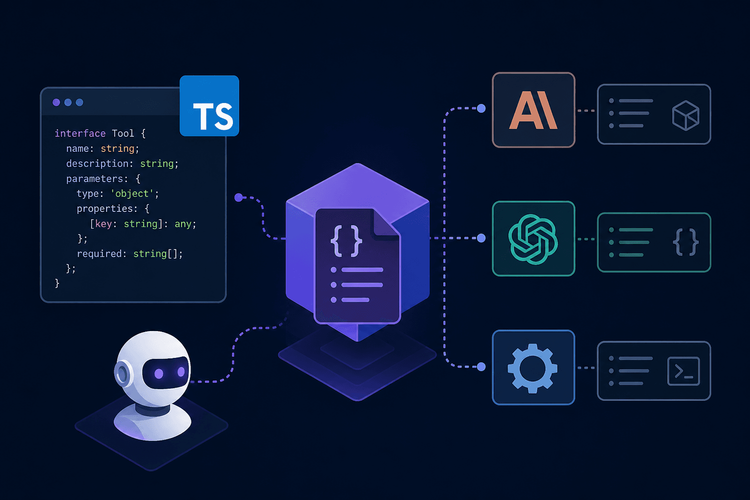
AI Agent Tool Manifests: Building a Unified TypeScript JSON Schema
A vendor‑agnostic JSON Schema manifest for AI agent tools, with a TypeScript adapter layer that compiles the manifest into OpenAI function‑calling and Anthropic Claude formats, plus runtime validation, permission scoping, and execution constraints.
SitePointsitepoint.com15 minSecuring AI Agent Tool Execution with TypeScript AST Sandboxes
The article shows how to protect AI‑generated shell/SQL commands by parsing them with real AST parsers (tree‑sitter for Bash, Babel for JS‑embedded SQL) and enforcing structural allowlists plus command/path whitelists, instead of fragile regex filters.
SitePointsitepoint.com21 minBuild a Typed Context Compaction Gate for AI Agents
A step‑by‑step tutorial showing how to build a typed context‑compaction gate for AI agents in TypeScript using LangChain and Zod. It defines a discriminated‑union schema for keep/summarize/discard actions, implements a fast gpt‑4o‑mini classifier, validates decisions at runtime, and wires the gate as middleware in an agent loop, with testing and production‑grade tuning advice.
SitePointsitepoint.com16 minAI on your terms: Firefox meets you where you are
Firefox adds an AI Controls panel letting users toggle all current and future AI features, pick individual capabilities (translation, alt‑text, tab suggestions, link‑preview key points), and choose from multiple chatbot providers (Claude, ChatGPT, Gemini, Mistral) in a sidebar. The new Smart Window beta integrates an AI assistant that can read open tabs, browsing history, group related tabs, show…
Mozilla Automation Teammozilla.org4 minBuild Your Own AI Agent Harness in C#, the MafClaw Live Series
The post walks .NET developers through using Microsoft Agent Framework's harness to turn a simple IChatClient into a fully‑featured C# AI agent, showing code for tool integration, file sandboxing, approval flows, and memory, then outlines further capabilities like skills and observability.