Related reading
Glean Dictionary + DuckDB
A short post describing how the Mozilla Glean Dictionary JSON can be exported into a DuckDB file via a simple ETL script, enabling SQL queries and notebook‑driven analysis of metric types and growth over time.
Mozilla Automation Teamwrla.ch2 minClickHouse is now available on the dbt platform
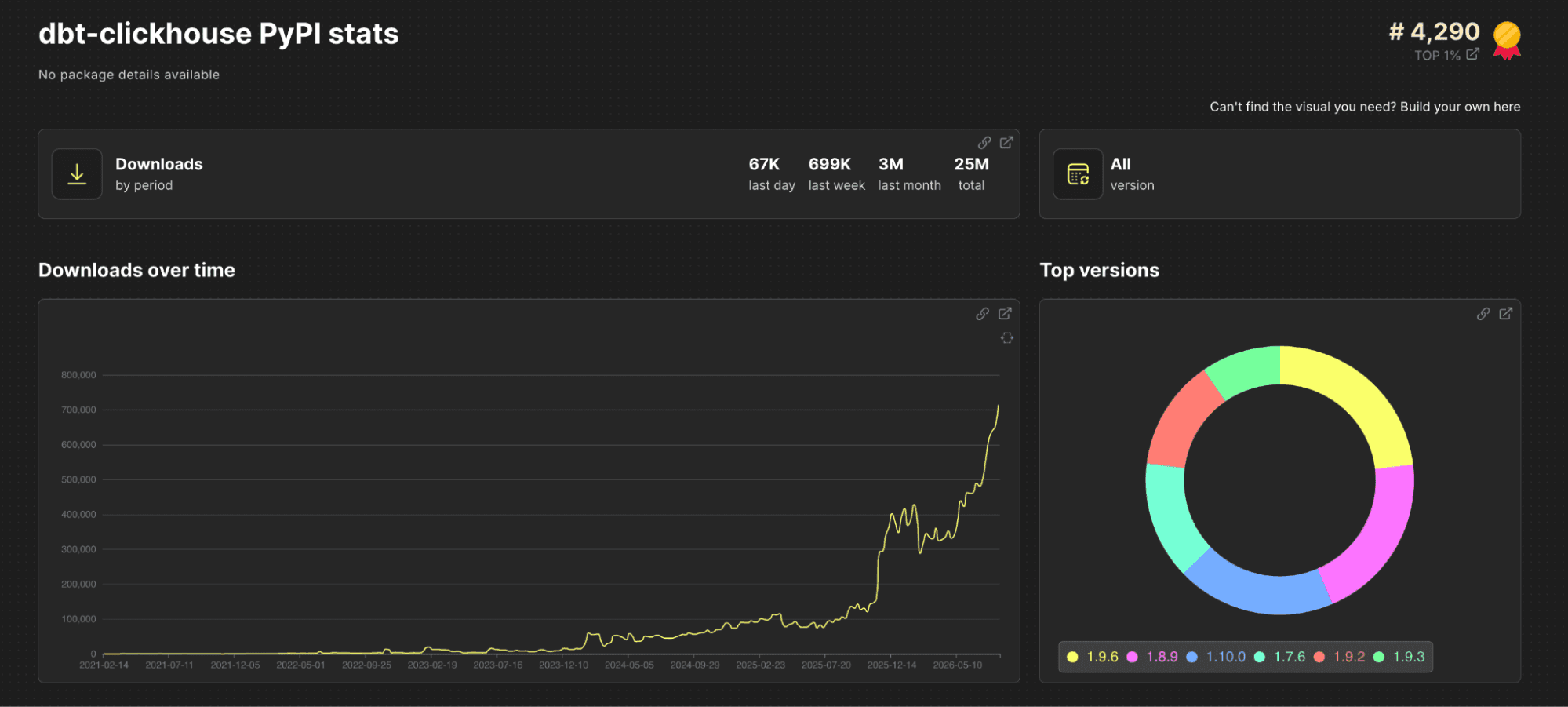
ClickHouse released a public‑beta dbt v2 adapter written in Rust that ships inside the dbt binary and talks to ClickHouse via the new ADBC driver. The adapter promises up to 30× faster dbt parsing and leverages ClickHouse’s sub‑second, high‑concurrency engine (e.g., materialized views, MCP server). A private‑beta integration on the dbt Platform now lets users develop, schedule, and catalog ClickH…
ClickHouseclickhouse.com8 minShared Selective Persistent Memory for Agentic LLM Systems
Apple proposes a memory architecture for agentic LLMs that selectively persists reusable context (specs, schemas, configs, constraints) across sessions and users. Shared workspaces with role‑based access and a zero‑token data‑refresh mechanism cut token usage by 97×, reduce task time by 14×, and raise task‑completion rates to 96% versus 71%‑79% for baselines.
Apple Machine Learning Researchapple.com1 minpaperBuilding Deterministic Multi-Agent State Machines in TypeScript
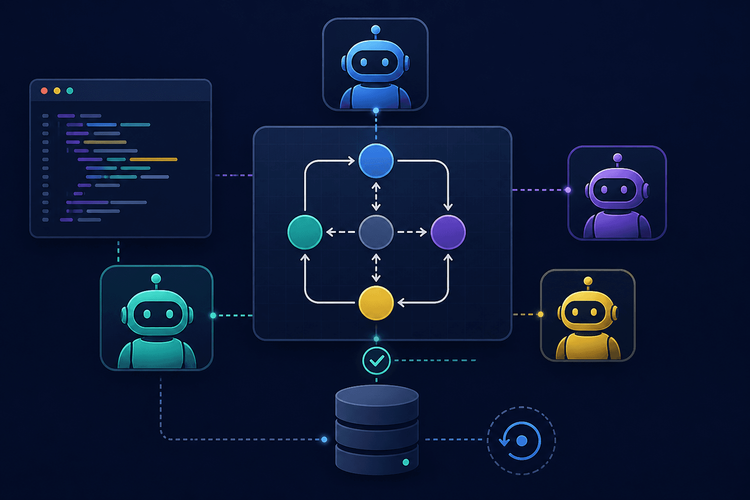
The article shows how to build a deterministic, checkpoint‑backed finite state machine engine in TypeScript for orchestrating multi‑agent AI workflows. It uses Zod for schema validation, better‑sqlite3 for atomic persistence, and a pure transition function to make workflows traceable and recoverable in serverless environments.
SitePointsitepoint.com18 minHow a solo founder runs a five-continent tender platform on AlloyDB and MCP
A solo founder runs a global tender platform using Google Cloud's AlloyDB for PostgreSQL and Model Context Protocol (MCP). This setup consolidated relational data, vector embeddings, and audit logs, reducing semantic search latency by 47x with ScaNN indexing and automating database operations.
Google Cloud Bloggoogle.com4 minHN2