proomt

Search

Search posts, papers, and topics

All posts

Hacker News front page1 min readrelease notesintermediate
Show HN: Drop – a rootless Linux sandbox with gVisor support

Summary

Drop is a root‑less Linux sandbox that runs programs in a user‑namespace with isolated mount, network, IPC and cgroup namespaces. It reuses the host distribution’s binaries (no Docker image), provides disposable per‑project home directories, and is configured via a high‑level TOML file. An optional gVisor integration adds a user‑space kernel layer for extra kernel‑attack surface reduction. Use ca…

  • Root‑less sandbox: runs entirely in a user namespace, no sudo required, drops namespace capabilities before exec.
  • No container image: leverages the host’s existing packages, so any installed binary is immediately available inside the sandbox.
  • Disposable environments get their own home directory; the real home is hidden, similar to Python virtualenv.
  • Configuration via TOML lets you whitelist files, directories, and local network services per sandbox; a base config can be shared across environments.

Running untrusted code (e.g., AI coding agents, supply‑chain‑compromised packages) on a developer workstation traditionally requires heavyweight containers or VMs, which add friction and overhead. Drop offers a lightweight, root‑less alternative that integrates with the existing OS, reducing setup…

5/10

Related reading

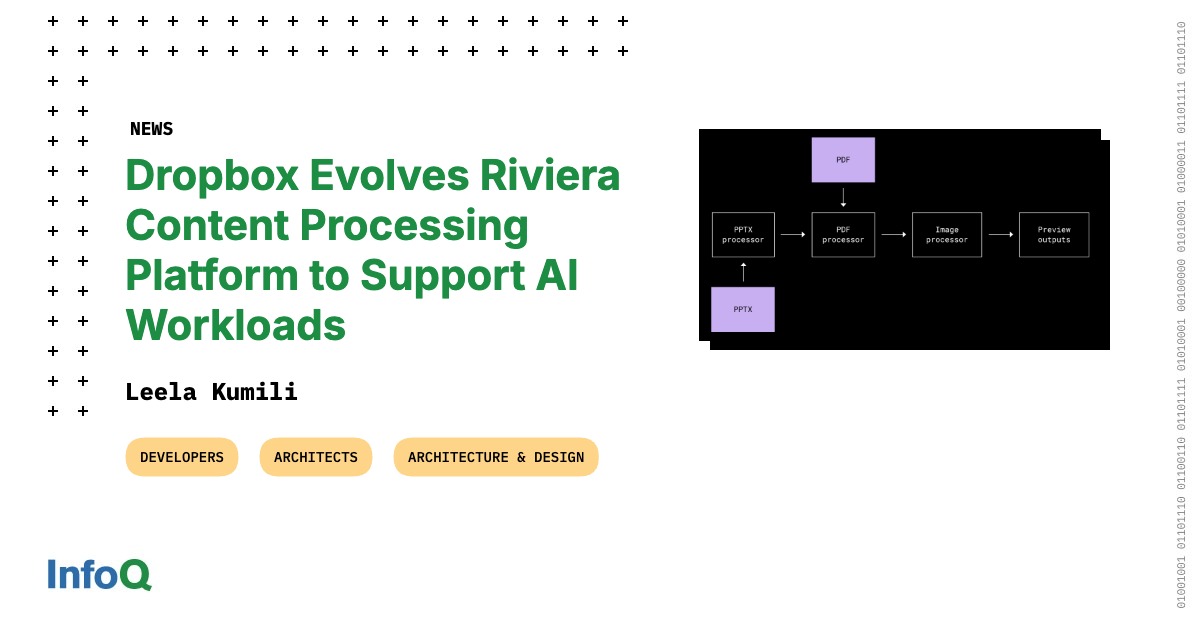
  1. Dropbox Evolves Riviera Content Processing Platform to Support AI Workloads

    Dropbox’s Riviera platform has been expanded from a preview service into a universal, composable content‑processing system that now handles hundreds of thousands of transformations per second across 300+ file types. The architecture separates orchestration from execution, adds a plugin model, and offers async public APIs so internal and external AI workloads can reuse cached transformations.

    InfoQinfoq.com2 min
  2. For SeaVerse, GKE Agent Sandbox reduces infrastructure costs by 60%

    SeaVerse uses GKE Agent Sandbox (Kata Containers + Cloudhypervisor or gVisor) to run isolated AI sandboxes at scale, achieving 300 allocations / s per cluster (90% ≤ 200 ms) and cutting infrastructure spend by up to 60% via flexible VM sizing and per‑sandbox persistent storage, while gaining native Cloud observability.

    Google Cloud Bloggoogle.com5 min
  3. Introducing Our New Dropbox API Documentation

    Dropbox launched a revamped API documentation site with interactive request testing, an embedded AI assistant, and a new Model Context Protocol for connecting external AI tools. The UI is unified, searchable, and includes full request/response schemas.

    Dropboxdropbox.tech2 min