proomt

Search

Search posts, papers, and topics

All posts

RenderHazal Mestci3 min readintermediate

Stripe: An orchestration layer, not a platform

Summary

Stripe Projects is an orchestration layer that lets developers provision accounts, services, and resources across multiple SaaS providers via a single CLI, using a shared payment token to centralize billing. It abstracts three core objects—account, service, resource—and defines a simple lifecycle for provisioning, credential rotation, and de‑provisioning.

  • Stripe Projects models provisioning around three objects (account, service, resource) with a uniform API for all providers.
  • A shared payment token lets developers enter payment details once and have each provider bill against its own token, with per‑provider spend limits.
  • Providers implement three endpoints (account creation, service catalog, resource lifecycle) and can expose usage‑based, flat, or hybrid pricing.
  • The CLI pulls provider catalogs, creates resources, and returns credentials, enabling agents like Claude to automate full stack deployment.

SaaS engineers and devops teams should care because it reduces the friction of multi‑provider onboarding and centralizes billing, speeding up early‑stage product development.

6/10
Related reading

  1. SaaS platforms are surging despite the SaaSpocalypse

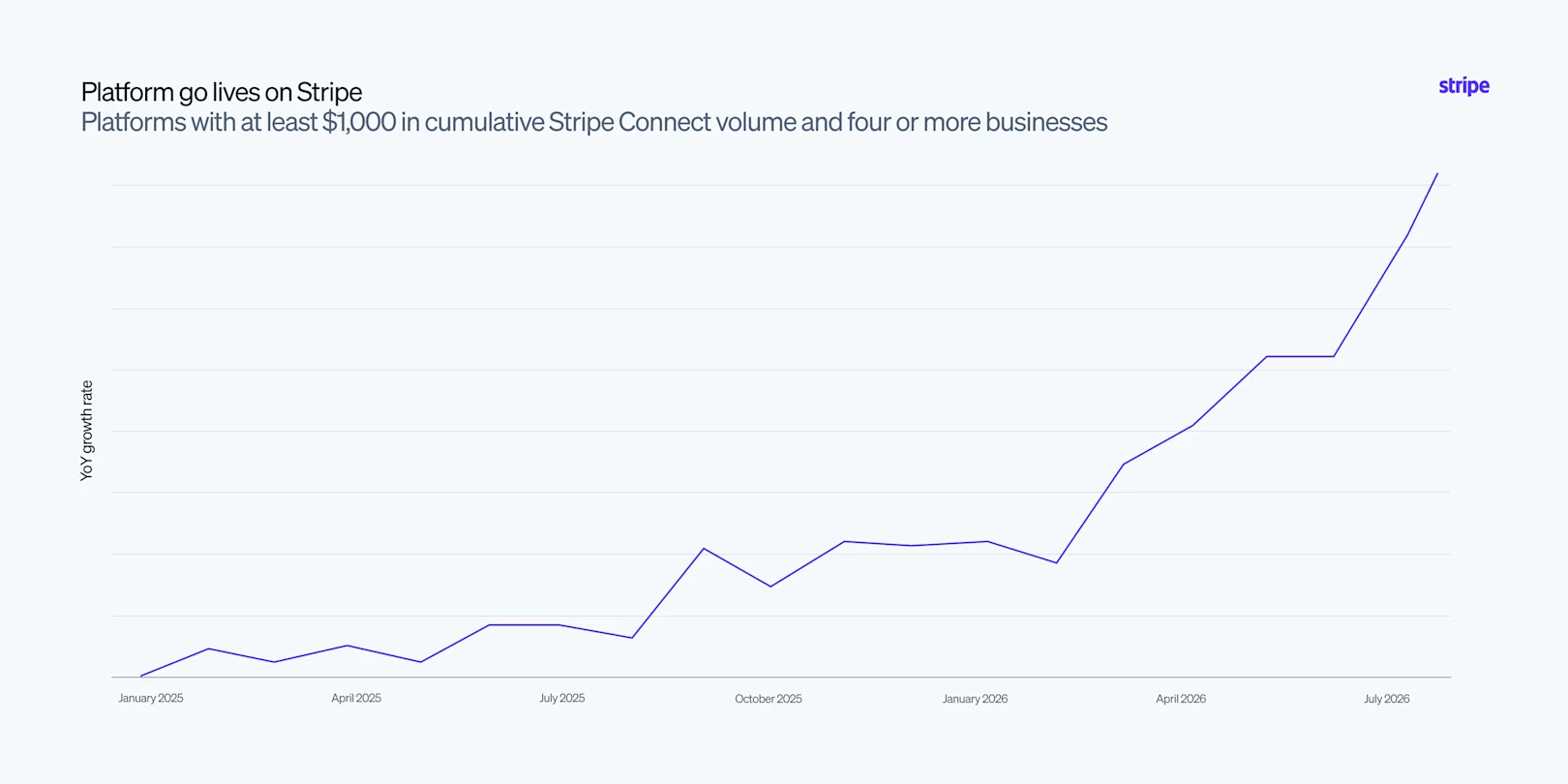
    New SaaS platforms are experiencing a significant boom on Stripe, with new businesses up over 180% year-over-year, defying earlier market fears of a 'SaaSpocalypse'. These platforms differentiate by embedding deep industry knowledge and integrating core workflows, with AI accelerating their development and enhancing offerings.

    Stripestripe.com3 min
  2. AWS reimagines the getting started experience

    AWS announced a new “project” onboarding flow that lets new users start building with default configurations, free credits, and simplified IAM handling. Sign‑in via Google/GitHub/Apple creates an isolated AWS account, auto‑provisions a CLI/agent toolkit, and lets you invite collaborators by email. Spend limits can be set per project, and advanced features (multi‑region, org policies) can be enabl…

    AWSamazon.com5 minHN33
  3. Article: Architecting Secure and Scalable Facial Verification Systems

    A real‑world post‑mortem of a high‑volume face verification service that moved from a naïve synchronous API to an async, layered pipeline (edge validation, preprocessing, decoupled detection/verification, decision engine) to achieve 8.5k rpm, p99 < 1.8 s, 30 % cost savings, and strict privacy controls.

    InfoQinfoq.com15 min
  4. Announcing Project Zenith: The ready-to-code Windows experience on developer-class devices

    Microsoft announced Project Zenith, a Windows 11 configuration bundled with high‑end developer PCs (64 GB+ unified memory, ≥250 GB/s bandwidth) that ships with VS Code, Windows Terminal and tuned settings for a distraction‑free coding workspace. It also adds built‑in WSL container support and MXC security, enabling on‑device execution of 30B‑parameter AI models without cloud token costs.

    Microsoft Edgewindows.com4 minHN143
  5. Article: Your Next DSL Author Is a Language Model

    Typed Domain Grounding (TDG) embeds a DSL inside a mainstream language the LLM already knows (e.g., Kotlin) and uses the host compiler as an oracle. The author describes five building blocks—embedding, choosing a host language with high training‑data frequency, compiler‑driven type safety, a generate‑compile‑repair loop, and an on‑demand teaching tool—and shows measured results from kUML, a Kotli…

    InfoQinfoq.com18 min