proomt

Search

Search posts, papers, and topics

All posts

Hacker News front page3 min readintro

Tell the speakers that you liked their talks

Summary

The author shares personal experiences encouraging conference attendees to approach speakers and give feedback, and urges speakers and organizers to facilitate those conversations. The post is a reminder that a simple compliment or chat can help speakers gauge impact and improve community connections.

  • Introduce informal meet‑ups or “speaker tables” at events to lower the barrier for attendees to ask questions.
  • Speakers should explicitly invite feedback after their talk, e.g., via a quick poll or a note in the slide deck.
  • Attendees can boost speaker confidence by sending a brief, sincere message saying what they liked, even if it’s just a short comment.

Conference attendees, speakers, and organizers should care because better feedback loops improve talks and community engagement.

4/10

Related reading

  1. In Meetings, Raise Hands Before Reading

    The article argues that starting meetings with everyone’s hand raised and lowering it when finished (counting down) gives facilitators a clear signal of who still needs time, unlike the opposite approach that counts up. Counting down avoids miscounts, reduces failure modes, and leaves a clean hand‑down state for post‑reading discussion.

    Daniel Doubrovkine (dB.)dblock.org3 min
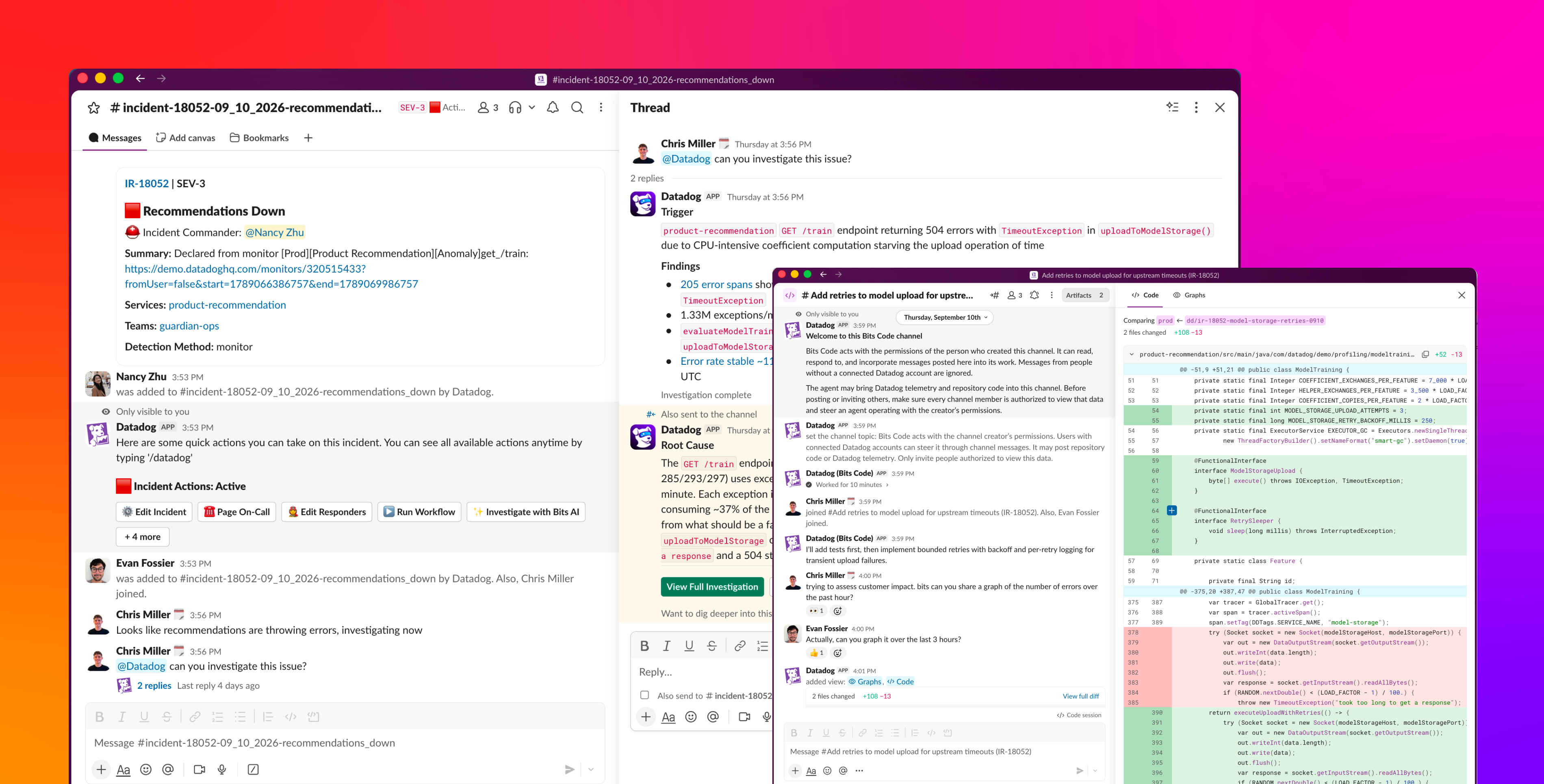
  2. From alert to resolution: Manage incidents with Bits Chat in Slack

    Datadog’s Bits Chat adds a natural‑language interface to Slack, letting responders start investigations, get root‑cause analysis, generate code fixes, and close incidents without leaving the channel. The post walks through a sample e‑commerce outage to show the end‑to‑end workflow.

    Datadogdatadoghq.com4 min
  3. Confidence Comes from Experience: Experiential Confidence Estimation from Reasoning to Agents

    XConf (eXperiential Confidence) is a novel method for estimating language model confidence by leveraging the model's accumulated experience from past graded episodes. It significantly outperforms existing methods like self-consistency in discrimination and calibration, at a fraction of the computational cost, across various tasks.

    Hugging Face Daily Papersarxiv.org2 minpaper
  4. Podcast: Signals and Levers: Building Thriving Engineering Organizations

    The podcast explains how systems thinking helps leaders grasp the complex, adaptive nature of software delivery, especially as AI rollouts amplify bottlenecks. It also outlines cultural "levers"—choices that shape unwritten rules—to build sustainable, fun engineering teams.

    InfoQinfoq.com31 mintalk
  5. Presentation: Teaching Engineers, Trusting AI: How Education Enabled Autonomous Code Review

    Duolingo’s DevEx AI team built a program of AI‑literacy workshops, observability dashboards, office‑hours, and vendor partnerships to get engineers comfortable with LLM‑based tools. With that foundation they launched a PR‑risk‑assessment bot that auto‑approves low‑risk pull requests, cutting review bottlenecks while keeping defect rates flat.

    InfoQinfoq.com24 mintalk