proomt

Search

Search posts, papers, and topics

All posts

CodeshipDrew Piland5 min readintermediate

Why Releasing Software as an Application Beats Deploying Components

Summary

This article argues that independent microservice deployments, while seemingly fast, often lead to complex and fragile releases due to environment drift and implicit dependencies. It advocates for "application-level releasing," where a consistent, validated snapshot of interdependent components is promoted together across environments to restore predictability and stability.

  • Independent microservice deployments often increase release fragility due to implicit dependencies and environment drift.
  • Environment drift causes testing to be unreliable and makes rollbacks complex, as there's no single "last known good version."
  • "Application-level releasing" treats the system as a whole, promoting a consistent, validated payload across all environments.
  • This approach improves predictability, simplifies rollbacks, accelerates debugging, and strengthens governance.

This matters for engineering leaders and DevOps teams struggling with microservice release complexity, as it offers a structured approach to improve system stability and delivery predictability.

6/10
Related reading

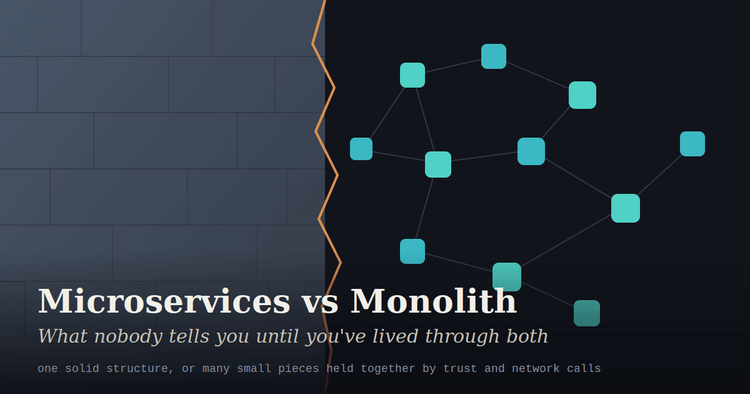
  1. Microservices vs Monolithic Architecture: What Nobody Tells You Until You've Lived Through Both

    The article walks through the hidden costs of both monoliths and microservices, showing that the choice isn’t about hype but about concrete trade‑offs like deployment coordination, observability, data consistency, and team structure. It recommends a modular monolith as a pragmatic middle ground when the organization isn’t ready for full service sprawl.

    SitePointsitepoint.com9 min
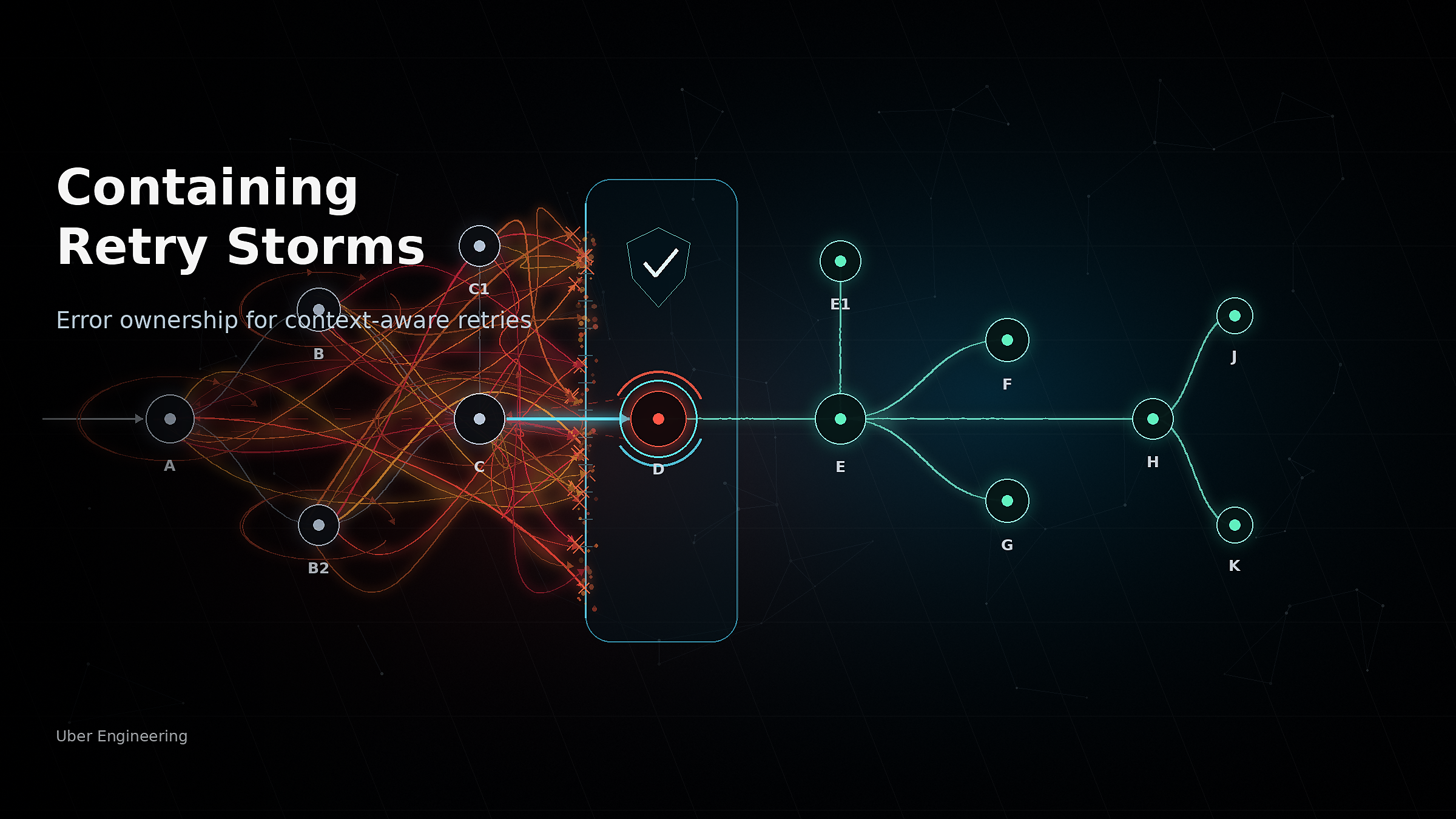
  2. How Uber Protects Against Retry Storms

    Uber developed a context-aware mechanism to prevent retry storms in deep microservice dependency chains. It introduces "error ownership" where services claim errors they originate and unclaim errors they propagate, allowing upstream callers to make informed retry decisions and avoid amplifying load on already struggling services.

    Hacker News front pageuber.com12 minHN11949
  3. Every tool is green. Can you ship?

    A CloudBees blog post argues that existing CI, security, and QA tools don’t give release managers a complete view of AI‑generated code risk. It claims tool consolidation rarely helps and proposes a “control plane” (CloudBees Unify) that aggregates signals from multiple tools and adds AI‑driven test prioritization. The piece is largely promotional, with no concrete implementation details, metrics,…

    Codeshipcloudbees.com4 min
  4. Towards Self-Driving Codebases

    The post argues that AI agents could eventually handle low‑level engineering tasks—bug fixing, debugging, UI consistency, growth experiments—if the dev toolchain is made “agent‑legible”. It outlines missing primitives (global memory, code‑base rot prevention, better dev environments) and proposes a bootstrapping process to measure and improve a repo’s “agent readiness”. The piece is largely specu…

    Hacker News front pagedetail.dev9 minHN12099