proomt

Search

Search posts, papers, and topics

generative models

RSS
  1. 2

    UFO: Chain-of-Evaluation for Omni-Condition Alignment in Multi-Modal Image Generation

    UFO introduces an Atomized Chain‑of‑Evaluation (AEU) framework that breaks omni‑condition alignment in multi‑modal image generation into a sequential set of fine‑grained checks, achieving a 15.25 % boost in correlation with human judgments. The authors also release UFO‑Bench, a benchmark for testing how well models satisfy combined textual and visual conditions.

    Hugging Face Daily Papersarxiv.org1 minpaper

  2. 3

    Zing-0.5: Toward Playable Worlds with Real-Time Joint Action and Text Control

    Zing‑0.5 is a 5 B autoregressive world model that lets users control generated environments in real time using both keyboard actions and text prompts. The paper introduces unified action‑text conditioning, segment‑level teacher distillation, and a low‑cost streaming inference pipeline that runs at 24 FPS (832×480) for about $0.009 per minute, achieving 81 % overall and 88.5 % consistency on a nav…

    Hugging Face Daily Papersarxiv.org1 minpaper
  3. 4

    DeformSmith: Physics Harness-Guided Hierarchical Generation of Deformable Assets for Robot Manipulation

    DeformSmith is a framework that generates physically plausible deformable assets for robot manipulation from a text prompt or a single image, using a hierarchical construction process guided by a shared physics harness. It outperforms prior baselines in visual fidelity and physical realism while also producing interaction data for downstream tasks.

    Hugging Face Daily Papersarxiv.org1 minpaper
  4. 5

    PhysStream: Streaming Physics-Grounded Video Generation with Structured Scene Memory and Fine-Grained Motion Control

    PhysStream introduces a two‑stage autoregressive video generator that uses online‑derived positional and tracking maps (structured scene memory) and sparse velocity‑increment signals to enable fine‑grained, physics‑grounded control of multi‑object tabletop scenes. It cuts motion distribution error by 33 % and trajectory error by 12 % versus strong baselines, and wins 85 % of human preference test…

    Hugging Face Daily Papersarxiv.org1 minpaper
  5. 6

    Trajectory as the Teacher: Few-Step Discrete Flow Matching via Energy-Navigated Distillation

    Apple researchers propose Trajectory‑Shaped Discrete Flow Matching (TS‑DFM), a training‑time distillation method that replaces blind stochastic jumps in discrete flow‑matching with an energy‑based compass to select higher‑quality intermediate tokens. On a 170 M‑parameter language model, the 8‑step student outperforms the 1 024‑step teacher by 32 % perplexity while being 128× faster, beating basel…

    Apple Machine Learning Researchapple.com1 minpaper
  6. 7

    Refinement Is Inherently Editable: Training-Free Prompt-to-Prompt Image Editing with Generative Refinement Network

    RefineEdit is a training‑free framework that edits images by refining binary image codes through a generative refinement network, using probability differences to pick edit locations. It outperforms prior methods on background preservation and CLIP scores across nine editing categories without extra training or masks.

    Hugging Face Daily Papersarxiv.org1 minpaper
  7. 8

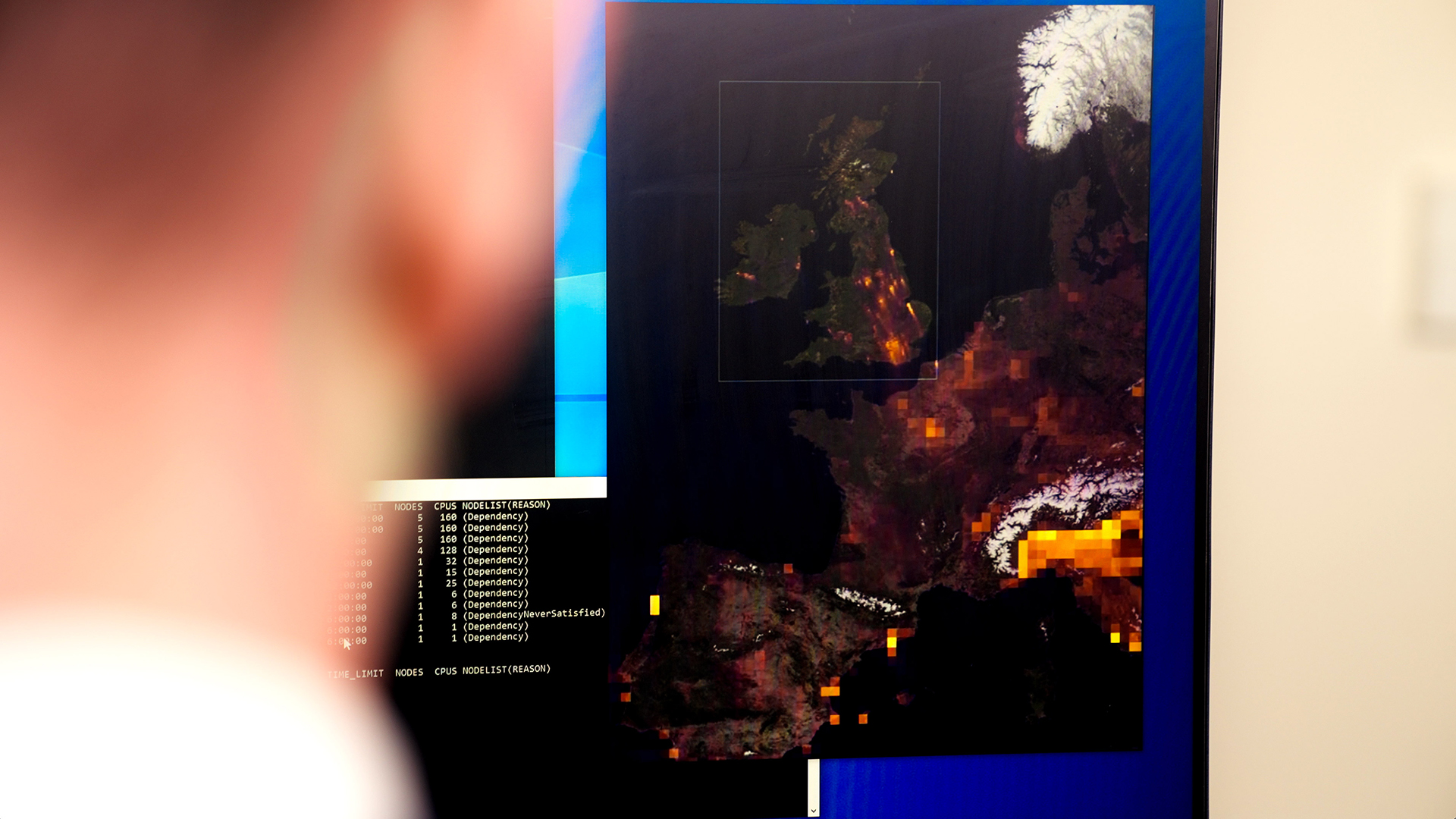
    University of Manchester Uses NVIDIA Earth-2 to Forecast Air Pollution Across the UK

    University of Manchester used NVIDIA Earth‑2 CorrDiff and StormCast generative models to downscale UK‑wide air‑pollution simulations. Training on the Isambard‑AI supercomputer (5,448 GH200 chips, 21 EFLOPS) took two days on an eight‑GPU node, producing a 2‑3 km resolution model. Inference runs on a desktop‑class DGX Spark, enabling rapid scenario forecasting and potential real‑time health alerts.…

    Nvidianvidia.com4 min