Related reading
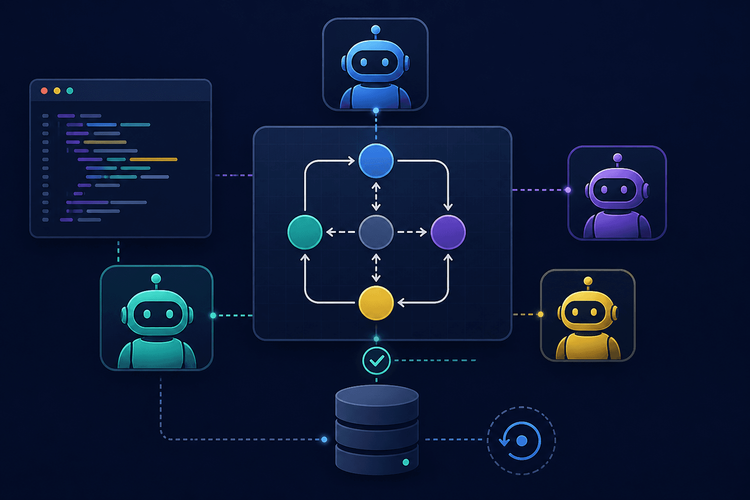
Building Deterministic Multi-Agent State Machines in TypeScript
The article shows how to build a deterministic, checkpoint‑backed finite state machine engine in TypeScript for orchestrating multi‑agent AI workflows. It uses Zod for schema validation, better‑sqlite3 for atomic persistence, and a pure transition function to make workflows traceable and recoverable in serverless environments.
SitePointsitepoint.com18 minChanging the game: How Google uses agentic AI to secure hundreds of millions of lines of code
Google’s AI & Infrastructure team built an agentic pipeline (Mantis) that runs pre‑submit AI‑driven scans on every code check‑in, validates findings with a fast triage agent (AST + call‑graph analysis) achieving >92% precision in <1 min, then auto‑generates fixes via a bug‑fix agent. Localized threat models and a two‑step scan cut false‑positives to ~3% and prevent hundreds of vulnerabilities eac…
Google Cloud Bloggoogle.com4 minPresentation: The Agent Harness: Control Planes, Invariants, and Approval Boundaries for Production AI Agents
Production AI agents often fail silently due to issues beyond model hallucination, such as state inconsistencies. This talk outlines principles for building reliable agent harnesses, focusing on explicit state ownership, ordered mutations, and verifiable actions, using real-world case studies.
InfoQinfoq.com24 mintalkAgent Anomaly Detection, now in Private Preview on the Gemini Enterprise Agent Platform
Google’s Gemini Enterprise Agent Platform now offers a private‑preview Agent Anomaly Detection service that asynchronously analyzes agents’ OpenTelemetry traces and logs to flag risky behavior (e.g., tool misuse, privilege abuse) without adding latency, surfacing findings in Security Command Center and via an API for automated mitigation.
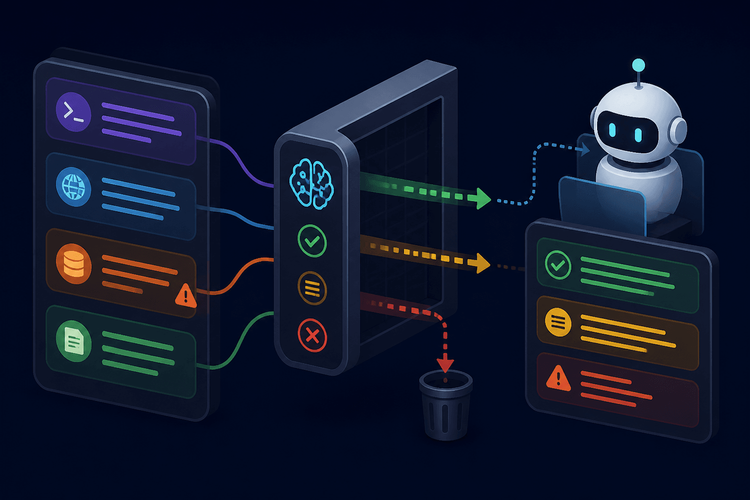
Google Developersgoogleblog.com4 minBuild a Typed Context Compaction Gate for AI Agents
A step‑by‑step tutorial showing how to build a typed context‑compaction gate for AI agents in TypeScript using LangChain and Zod. It defines a discriminated‑union schema for keep/summarize/discard actions, implements a fast gpt‑4o‑mini classifier, validates decisions at runtime, and wires the gate as middleware in an agent loop, with testing and production‑grade tuning advice.
SitePointsitepoint.com16 minWSO2 Releases Agent Manager as Enterprises Look to Control Growing AI Agent Sprawl
WSO2 Agent Manager GA adds model‑agnostic identity, role‑based access, policy enforcement (40+ controls), a Kubernetes‑native sandboxed runtime, and OpenTelemetry‑based tracing/evaluation for AI agents across cloud, on‑prem and hybrid environments.
InfoQinfoq.com3 minrelease