Related reading
Local S3 Storage Without MinIO: SeaweedFS and Garage in Docker Compose
The article shows how to run SeaweedFS and Garage together in a single Docker‑Compose file to provide low‑memory, S3‑compatible local storage, avoiding MinIO’s larger footprint and licensing concerns. It includes bucket‑seeding scripts and a Node.js test suite using AWS SDK v3.
SitePointsitepoint.com16 minTSMC revealing details about next gen A14 node
TSMC’s upcoming A14 NanoFlex Pro node promises the world’s smallest SRAM cell (<0.017 µm²) and up to 30% power savings, with a 10‑15% speed boost and ~20% density increase over N2. The platform also introduces TSV and RDL innovations for 4.5 µm SoIC bonding, targeting volume production in 2028.
Hacker News front pagemapyourshow.com1 mintalkHN12455How to Orchestrate Multi-Call Conversations with an LLM and Twilio Conversation Memory
A step‑by‑step tutorial for building a C# ASP.NET Core service that uses Twilio Conversation Memory and OpenAI’s gpt‑4o‑mini to retain caller context across multiple phone calls, with full code snippets, environment setup, and prompts for both real‑time response streaming and call summarization.
Twiliotwilio.com16 minUber Redesigns M3DB Sharding with Subclusters to Limit Failure Impact
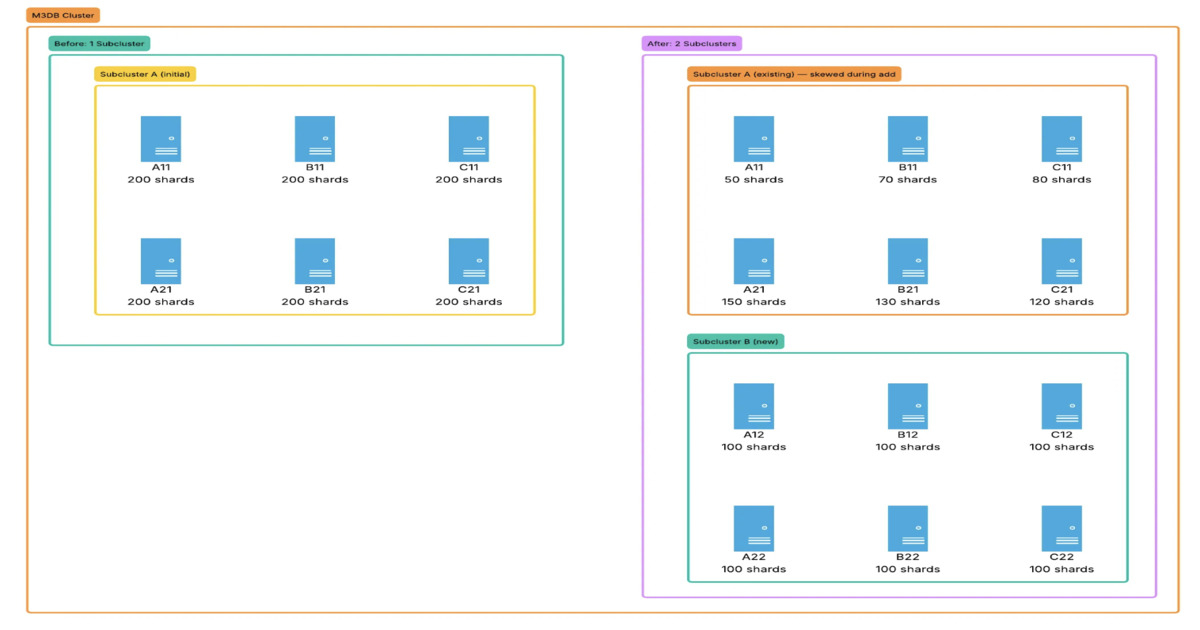
Uber reworked M3DB's shard placement by grouping nodes into fixed-size subclusters, each owning a disjoint shard range, to bound the blast radius of node failures. A greedy shard‑move algorithm (O(S log S) + O(S×N)) handles scaling while preserving existing placement tooling.
InfoQinfoq.com2 minThe Road to Better Performance Profiles – Part 2
Mozilla’s Automation Team added native system‑wide profiling to their CI pipelines for Speedometer 3 on Windows, macOS, Linux, and Android, using xperf, perf, and simpleperf together with the samply toolchain, and modernized the mozgeckoprofiler symbolication stack by replacing the legacy Eliot service with samply and profiler‑edit.
Mozilla Automation Teammozilla.org5 minArchitecting Generative UI with Streaming JSON Schemas and React Server Components
This article details building a Generative UI architecture that streams structured JSON component schemas from LLMs, rendering them directly into type-safe React Server Components. It provides a full, from-scratch implementation using Web Streams, Zod, and Next.js 15+, avoiding proprietary libraries.
SitePointsitepoint.com19 min