proomt

Search

Search posts, papers, and topics

All posts

Hacker News front page1 min readtalkintermediate

TSMC revealing details about next gen A14 node

Summary

TSMC’s upcoming A14 NanoFlex Pro node promises the world’s smallest SRAM cell (<0.017 µm²) and up to 30% power savings, with a 10‑15% speed boost and ~20% density increase over N2. The platform also introduces TSV and RDL innovations for 4.5 µm SoIC bonding, targeting volume production in 2028.

  • A14 NanoFlex Pro claims the smallest SRAM cell at <0.017 µm², boosting macro density.
  • PPA gains vs N2: 10‑15% speed increase, 25‑30% power reduction, ~20% chip density rise.
  • New TSV and RDL enable 4.5 µm SoIC bond pitch for tighter system integration.
  • Volume production targeted for 2028, giving designers a timeline for adoption.

SoC designers and hardware engineers should care because it outlines upcoming SRAM density and power improvements that could impact future chip designs.

5/10
Related reading

  1. M4N VM family, now GA: Highest per-core IOPS and throughput for I/O and memory-bound workloads

    Google Cloud’s GA‑available M4N VM family pairs 5th‑gen Intel Xeon CPUs with Google’s custom Titanium offload to deliver up to 1 M IOPS, 25 GiB/s block‑storage throughput, 400 Gbps VM‑to‑VM bandwidth, and a 26 GB/vCPU memory ratio (up to 5.9 TiB RAM). The design targets memory‑bound, I/O‑intensive workloads (Oracle, SAP HANA, vector search, real‑time analytics) and claims >20 % TCO reduction for…

    Google Cloud Bloggoogle.com5 min
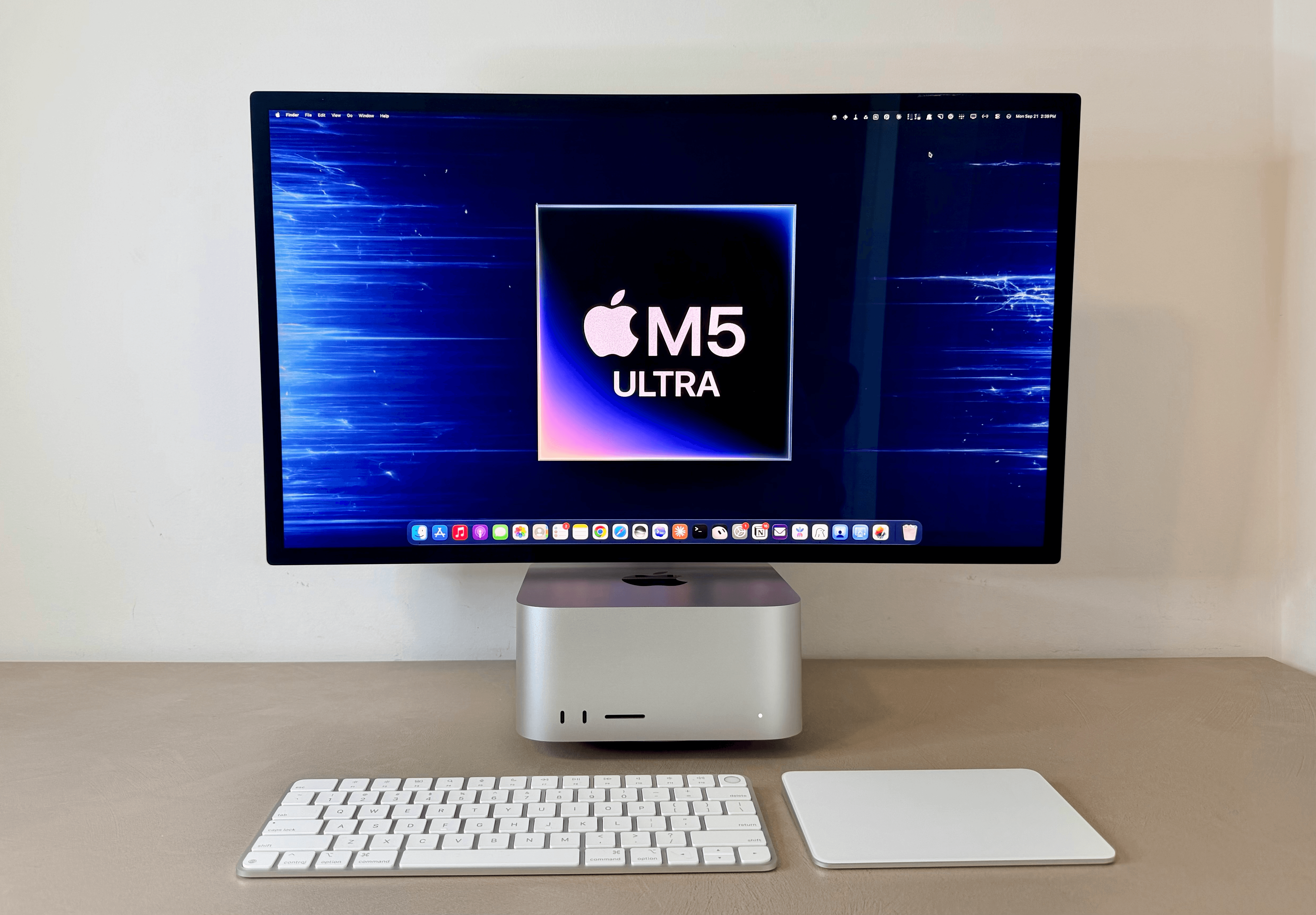
  2. M5 Ultra Mac Studio Review

    The M5 Ultra Mac Studio (256 GB RAM) uses a quad‑die M5 Max architecture with an 80‑core GPU and 1.2 TB/s memory bandwidth, delivering ~70 % faster prompt‑to‑first‑token and token‑generation rates than the M3 Ultra. In the author’s tests Qwen3.8‑Flash‑Next hits 100 tokens/s on short prompts and 60‑85 tokens/s with 64‑256 KB context, making local AI agents (Open Minis, Hermes, Codex) feel snappy a…

    Hacker News front pagemacstories.net39 minHN234235
  3. SiliconBench: Speed, Memory, and Fidelity for LLM Serving on Unified-Memory Desktops

    SiliconBench benchmarks nine Apple‑Silicon LLM serving engines on unified‑memory desktops, measuring speed, memory usage, and output fidelity across Qwen3, Qwen3.5, and Gemma‑4 models. It finds vllm‑metal doubles throughput at modest concurrency, memory budgets often fail to preserve headroom, and only three stacks satisfy all fidelity and model‑coverage requirements, with tensor‑parallel scaling…

    Hugging Face Daily Papersarxiv.org1 minpaper
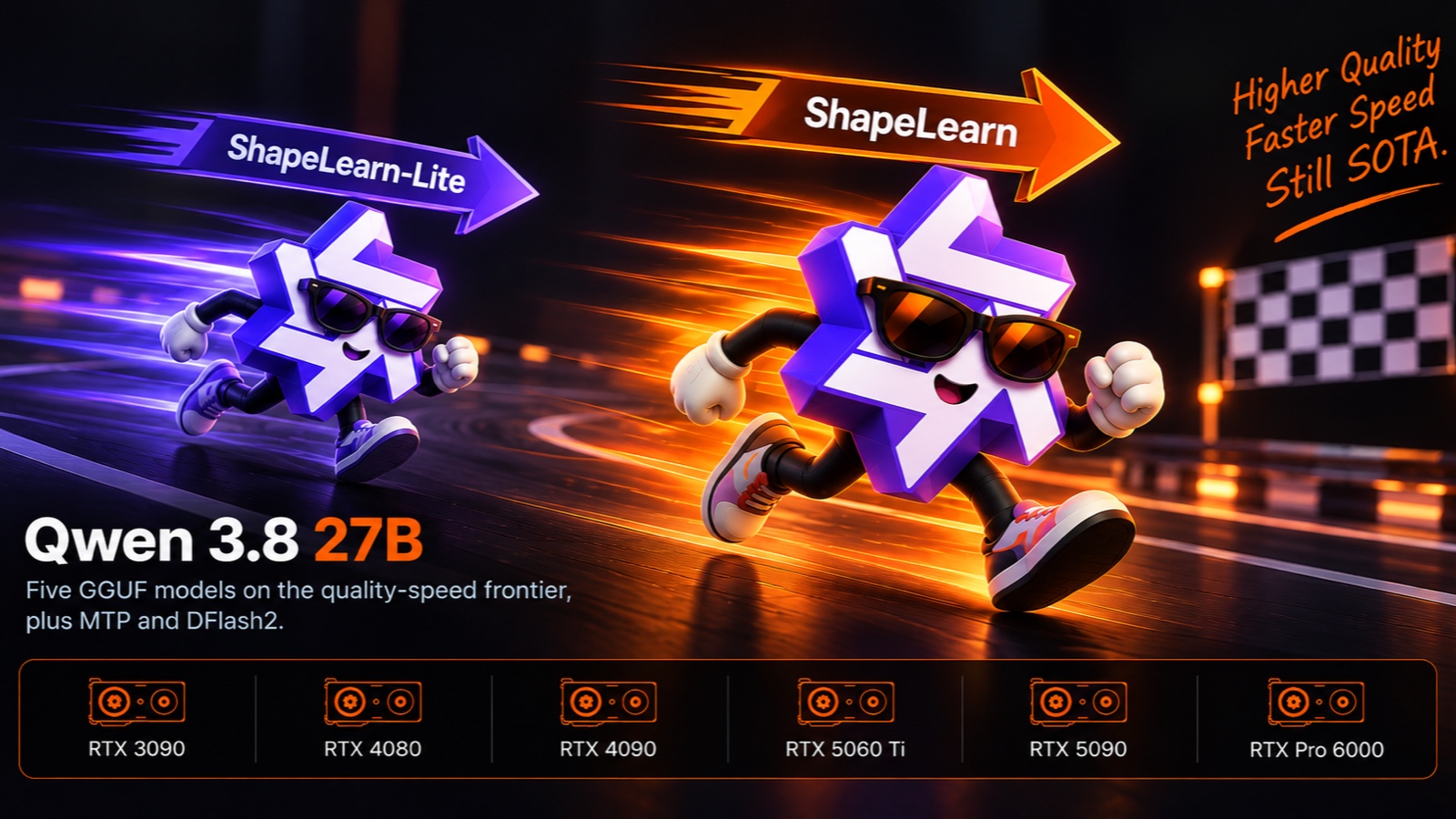
  4. Shapelearn Qwen 3.8 27B (13.1 GB VRAM)

    ByteShape releases full ShapeLearn quantizations for Qwen 3.8 27B, showing that their GPU‑specific GGUFs (GPU‑1…GPU‑5) dominate the quality‑throughput frontier across six GPUs, with GPU‑5 hitting 99.63 % of BF16 accuracy at 90 TPS on a 13.1 GB model. Speculative decoding (MTP, DFlash2) further boosts throughput, and the Lite set remains competitive.

    Hacker News front pagebyteshape.com17 minHN10439