proomt

Search

Search posts, papers, and topics

All posts

SitePointRaas Digital11 min readintermediate

Building a Reliable Script-to-Video Pipeline for Modern Web Applications

Summary

A practical guide to building a reliable, observable script‑to‑video pipeline. It advocates a staged architecture (scene manifest → asset generation → voice → rendering → encoding), validates AI‑generated JSON with Zod, persists project and scene state, uses explicit workflow states, runs heavy work in background queues, limits concurrency, and stores voice, captions, and assets separately to ena…

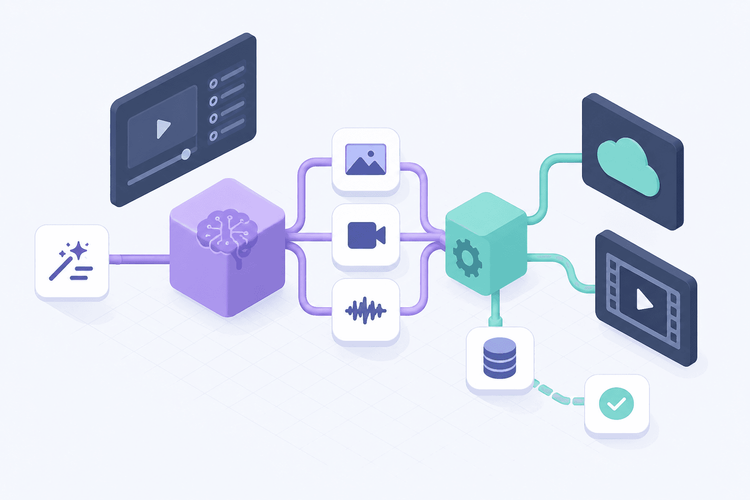
  • Convert raw scripts into a structured scene manifest; treat the manifest as the source of truth.
  • Separate concerns: script understanding → scene planning → media generation → rendering, each with its own validation and observability.
  • Validate AI‑generated scene data with a schema (e.g., Zod) to catch unreasonable values.
  • Persist project and per‑scene records before media generation to enable resumable workflows.

Video generation pipelines combine AI inference, media asset handling, and long‑running rendering, all of which are failure‑prone and costly. By structuring the workflow, persisting intermediate state, and decoupling assets, engineers can achieve predictable latency, easier debugging, and lower com…

6/10

Related reading

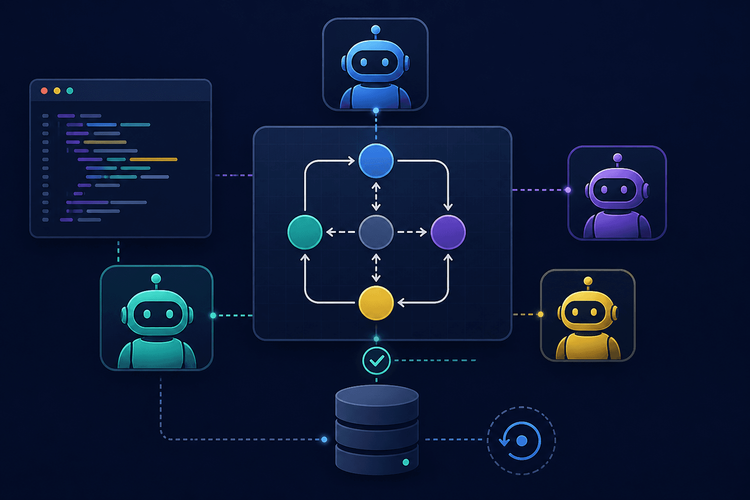
  1. Building Deterministic Multi-Agent State Machines in TypeScript

    The article shows how to build a deterministic, checkpoint‑backed finite state machine engine in TypeScript for orchestrating multi‑agent AI workflows. It uses Zod for schema validation, better‑sqlite3 for atomic persistence, and a pure transition function to make workflows traceable and recoverable in serverless environments.

    SitePointsitepoint.com18 min
  2. Zing-0.5: Toward Playable Worlds with Real-Time Joint Action and Text Control

    Zing‑0.5 is a 5 B autoregressive world model that lets users control generated environments in real time using both keyboard actions and text prompts. The paper introduces unified action‑text conditioning, segment‑level teacher distillation, and a low‑cost streaming inference pipeline that runs at 24 FPS (832×480) for about $0.009 per minute, achieving 81 % overall and 88.5 % consistency on a nav…

    Hugging Face Daily Papersarxiv.org1 minpaper
  3. How Data 360 Builds Trusted Context: The Enduring Layer for Enterprise AI

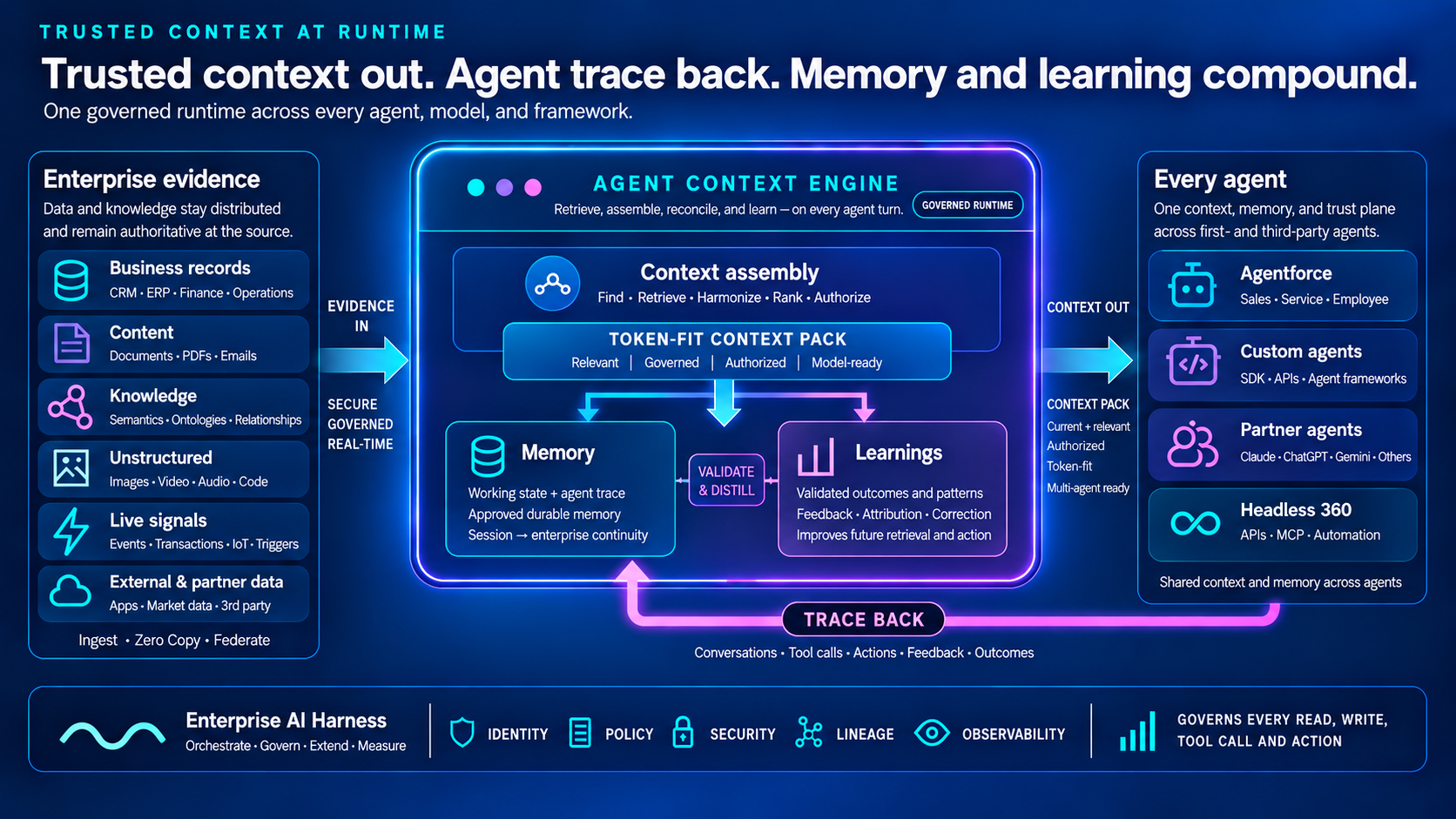
    Salesforce’s Data 360 provides a shared runtime that assembles the minimal, authorized slice of enterprise data (“Trusted Context”) for each AI‑agent turn. A six‑stage Agent Context Engine (Resolve, Plan, Reconcile, Govern, Compile, Learn) pulls data from structured, unstructured, and streaming sources across Salesforce, Snowflake, Databricks, etc., applies fine‑grained policy, and returns a toke…

    Salesforce Engineeringsalesforce.com11 min
  4. ProgramDistill: From Interactive Web Apps to Verifiable Reference-Guided SWE Tasks

    ProgramDistill is a new benchmark that automatically extracts 1,975 replay‑verified feature behaviors from 26 real web apps, builds 4,063 coding‑agent tasks, and measures how well state‑of‑the‑art agents (e.g., GPT‑6 Astra, Claude Opus 5) can reconstruct full or partial applications, revealing steep drops in success as restoration depth grows.

    Hugging Face Daily Papersarxiv.org1 minpaper