proomt

Search

Search posts, papers, and topics

All posts

Gleb Bahmutov7 min readintermediate
Cypress Cloud Test Triage Using AI

Summary

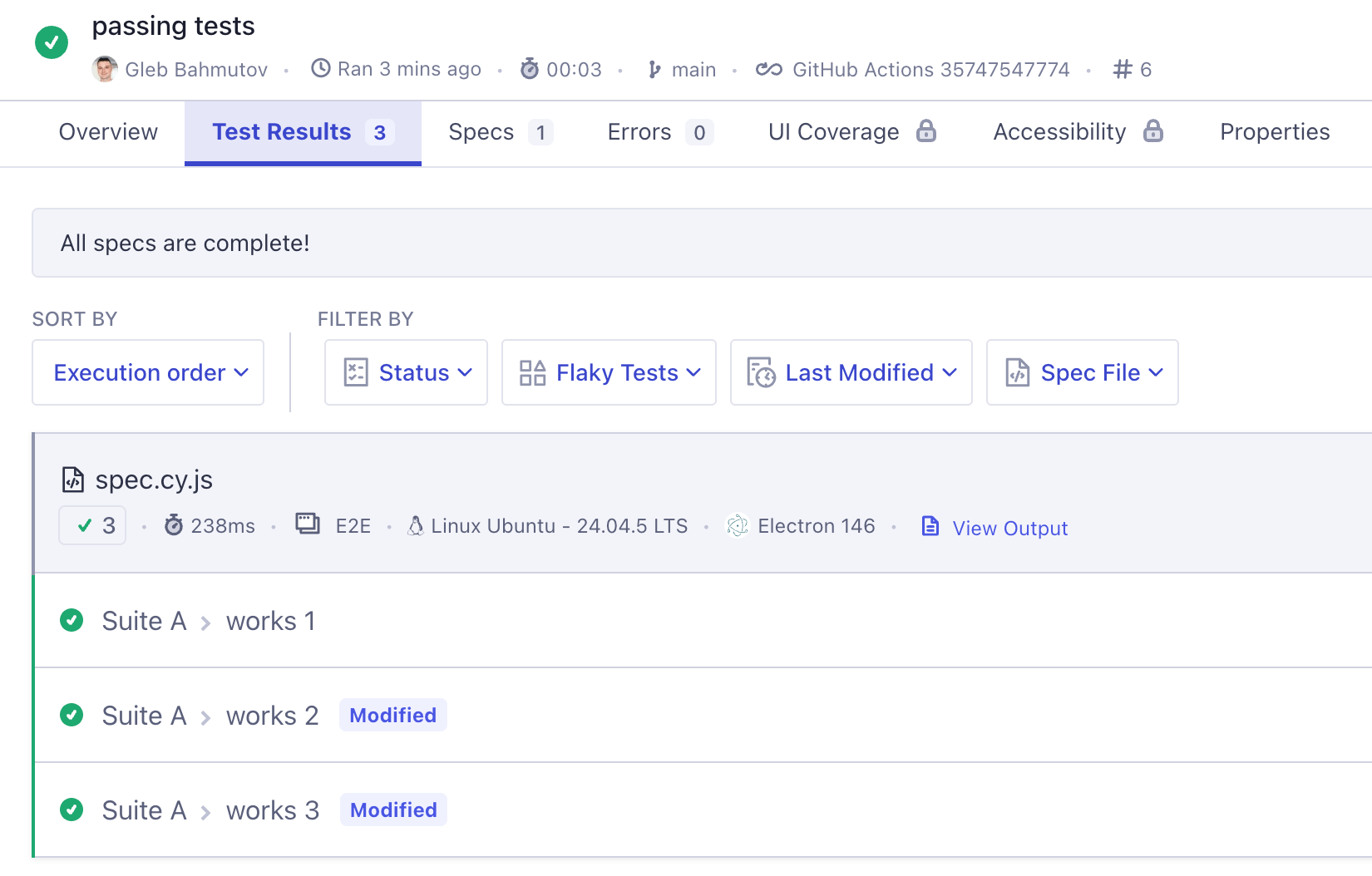
The post shows how to use Cypress Cloud’s CLI to fetch recent test run data, then script a simple triage that identifies tests that failed in the latest run and also failed previously. It walks through installing the CLI, querying runs and tests, and provides a Node script (triage.js) that automates the comparison, with a brief note on using AI to explore results.

  • Cypress Cloud CLI returns JSON, making it easy to pipe into scripts or other tools.
  • You can filter runs by status, limit, and project ID to focus on recent failures.
  • Test IDs change per run; matching on the hierarchical testName (suite > test) is a reliable way to correlate failures across runs.
  • A short Node script can fetch the latest run number, list failed tests, fetch the previous run’s failures, and report intersecting titles.

Automating test‑failure triage saves developers time by surfacing regressions that are truly new versus flaky or already‑known issues, and the JSON output lets you integrate Cypress results into CI dashboards, chat bots, or AI assistants without manual UI navigation.

6/10
Related reading

  1. How to Review AI-Generated Python Code Efficiently

    A practical five‑step workflow for reviewing AI‑generated Python code, covering intent clarification, automated quality checks (linters, type checkers, security scanners, tests), risk‑first manual reading, a checklist of common AI mistakes, and fix‑verify loops, plus a ready‑to‑use dev‑environment setup.

    Real Pythonrealpython.com26 min
  2. Eliminating AI Code Hallucinations with TypeScript Compiler Diagnostics and TDD Loops

    The article shows how to replace raw TypeScript compiler output with a programmatic JSON feedback loop that merges diagnostics and Vitest test failures, feeding the structured data back to an LLM coding agent for self‑correction. It provides concrete code for extracting, enriching, validating, and de‑duplicating errors, and demonstrates token savings and deterministic iteration until compilation…

    SitePointsitepoint.com15 min
  3. Stop restarting your tests

    This article proposes using Temporal to orchestrate large, flaky end-to-end test suites, treating each test execution as a durable unit of work. This approach allows retrying only failed individual tests or browser configurations, significantly reducing wasted CI time from transient failures.

    Temporaltemporal.io11 minHN1
  4. Introducing AI First Responder: The Next Step in CloudBees’ AI Journey

    CloudBees announced AI First Responder (AIFR), an AI‑powered incident‑triage assistant that lives in Slack and leverages the CloudBees Unify control plane and its knowledge graph. AIFR claims to summarize logs, suggest root causes, and optionally trigger GitOps remediation, all while logging actions for governance. The feature is in limited preview and available to a design‑partner program.

    Codeshipcloudbees.com2 minrelease
  5. Optimizing GitHub Actions for Agent PRs: Speculative Test Slicing and AST Impact Analysis

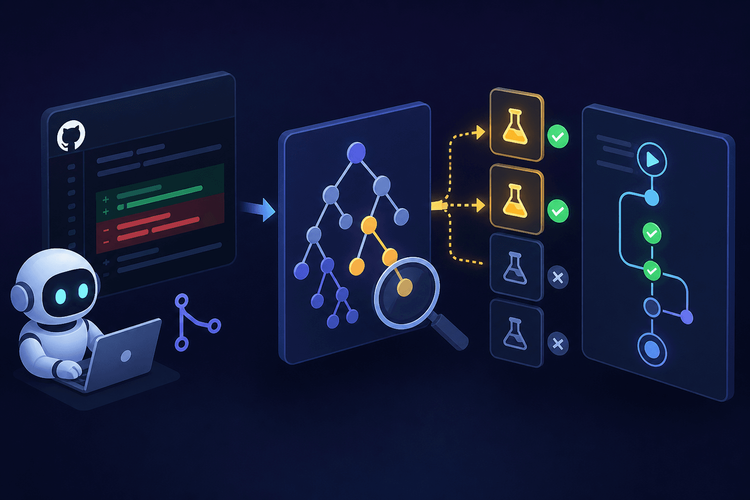
    A step‑by‑step guide for handling the flood of pull requests generated by code‑generation agents. It builds a TypeScript CLI that uses ts‑morph to do AST‑level change‑impact analysis, maps affected symbols to tests, and runs only those tests in a “speculative” GitHub Actions job while a full‑suite verification runs in the background. The article includes concrete CLI code, dependency choices, con…

    SitePointsitepoint.com17 min