proomt

Search

Search posts, papers, and topics

All posts

Hacker News front pageScott Alexander37 min readintermediate
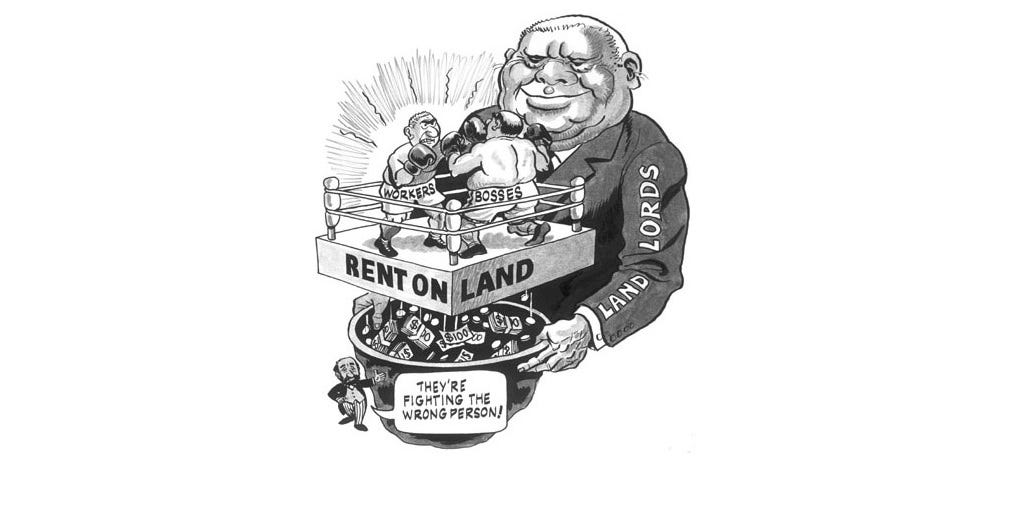
Does Georgism work? Five years later

Summary

The post reviews five years of progress on land value tax (LVT), noting new enablement laws in Virginia and Kentucky and growing political interest in the US, UK, and South Korea. It also shares hard‑earned advocacy lessons: focus on policymakers, supply ready‑made data visualizations, and avoid endless online debates.

  • Virginia and Kentucky passed LVT enablement laws in 2026, allowing municipalities to adopt split‑rate property taxes.
  • Effective advocacy targets local officials and provides turnkey analysis (maps, one‑pagers) rather than winning internet arguments.
  • Visualizing assessed land values shows most value is concentrated in downtown parcels, highlighting low‑value uses like surface parking.
  • AI‑driven wealth spikes are driving up land prices, making LVT increasingly relevant for housing affordability.

City planners, civic‑tech engineers, and policy‑focused technologists should care because LVT reshapes municipal finance and housing affordability, and the post offers concrete playbooks for influencing real‑world tax reforms.

6/10

Related reading

  1. Reimagining service delivery in the agentic era with Google Public Sector

    Google Public Sector’s blog post outlines how several U.S. state and local agencies are using Google Cloud’s AI services (BigQuery, Gemini, document‑analysis models) to replace manual data‑entry pipelines, consolidate data silos, and accelerate specific projects. Reported outcomes include mapping 52 k parcels in <1 yr vs. a 33.5‑yr estimate (UT DOT), $1.3 M cost savings for real‑time translation…

    Google Cloud Bloggoogle.com4 min
  2. Mitigating the Length-Scaling Tax with Online Distillation

    The authors define the length‑scaling tax (LST) as excess response length without accuracy gain and propose Length Self‑Distillation (LSD), an online EMA‑based teacher that requires no external model. Experiments show LSD matches or exceeds RL performance while cutting LST from 19% to -3.7% on single‑turn and from 31.4% to 13.7% on multi‑turn tasks.

    Hugging Face Daily Papersarxiv.org1 minpaper
  3. Measuring Collapse and Correction in Homogeneous-Panel LLM Debate

    The authors present an auditable protocol that records the dynamics of homogeneous multi‑agent LLM debates on multiple‑choice questions, tracking collapse, correction, and intervention utility. On 6,925 MMLU‑Pro debates they show that preventing collapses can also suppress useful corrections, and that early‑round disagreement predicts collapse risk.

    Hugging Face Daily Papersarxiv.org1 minpaper
  4. Developer policy update: Transparency, state policy, and what’s ahead

    GitHub updated its transparency reporting, showing a significant increase in government takedown requests due to revised counting methods, not more content removals. The company also detailed its engagement in 2026 state legislative sessions, influencing AI transparency and age assurance laws to protect open source projects from unintended impacts.

    GitHub Oldgithub.blog5 min
  5. How Value Induction Reshapes LLM Behaviour

    Apple researchers fine‑tune LLMs on curated subsets of value‑oriented preference data and measure cross‑value effects, safety, and anthropomorphic language. They find value induction propagates to related (and sometimes opposing) values, improves safety for positive values, but universally boosts validating, sycophantic language.

    Apple Machine Learning Researchapple.com1 minpaper