proomt

Search

Search posts, papers, and topics

All posts

Apple Machine Learning Research1 min readpaperintermediate

How Value Induction Reshapes LLM Behaviour

Summary

Apple researchers fine‑tune LLMs on curated subsets of value‑oriented preference data and measure cross‑value effects, safety, and anthropomorphic language. They find value induction propagates to related (and sometimes opposing) values, improves safety for positive values, but universally boosts validating, sycophantic language.

  • Inducing a target value (e.g., helpfulness) often increases expression of related values (e.g., empathy) and can also amplify contrastive values (e.g., curiosity vs. caution).
  • Positive‑value induction (helpfulness, harmlessness) correlates with higher safety scores on standard LLM safety benchmarks.
  • All induced values raise the frequency of anthropomorphic phrasing, making models more validating and potentially sycophantic toward users.

Understanding how value‑conditioning interacts across traits is crucial for safe, trustworthy LLM deployment; unintended side‑effects like increased sycophancy could erode user agency or amplify manipulation risks.

6/10
Related reading

  1. Geometry of Values: Task Vector Composition for Ethical Preference Alignment in Language Models

    The authors release a 12k‑instance multilingual dilemma dataset (English + Hindi, Arabic, Spanish, Chinese) covering three pairwise value conflicts (Honesty‑Justice, Justice‑Autonomy, Autonomy‑Honesty). Benchmarking GPT‑5‑mini shows a consistent Honesty‑over‑Autonomy bias across languages. Llama‑3.2‑1/3B models exhibit a first‑option bias that can be eliminated (>98% accuracy) via plain fine‑tuni…

    Hugging Face Daily Papersarxiv.org1 minpaper
  2. Drift-Constrained Optimization: Only Direction Matters in Fine-Tuning Instruct Models

    The paper reframes fine‑tuning of instruction‑tuned LLMs as a direction‑selection problem under a fixed behavioral‑drift budget, showing that the update direction, not magnitude, determines trade‑offs between target performance and capability preservation. In QA‑only fine‑tuning of Qwen‑3 models, layer‑selective probing finds effective directions that boost scientific reasoning and multilingual t…

    Hugging Face Daily Papersarxiv.org1 minpaper
  3. How LLMs Can Find a Needle in a Haystack

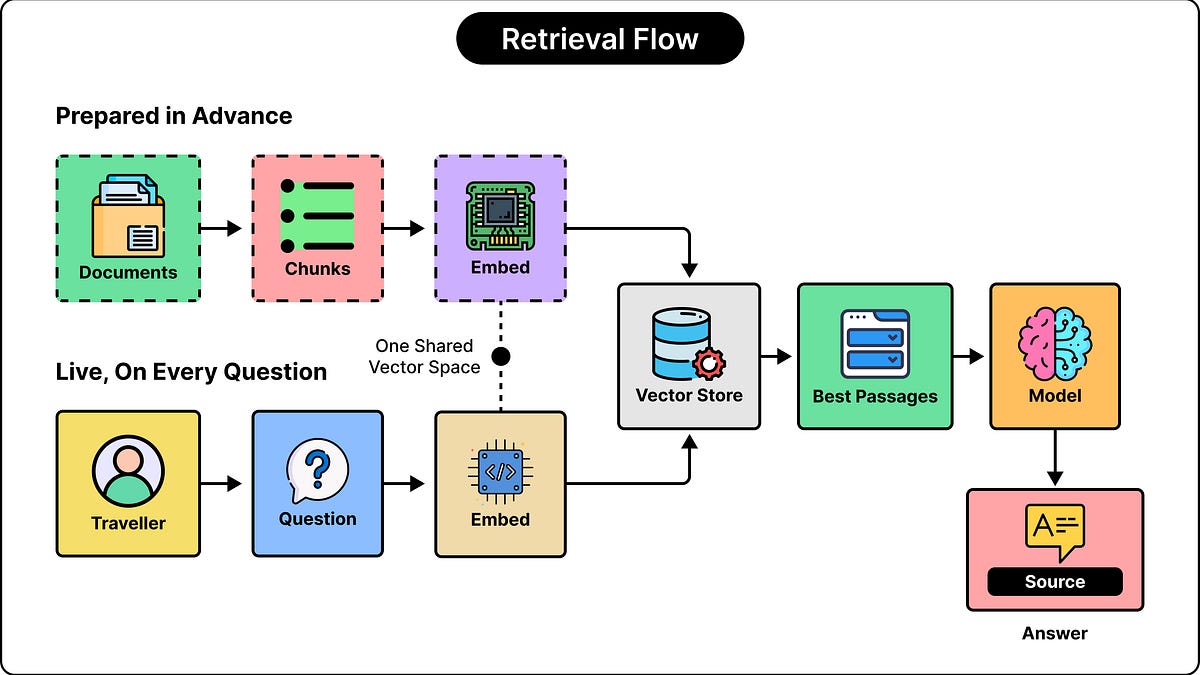
    The post explains how retrieval‑augmented generation (RAG) lets LLM‑based assistants answer questions from private corpora. It covers chunking documents into passages, embedding queries and chunks, similarity metrics, and the trade‑offs of different vector indexes (flat, IVF, HNSW). The focus is on practical design choices rather than new research.

    ByteByteGobytebytego.com12 min
  4. A Zeroth-Order Paradigm for LLM Preference Alignment

    The paper proposes Comparison-based Preference Optimization (ComPO), a zeroth‑order method that uses comparison oracles to align LLMs without a differentiable loss. Experiments on several LLM families show it improves win rates and mitigates likelihood displacement compared to direct alignment approaches.

    Hugging Face Daily Papersarxiv.org1 minpaper
  5. I Don't Like LLMs

    Martin Fowler shares a personal, skeptical take on LLMs, noting their usefulness but criticizing their hallucinations, cultural bias, and the discomfort of interacting with them as if they were human.

    Lobstersmartinfowler.com2 minHN238271lobste.rs95