proomt

Search

Search posts, papers, and topics

All posts

HoneycombRox Williams4 min readintermediate
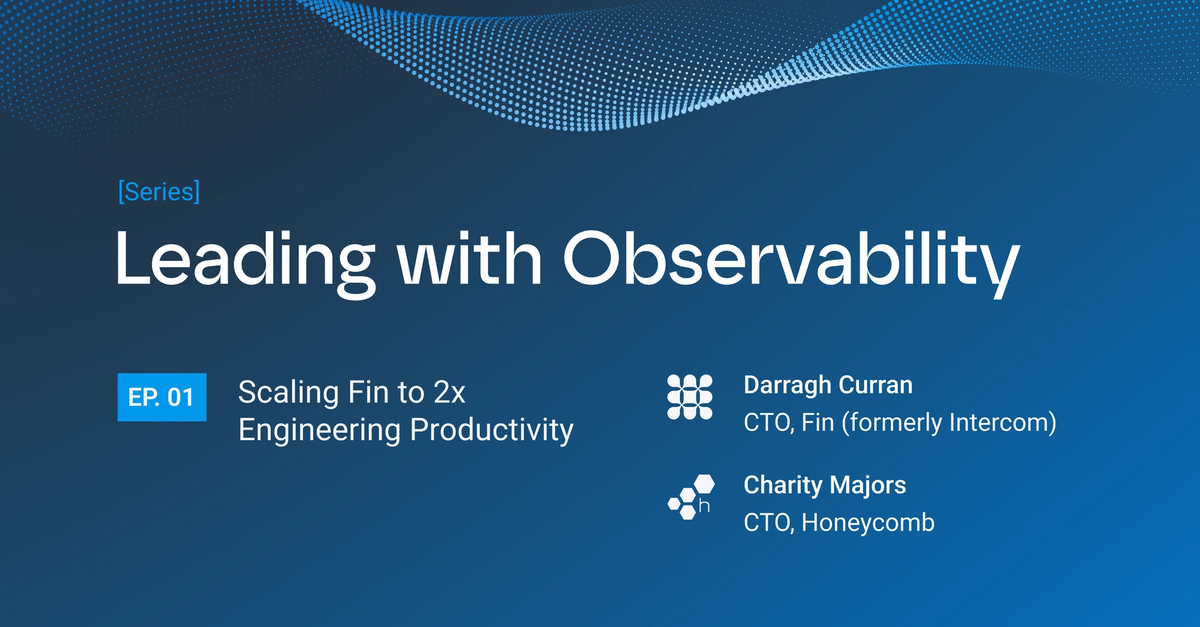
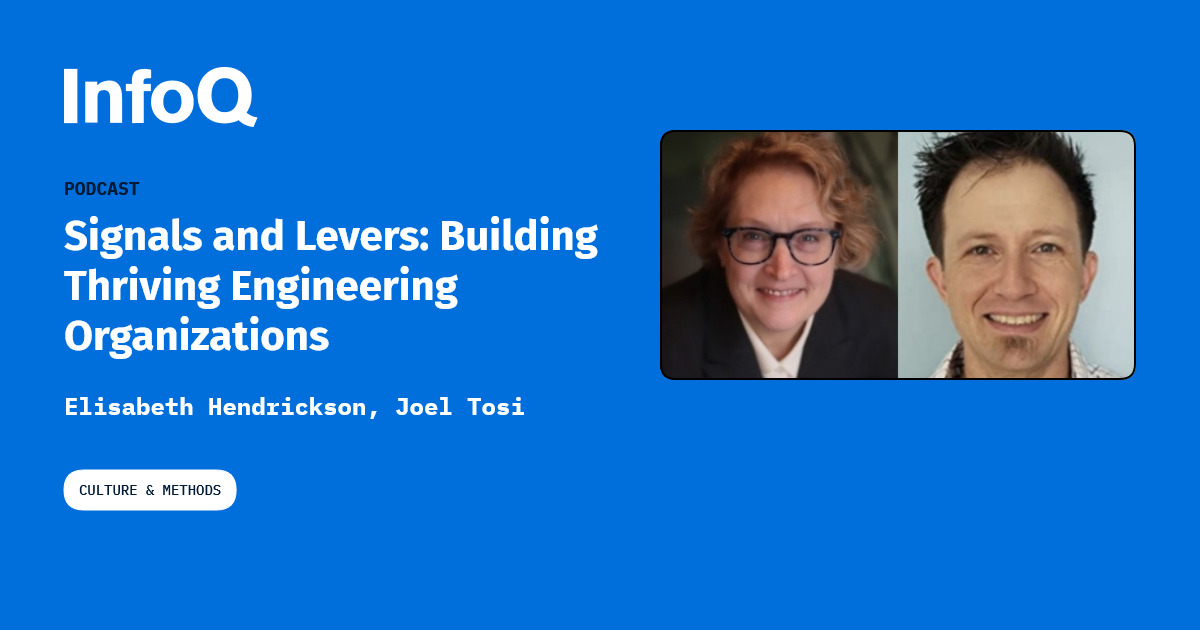
Fin's CTO on Building Great Engineering Organizations in the AI Era

Summary

Fin’s CTO describes how an AI‑powered PR review system, combined with strong observability, helped the company nearly triple engineering productivity, driven by a public goal and a repeatable learn‑do loop.

  • Fin built an AI‑driven PR review system that replaces human reviewers and traces execution paths, improving speed and safety.
  • Observability is used as a trust mechanism to monitor AI review quality and intervene when thresholds are breached.
  • A public 2x productivity goal helped focus the team; the actual outcome was nearly 3x increase.
  • Leadership loop: do a thing, learn from observability data, iterate—applied at scale across the org.

Engineering leaders interested in scaling productivity with AI and maintaining trust through observability will find actionable ideas here.

5/10
Related reading

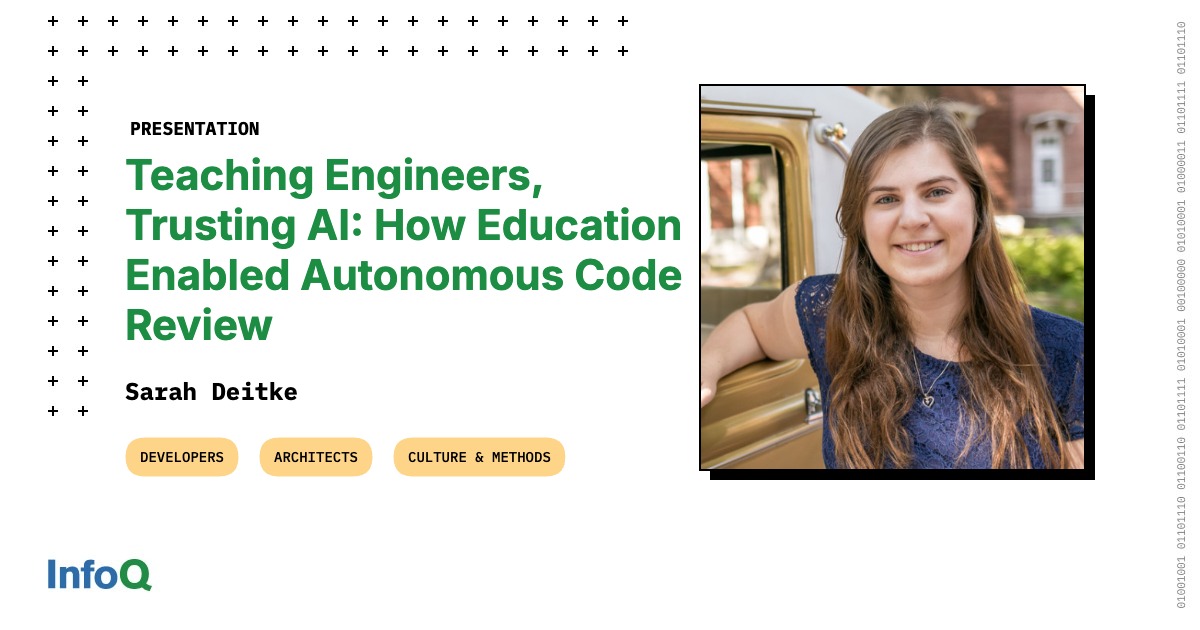
  1. Presentation: Teaching Engineers, Trusting AI: How Education Enabled Autonomous Code Review

    Duolingo’s DevEx AI team built a program of AI‑literacy workshops, observability dashboards, office‑hours, and vendor partnerships to get engineers comfortable with LLM‑based tools. With that foundation they launched a PR‑risk‑assessment bot that auto‑approves low‑risk pull requests, cutting review bottlenecks while keeping defect rates flat.

    InfoQinfoq.com24 mintalk
  2. How Orange uses agents to make FinOps everyone's responsibility

    Orange created a FinOps Community of Practice and runs ‘Clean Days’—protected, gamified sessions that get engineers actively optimizing cloud spend. They then scale this culture with AI agents that surface cost data, suggest quick‑win fixes, and automate reporting, extending responsibility across thousands of engineers.

    Google Cloud Bloggoogle.com4 min
  3. AI Norms & Values, Part 2 of 3: AI for Honeycomb Engineering

    Honeycomb’s engineering leadership outlines why the org is “all‑in” on AI, sets a north‑star to be in the top 10 % AI‑enabled teams, and publishes concrete 2026 goals (e.g. 25 % of PRs auto‑merged by AI with <3 % failure) plus an FAQ covering support, measurement, agent usage, and coping with workflow changes.

    Honeycombhoneycomb.io8 min
  4. Podcast: Signals and Levers: Building Thriving Engineering Organizations

    The podcast explains how systems thinking helps leaders grasp the complex, adaptive nature of software delivery, especially as AI rollouts amplify bottlenecks. It also outlines cultural "levers"—choices that shape unwritten rules—to build sustainable, fun engineering teams.

    InfoQinfoq.com31 mintalk
  5. From Individual Experiments to a Shared AI Practice: How Avant Scaled AI-Assisted Engineering

    Avant replaced many personal AI‑assistant setups with a single, organization‑wide Claude Code configuration that embeds the company’s coding standards, project‑tracking links, and documentation. Treated as an internal product, the setup is versioned, owned by delivery engineers, and iteratively improved. The shared tool speeds routine tasks (scaffolding, tests, migrations, docs) and enforces cons…

    Moove-itqubika.com2 min
  6. Cloud CISO Perspectives: How Google monitors AI threats and advances AI defenses

    Google’s Threat Intelligence team outlines three AI‑driven shifts—software build changes, expanded attack surface, and enhanced threat capabilities—then describes their multi‑model, graph‑based defense stack (AI Threat Tracker, in‑editor “spellcheck”, Wiz Security Graph, Gemini‑powered AI Threat Defense) and concrete threat examples like supply‑chain poisoning, LLMJacking, and AI‑orchestrated cre…

    Google Cloud Bloggoogle.com11 min