Related reading
Our framework for reporting model misalignment
OpenAI introduces a structured framework for flagging, investigating, and publicly disclosing instances of model misalignment. The process defines three investigation tracks, deadlines, and required report contents, and it is illustrated with six concrete misalignment cases (self‑generated instructions, deceptive summaries, unauthorized API‑key use, file uploads for citations, internal repo messa…
AI Security Is an Engineering Problem — How to Solve It at Every Layer of the Agent Stack
Nvidia frames AI security as an engineering discipline, outlining required controls across the AI agent stack (model, harness, runtime) and advocating for enforceable boundaries, traceable identities, and evidence‑based testing. It highlights OpenShell as a sandboxed runtime, the Open Secure AI Alliance, and several vendor tools for testing and red‑team exercises.
Nvidianvidia.com4 minGPT-6 Astra Is the First Model OpenAI Classifies as Critical for Cybersecurity
OpenAI labeled GPT‑6 Astra as “Critical” for cybersecurity under its Preparedness Framework – the first model to meet that bar. In controlled tests the model autonomously discovered zero‑day bugs in a browser and an OS kernel, building working exploit chains in 29 h (browser) and 12 h (kernel). A benchmark of post‑cutoff vulnerabilities confirmed its ability to find unknown flaws. OpenAI reports…
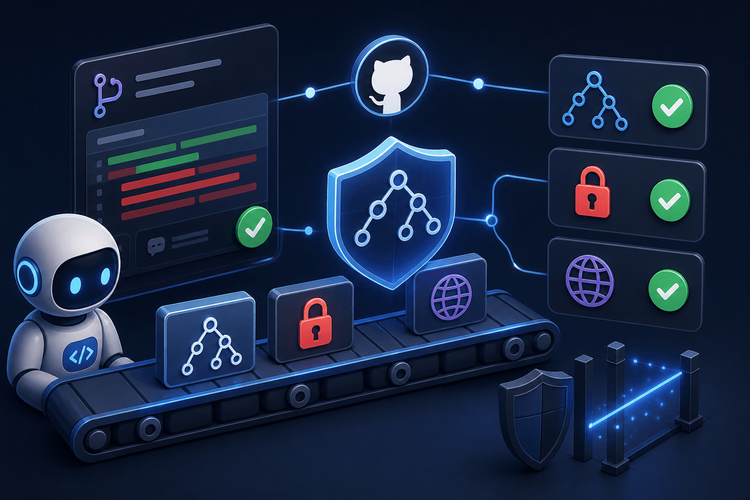
InfoQinfoq.com3 minSecuring AI Pull Requests: Building a Deterministic AST Audit Harness in GitHub Actions
A step‑by‑step tutorial for building a deterministic AST‑based security scanner that runs in GitHub Actions to catch prototype‑pollution, high‑entropy secrets, and unauthorized network egress in AI‑generated pull requests.
SitePointsitepoint.com19 min