Related reading
Arch-specific SIMD in Go
Go 1.27 introduces experimental `arm64` and `wasm` support to the `archsimd` API, allowing Go developers to use architecture-specific SIMD instructions without writing assembly. The API prioritizes sensible naming and compiler optimizations over direct hardware mirroring, making low-level SIMD more accessible.
The Go Bloggo.dev11 minHN4Article: Your Next DSL Author Is a Language Model
Typed Domain Grounding (TDG) embeds a DSL inside a mainstream language the LLM already knows (e.g., Kotlin) and uses the host compiler as an oracle. The author describes five building blocks—embedding, choosing a host language with high training‑data frequency, compiler‑driven type safety, a generate‑compile‑repair loop, and an on‑demand teaching tool—and shows measured results from kUML, a Kotli…
InfoQinfoq.com18 minSize-Specialized Memory Allocation
Go 1.27 adds a set of span‑class‑specific malloc functions for allocations ≤ 80 bytes. By generating a tiny, constant‑size allocator per span class the runtime can inline size‑dependent work (e.g. zero‑clear) and skip span‑class lookup, yielding 20‑30 % faster small allocations and ~1 % overall speed‑up for allocation‑heavy programs. The implementation is generated automatically via an AST inline…
The Go Bloggo.dev7 minHN315Securing AI Pull Requests: Building a Deterministic AST Audit Harness in GitHub Actions
A step‑by‑step tutorial for building a deterministic AST‑based security scanner that runs in GitHub Actions to catch prototype‑pollution, high‑entropy secrets, and unauthorized network egress in AI‑generated pull requests.
SitePointsitepoint.com19 minScaling Golang CI by Replacing actions/setup-go
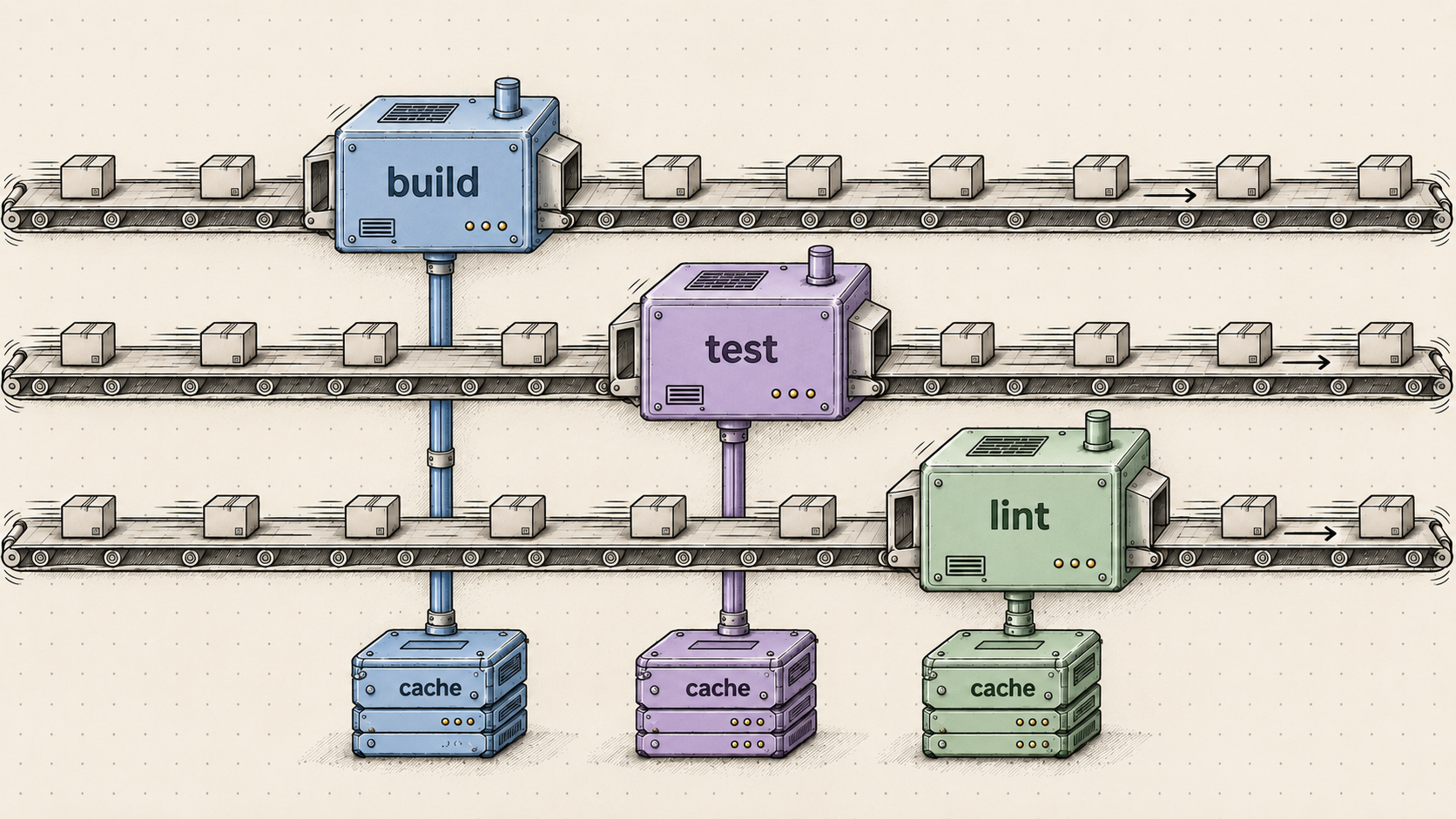
The default GitHub actions/setup-go action degrades parallel Go CI performance due to incomplete cache keys and stale writes. A new open-source action, cloudx-io/setup-go, resolves this with job-specific and run-ID-based keys, cutting test job runtimes by 69%.
Hacker News front pagecloudx.ai9 minHN7424What Go Taught Us About Java Garbage Collection
ParparVM’s GC was tuned by lowering the allocation‑trigger floor, adding configurable thresholds, parallel marking, mutator assistance, and proper weak/soft reference handling. These changes cut RSS from 98 MB to 38 MB, reduced worst‑case GC pauses from seconds to sub‑second, and improved cache hit rates with a recency‑based eviction policy.
CodeName Onecodenameone.com7 min