proomt

Search

Search posts, papers, and topics

All posts

Hacker News front pageThomas & Erin Ptacek6 min readintermediate
How to Write with an LLM

Summary

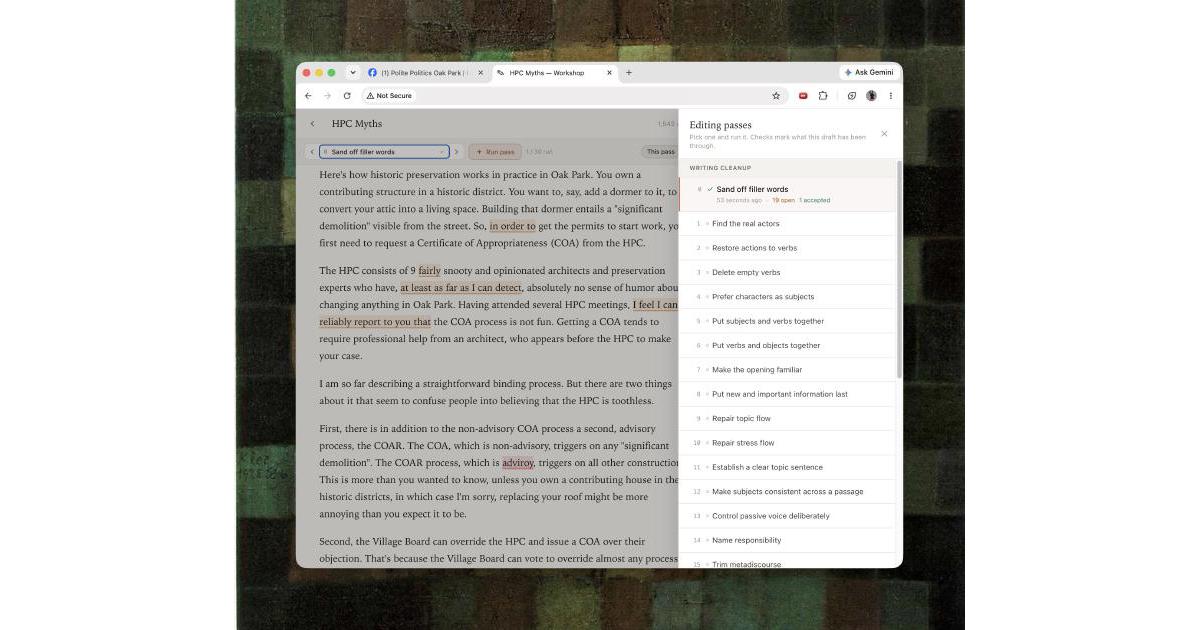
The post proposes a two‑rule workflow for using LLMs as copy‑editors rather than ghostwriters: never adopt a phrase the model suggests, and block its encouragement feedback. It then shows how to automate iterative copy‑editing with a small Python/HTMX/Tailwind app and a set of concrete prompts.

  • Write the first draft yourself; treat the LLM only as a mechanical copy‑editor.
  • Rule 1: reject any specific wording the model proposes – keep your voice intact.
  • Rule 2: suppress the model’s praise/encouragement to avoid reinforcing draft‑level flaws.
  • Use the model to flag passive voice, filler adverbs, over‑nominalizations, and misplaced paragraphs.

LLM‑assisted writing is proliferating, but most engineers treat the model as a content generator, risking loss of personal voice and over‑reliance on generic phrasing. This post offers a disciplined, reproducible workflow that preserves authorial style while offloading tedious mechanical edits, whi…

5/10
Related reading

  1. How To Write With An LLM

    Simon Willison argues that LLMs should be used as copyeditors, not as writers, and proposes a strict rule never to reuse any phrase they suggest. He shares a prompt for building a personal LLM proofreading tool.

    Simon Willisonsimonwillison.net1 min
  2. Writing the Docs: 2026 Edition

    The post revisits core documentation principles—separating what from how, grounding reference docs in source truth, and continuously improving—and examines how large language models fit into this workflow. It argues that diataxis still guides effective docs and that LLM‑generated drafts must be anchored to machine‑readable ground truth to avoid hallucination.

    Mozilla Automation Teamwrla.ch15 min
  3. How LLMs Can Find a Needle in a Haystack

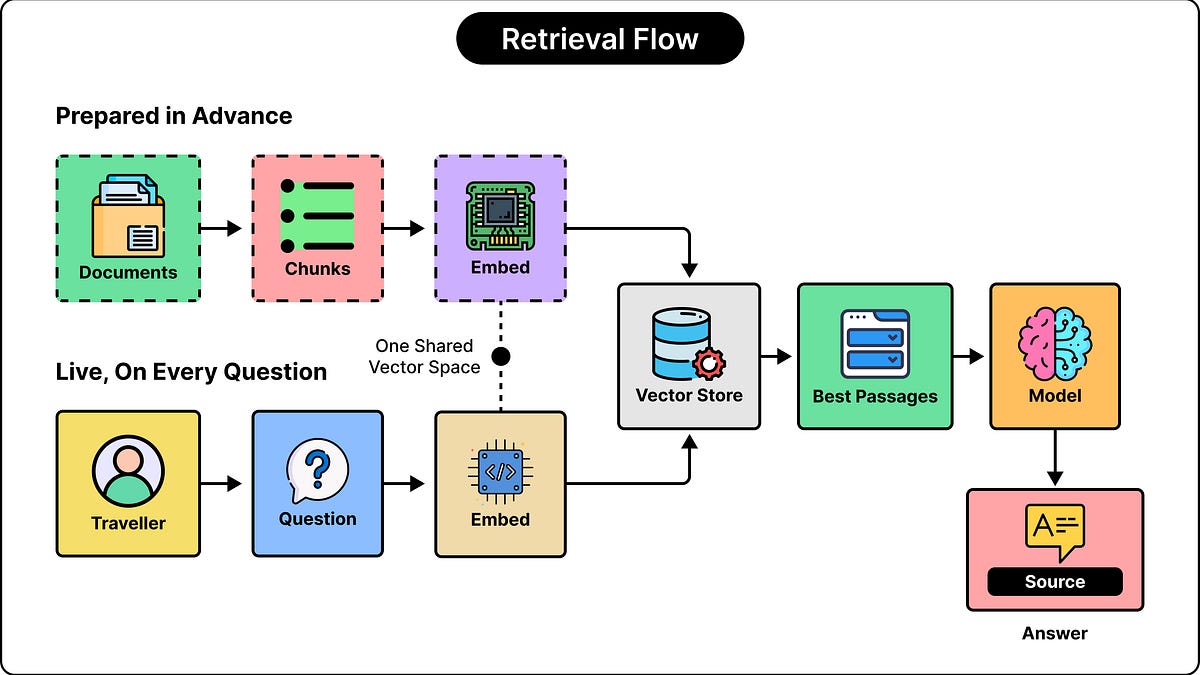
    The post explains how retrieval‑augmented generation (RAG) lets LLM‑based assistants answer questions from private corpora. It covers chunking documents into passages, embedding queries and chunks, similarity metrics, and the trade‑offs of different vector indexes (flat, IVF, HNSW). The focus is on practical design choices rather than new research.

    ByteByteGobytebytego.com12 min
  4. Note on 18th September 2026

    This entry is a brief, sponsored blurb that offers a vague opinion on using LLMs for security scanning, without any concrete data or analysis. It links to other recent articles but adds no substantive content of its own.

    Simon Willisonsimonwillison.net1 min
  5. Learning to solve hard problems in RL for LLMs by never giving up

    The post introduces the *Matthew Effect* in RL‑fine‑tuning of LLMs—performance gains concentrate on tasks the model already solves— and proposes *Never Give Up* (NGU), an adaptive sampling scheme that uses a small k for easy prompts and retries hard prompts with a high‑probability “never give up” loop. Experiments on math (AIME, GSM8k), code (Manufactoria), and larger‑scale setups (DeepScaler) sh…

    Hacker News front pagegithub.io11 minHN1179