proomt

Search

Search posts, papers, and topics

All posts

Mozilla Automation TeamWill Lachance15 min readintermediate

Writing the Docs: 2026 Edition

Summary

The post revisits core documentation principles—separating what from how, grounding reference docs in source truth, and continuously improving—and examines how large language models fit into this workflow. It argues that diataxis still guides effective docs and that LLM‑generated drafts must be anchored to machine‑readable ground truth to avoid hallucination.

  • Use the diataxis framework: split docs into tutorials, explanations, how‑tos, and reference to match audience needs.
  • Generate reference documentation from actual schemas or code and link back to the source to prevent drift.
  • Document decisions and processes alongside the docs to preserve rationale.
  • Treat LLM‑generated drafts as starting points; verify facts and add citations to ground truth.

Teams building internal data platforms or any product docs should care, because clear, source‑driven documentation reduces errors and makes LLM assistance reliable.

6/10

Related reading

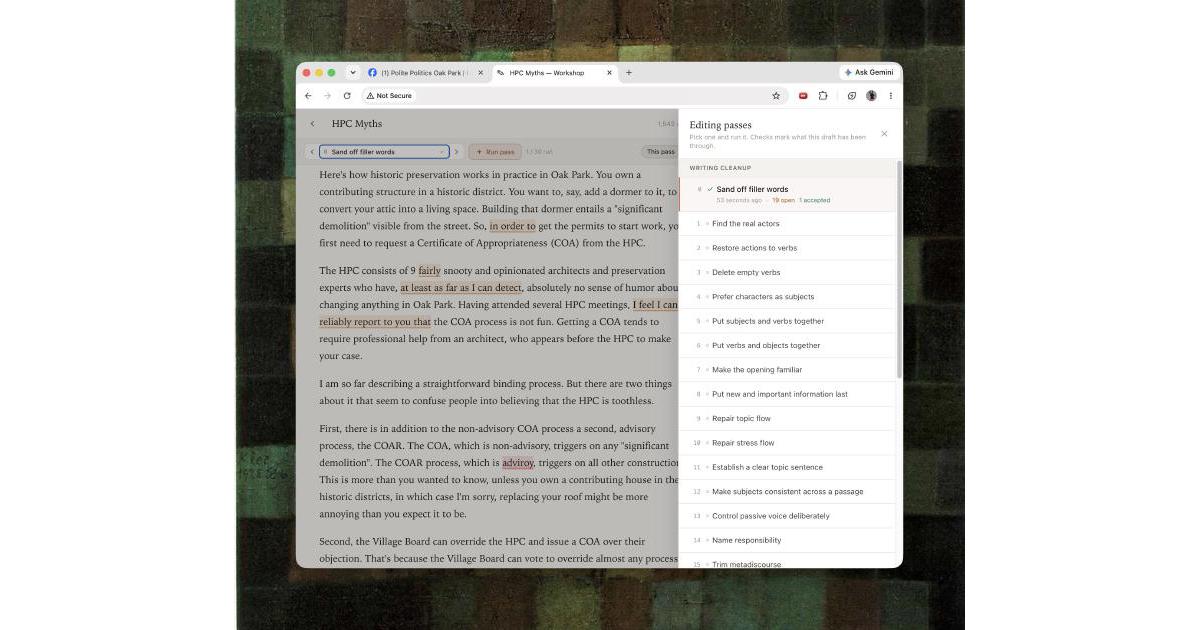
  1. How to Write with an LLM

    The post proposes a two‑rule workflow for using LLMs as copy‑editors rather than ghostwriters: never adopt a phrase the model suggests, and block its encouragement feedback. It then shows how to automate iterative copy‑editing with a small Python/HTMX/Tailwind app and a set of concrete prompts.

    Hacker News front pagesockpuppet.org6 minHN712401
  2. Article: Your Next DSL Author Is a Language Model

    Typed Domain Grounding (TDG) embeds a DSL inside a mainstream language the LLM already knows (e.g., Kotlin) and uses the host compiler as an oracle. The author describes five building blocks—embedding, choosing a host language with high training‑data frequency, compiler‑driven type safety, a generate‑compile‑repair loop, and an on‑demand teaching tool—and shows measured results from kUML, a Kotli…

    InfoQinfoq.com18 min
  3. How we AI-updated 1,138 Error-code Docs Pages

    Twilio built a two‑phase pipeline that first scores each error‑code doc with a deterministic script, then feeds only low‑scoring pages to an LLM (gpt‑5.4) using a strict prompt. The model’s diff is applied via git, linted, and opened as a PR for a reviewer. In 12 weeks they updated 1,138 pages (≈34.6 s/page) with a human reviewing every change, cutting manual effort from an estimated 18 k hours a…

    Twiliotwilio.com11 min
  4. One style guide for everything Claude Code writes

    A detailed walkthrough of forking the nbj‑write‑clearly Claude Code skill to enforce the Google Developer Documentation style guide across all developer‑facing prose (docs, comments, commit messages, review feedback). The fork expands the trigger set, vendors the 70‑page guide offline via a Bun sync script, and adds a layered approach (global CLAUDE.md rules, on‑demand skill, per‑agent preloaded…

    Bjørn Johansenbjornjohansen.com5 min
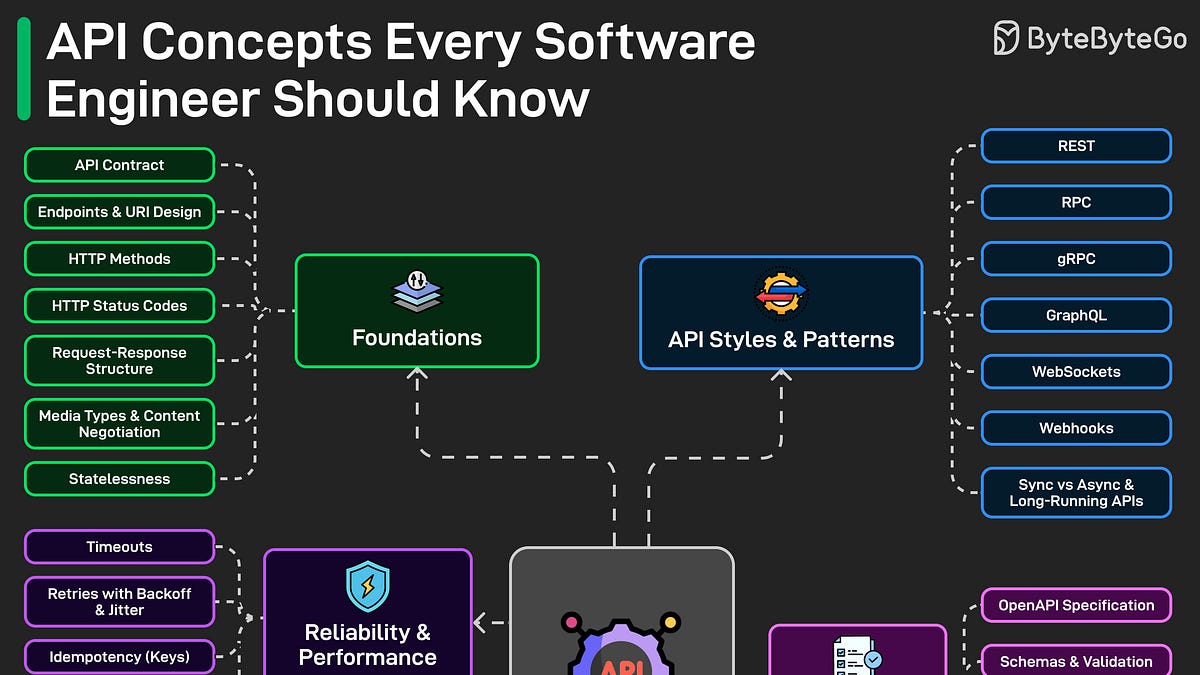
  5. EP226: API Concepts Every Software Engineer Should Know

    This article outlines essential API design considerations, covering HTTP fundamentals, architectural styles like REST and GraphQL, and critical aspects such as naming, versioning, security, and reliability. It serves as a high-level checklist for engineers designing or consuming APIs.

    ByteByteGobytebytego.com5 min
  6. Introducing Our New Dropbox API Documentation

    Dropbox launched a revamped API documentation site with interactive request testing, an embedded AI assistant, and a new Model Context Protocol for connecting external AI tools. The UI is unified, searchable, and includes full request/response schemas.

    Dropboxdropbox.tech2 min