Related reading
Introducing System One Models and Jev
TypeSafe AI announced its first “System One” model, Jev, a non‑text‑generating LLM that outputs type‑safe structured decisions with calibrated probabilities. It claims 40‑200× lower latency (70‑500 ms) and 100‑500× lower cost versus frontier LLMs, no hallucinations, and parallel sampling. The post includes a side‑by‑side demo, a custom “workflow” benchmark comparing Jev to GPT‑5.6/6 and other mod…
Why I'm still bearish on LLMs after Navier-Stokes
The author argues that despite headline successes (e.g., Navier‑Stokes proof, security exploits), current frontier LLMs still require heavy human oversight and rigorous specifications that are costly to produce. Reward‑hacking, narrow generalization, and the need for domain‑expert spec writing limit autonomous deployment to only a few niche domains (high‑failure‑cost work, tightly defined tasks,…
Article: Architecting Secure and Scalable Facial Verification Systems
A real‑world post‑mortem of a high‑volume face verification service that moved from a naïve synchronous API to an async, layered pipeline (edge validation, preprocessing, decoupled detection/verification, decision engine) to achieve 8.5k rpm, p99 < 1.8 s, 30 % cost savings, and strict privacy controls.
InfoQinfoq.com15 minJev is the fastest-adopted model in AI Gateway history
Vercel reports that the Jev decision model was adopted by 13% of paid teams within its first day, outpacing prior model launches. Jev claims to be up to 194× faster and 445× cheaper than general‑purpose LLMs while returning structured, probabilistic decisions.
Article: Beyond Relevance: A Governance-First Architecture for Enterprise Personalization
The article proposes a governance‑first architecture for enterprise personalization, where policy‑driven steps (memory, journey graph, AI routing, scoring, trust checks, outcome simulation) shape the recommendation before it is returned. A reference FastAPI implementation demonstrates the pattern with external YAML policies and optional LLM assistance.
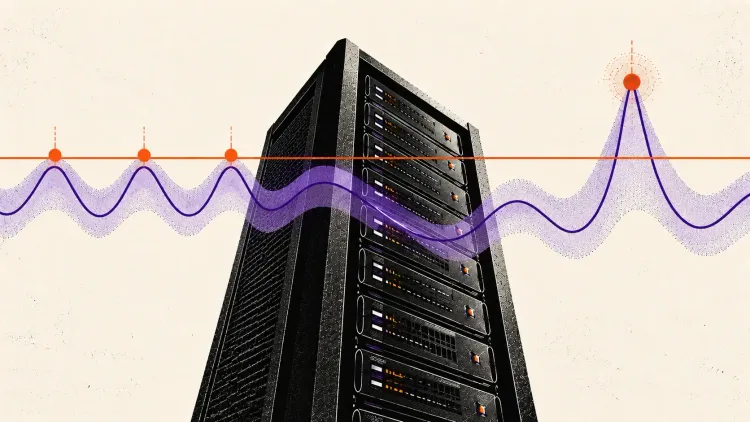
InfoQinfoq.com19 minServer Monitoring in the age of AI: What static thresholds miss and how adaptive monitoring fixes it?
Static CPU/memory thresholds generate noise because workloads vary by time‑of‑day, day‑of‑week, and long‑term trends. Adaptive monitoring learns per‑server baselines (using simple ML on historic metrics) and creates dynamic thresholds plus anomaly alerts. ManageEngine OpManager’s Zia engine is presented as a turnkey AIOps solution that auto‑learns baselines, lets you set sensitivity, and adds ale…
SitePointsitepoint.com6 min