proomt

Search

Search posts, papers, and topics

All posts

SitePoint19 min readtutorialintermediate
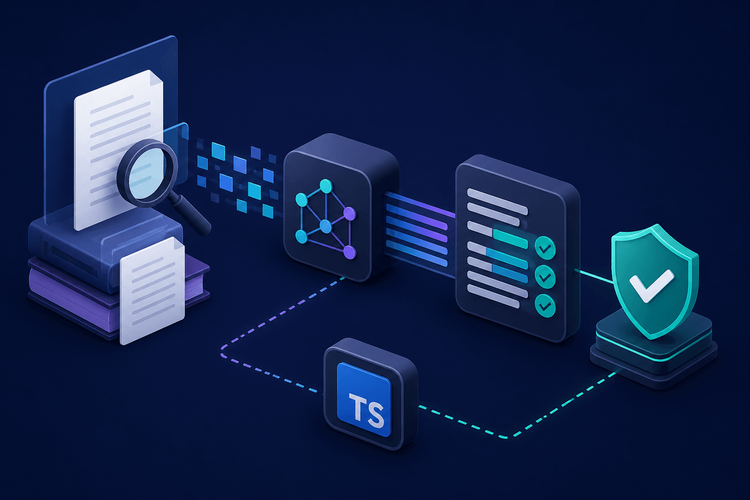
RAG Citation Verification: Building Deterministic Byte-Span Validators in TypeScript

Summary

The article walks through building a TypeScript middleware that validates RAG citations by checking exact byte‑span offsets against source buffers, replacing fuzzy heuristics with deterministic guarantees. Benchmarks show sub‑millisecond verification for 1,000 citations across 50 documents.

  • Byte‑span offsets give a binary guarantee of citation grounding, avoiding token or character misalignments.
  • Define a strict `GroundingAssertion` contract and use structured LLM output (JSON/function calling) to capture sourceId, byteStart, byteEnd, and citedText.
  • Implement a citation extractor that validates schema and numeric offsets before verification.
  • Integrate the validator as post‑generation middleware in LangChain pipelines to keep verification stateless and composable.

Any team deploying production RAG systems—especially in regulated domains—needs deterministic citation checks to prevent hallucinated references and audit failures.

6/10
Related reading

  1. How we AI-updated 1,138 Error-code Docs Pages

    Twilio built a two‑phase pipeline that first scores each error‑code doc with a deterministic script, then feeds only low‑scoring pages to an LLM (gpt‑5.4) using a strict prompt. The model’s diff is applied via git, linted, and opened as a PR for a reviewer. In 12 weeks they updated 1,138 pages (≈34.6 s/page) with a human reviewing every change, cutting manual effort from an estimated 18 k hours a…

    Twiliotwilio.com11 min
  2. Eliminating AI Code Hallucinations with TypeScript Compiler Diagnostics and TDD Loops

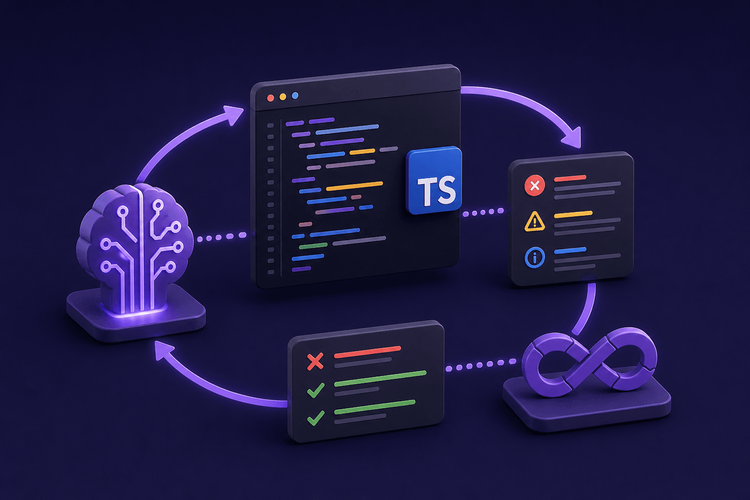
    The article shows how to replace raw TypeScript compiler output with a programmatic JSON feedback loop that merges diagnostics and Vitest test failures, feeding the structured data back to an LLM coding agent for self‑correction. It provides concrete code for extracting, enriching, validating, and de‑duplicating errors, and demonstrates token savings and deterministic iteration until compilation…

    SitePointsitepoint.com15 min
  3. Bend 2 and the Vibe-Coding Trap

    The author argues that “vibe‑coding” with LLMs can cause engineers to reinvent existing solutions, using Bend 2—a language that asks LLMs to write long formal proofs—as a case study. By re‑implementing the same demo in SPARK/Ada, the author shows that established formal‑verification tools achieve the same guarantees with a tiny proof, highlighting the need for domain research before prompting LLM…

    Hacker News front pageliampwll.com5 minHN326235
  4. How LLMs Can Find a Needle in a Haystack

    The post explains how retrieval‑augmented generation (RAG) lets LLM‑based assistants answer questions from private corpora. It covers chunking documents into passages, embedding queries and chunks, similarity metrics, and the trade‑offs of different vector indexes (flat, IVF, HNSW). The focus is on practical design choices rather than new research.

    ByteByteGobytebytego.com12 min