proomt

Search

Search posts, papers, and topics

typescript

RSS
  1. 1

    Migrating the GitHub Copilot runtime to Rust, using Copilot

    The Copilot agent runtime was rewritten from a 130‑k‑line TypeScript/Node.js codebase into a native Rust library (~830 k lines of Rust) to reduce startup latency, memory use, and improve reliability. The migration was done incrementally (in‑place) across 128 PRs, with AI‑generated code handling most of the work. The new runtime exposes a C ABI for in‑process embedding by all six Copilot SDK langu…

    GitHub Oldgithub.blog65 minHN188

  2. 3

    Building Deterministic Multi-Agent State Machines in TypeScript

    The article shows how to build a deterministic, checkpoint‑backed finite state machine engine in TypeScript for orchestrating multi‑agent AI workflows. It uses Zod for schema validation, better‑sqlite3 for atomic persistence, and a pure transition function to make workflows traceable and recoverable in serverless environments.

    SitePointsitepoint.com18 min
  3. 4

    Build a Typed Context Compaction Gate for AI Agents

    A step‑by‑step tutorial showing how to build a typed context‑compaction gate for AI agents in TypeScript using LangChain and Zod. It defines a discriminated‑union schema for keep/summarize/discard actions, implements a fast gpt‑4o‑mini classifier, validates decisions at runtime, and wires the gate as middleware in an agent loop, with testing and production‑grade tuning advice.

    SitePointsitepoint.com16 min
  4. 9

    GPT-Live 1 now available on AI Gateway

    Vercel AI Gateway now offers OpenAI’s GPT‑Live 1, a full‑duplex voice model that can listen and speak simultaneously. The SDK lets you start a voice session and optionally delegate work to any text model, with code examples for both patterns.

    Vercelvercel.com1 minrelease
  5. 10

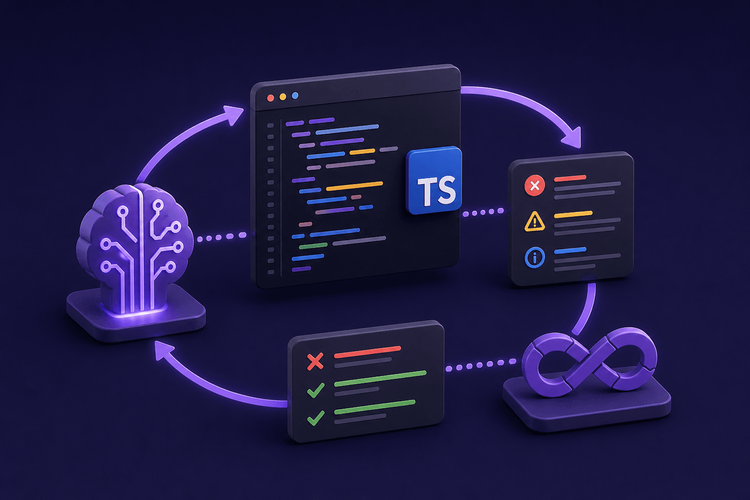
    Eliminating AI Code Hallucinations with TypeScript Compiler Diagnostics and TDD Loops

    The article shows how to replace raw TypeScript compiler output with a programmatic JSON feedback loop that merges diagnostics and Vitest test failures, feeding the structured data back to an LLM coding agent for self‑correction. It provides concrete code for extracting, enriching, validating, and de‑duplicating errors, and demonstrates token savings and deterministic iteration until compilation…

    SitePointsitepoint.com15 min
  6. 13

    Why client SDK generation belongs in the open

    Google partnered with Speakeasy to open‑source their OpenAPI‑based multi‑language SDK generator, covering Python, TypeScript, Go, Java, C#, PHP, and Ruby. The move replaces a now‑defunct proprietary generator, reduces maintenance overhead to ~1 engineer, and adds a CLI and documentation server generator under AGPLv3.

    Google Developersgoogleblog.com3 min
  7. 16

    Fixing Server Component Bundle Leaks in Next.js with AST Linting

    Server‑only code can silently inflate client bundles in Next.js 15+ apps. The article shows how to spot leaks with @next/bundle-analyzer, prevent them by removing shared barrel files or adding the `server-only` guard, and enforce a deny‑list of server modules via a custom ESLint rule that scans the AST of files with a `'use client'` directive. The rule is wired into a CI bundle‑budget check using…

    SitePointsitepoint.com14 min
  8. 18

    TanStack Charts Introduced with a Framework Agnostic Grammar of Graphics for TypeScript

    TanStack Charts α is a framework‑agnostic, TypeScript‑first charting library that implements a grammar‑of‑graphics API (marks, scales, channels, transforms, layers). It ships as a single npm package with adapters for React, Preact, Vue, Solid, Svelte, Angular, Lit, and vanilla DOM, and can run on server or client. The runtime is headless; type inference stays tied to the source row, so each mark…

    InfoQinfoq.com2 minrelease
  9. 19

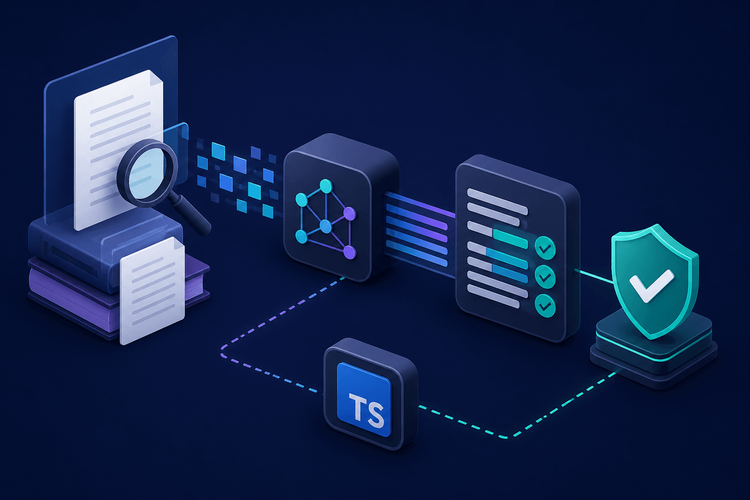
    WebAuthn Passkey Recovery: Building Account Fallbacks and Backup Codes in Node.js

    A step‑by‑step tutorial for building a zero‑trust WebAuthn passkey recovery flow in Node.js/TypeScript. It covers generating 128‑bit backup codes, hashing them with Argon2id, rate‑limited verification, time‑boxed JWT recovery sessions, and orchestrating new credential registration with @simplewebauthn/server while revoking lost credentials and rotating codes.

    SitePointsitepoint.com19 min
  10. 21

    GLM 5.3 FlashX now available on AI Gateway

    Vercel AI Gateway now offers the GLM‑5.3‑FlashX model, a fast (~200 tps) multimodal coding LLM. The post includes a TypeScript streaming example, notes the model’s fit for coding agents and interactive tools, and lists AI Gateway features (unified API, usage tracking, retries/failover, custom reporting, key budgets, routing rules) with no platform fee.

    Vercelvercel.com1 minrelease
  11. 22

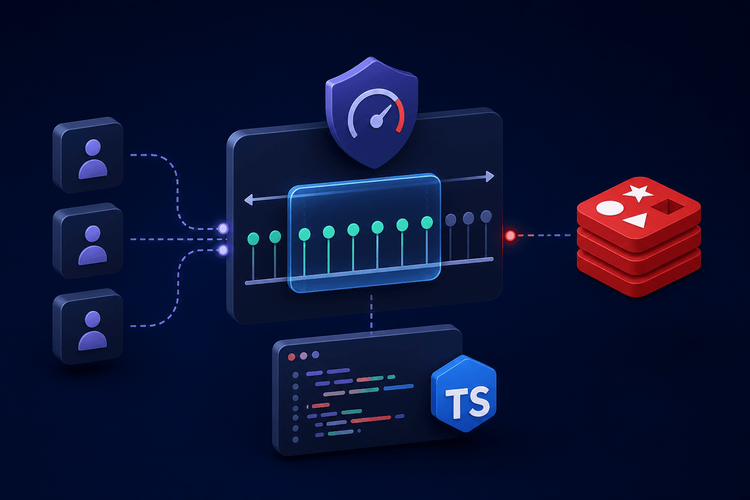
    Building Composite Model Context Protocol (MCP) Gateways in TypeScript

    Step‑by‑step tutorial showing how to build a stateless composite Model Context Protocol (MCP) gateway in TypeScript using Hono, Zod, and the MCP SDK. It covers config‑driven upstream registration, namespaced tool discovery, JSON‑RPC routing, per‑tool auth middleware, and a token‑bucket rate limiter, with concrete code snippets and design trade‑offs.

    SitePointsitepoint.com16 min
  12. 23

    Gemini 3.8 Live models now available on AI Gateway

    Vercel AI Gateway now offers Google’s Gemini 3.8 Live and Live Extended Thinking models through its realtime WebSocket API, enabling real‑time spoken interactions with audio output and parallel reasoning. The post includes a short TypeScript example for token acquisition, WebSocket setup, and handling of realtime events.

    Vercelvercel.com1 minrelease
  13. 24

    Give your eve agent a browser

    Vercel released the @agent-browser/eve extension, giving Eve agents full browser automation capabilities inside their sandbox. It adds installable tools for navigation, interaction, and screenshots, with domain allowlists and credential protection.

    Vercelvercel.com1 minrelease
  14. 25

    WebMCP support now available in mcp-handler

    Vercel's mcp-handler 2.2.0 adds experimental WebMCP support, letting you expose registered MCP tools to in‑browser agents via a single script tag. The script proxies tool calls back to your MCP server with the signed‑in user’s credentials, so no extra OAuth flow is needed.

    Vercelvercel.com1 minrelease