proomt

Search

Search posts, papers, and topics

All posts

Hacker News front page7 min readrelease notesintermediate

Show HN: Cactus Needle 3: 8-29MB automation models can match DeepSeek V4 Flash

Summary

Cactus Needle 3 is a laddered attention LLM (29‑121 M params, CQ2‑bit quantised) that fits in 9‑29 MB binaries and runs on devices like a Raspberry Pi 5 (400‑4k t/s decode, 1‑10k t/s pre‑fill). It can perform tool‑calling, structured extraction, and text embedding locally, matching DeepSeek V4 Flash on downstream tasks after a single fine‑tune epoch. The post includes architecture details, benchm…

  • Laddered Simple Attention Networks use a depth‑configurable sub‑network (2‑20 layers) that can be fine‑tuned independently, enabling a trade‑off between model size (9‑29 MB) and capability.
  • CQ2 quantisation reduces model size dramatically while keeping inference speed high on edge hardware (e.g., 850 t/s decode on a Pi 5).
  • The model supports three unified primitives: tool‑calling (auto‑selecting functions and filling arguments), structured extraction (typed JSON via Pydantic), and embedding generation for local semantic search.
  • Benchmarks show Needle 3 beating models 10× its size on tool‑call tasks and matching 2‑3× larger models on extraction, while using ~2× fewer MFLOPs per token than a comparable transformer.

Running LLM‑powered assistants entirely on‑device removes latency, privacy concerns, and dependence on cloud APIs—critical for smart‑home, robotics, wearables, and automotive use‑cases where connectivity is intermittent or data must stay local. Needle 3 demonstrates that sub‑30 MB models can still…

6/10
Related reading

  1. DeepSeek-V4.1-Flash: Pushing the Limits of KV Cache Compression

    DeepSeek‑V4.1‑Flash is a 552B‑parameter multimodal Mixture‑of‑Experts LLM that supports up to 1 M‑token contexts while slashing KV‑cache memory to 890 bytes/token (≈¼ of its predecessor) via cross‑layer reuse (CSA2) and FP4 quantisation, plus a SWA‑Bounded Replay scheme that cuts persistent cache to 1/8. The Causal Encoder‑Decoder design halves prefill compute (8B vs 16B active parameters) and th…

    Hugging Face Daily Papersarxiv.org3 minpaperHN12710
  2. M5 Ultra Mac Studio Review

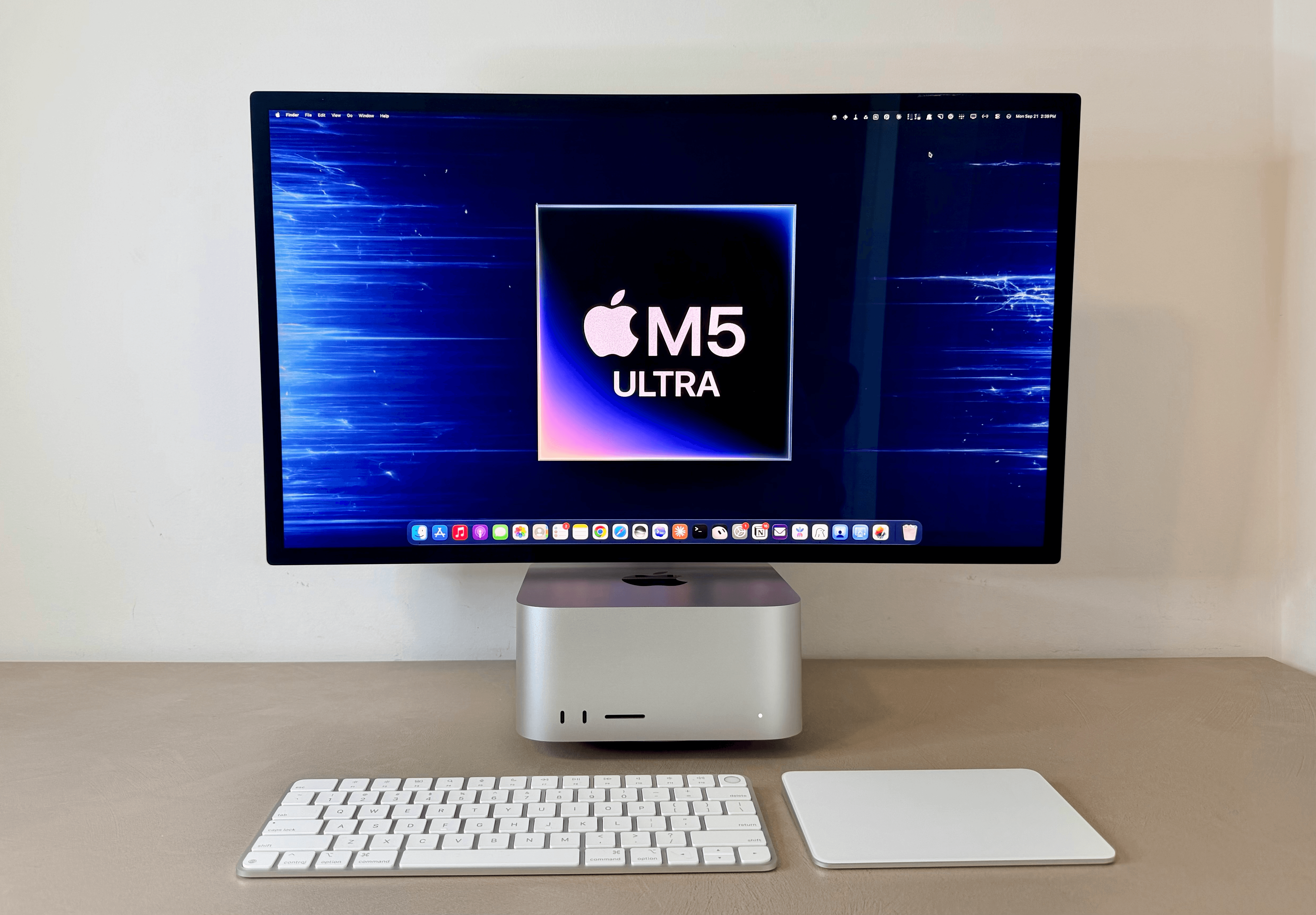
    The M5 Ultra Mac Studio (256 GB RAM) uses a quad‑die M5 Max architecture with an 80‑core GPU and 1.2 TB/s memory bandwidth, delivering ~70 % faster prompt‑to‑first‑token and token‑generation rates than the M3 Ultra. In the author’s tests Qwen3.8‑Flash‑Next hits 100 tokens/s on short prompts and 60‑85 tokens/s with 64‑256 KB context, making local AI agents (Open Minis, Hermes, Codex) feel snappy a…

    Hacker News front pagemacstories.net39 minHN191174
  3. SiliconBench: Speed, Memory, and Fidelity for LLM Serving on Unified-Memory Desktops

    SiliconBench benchmarks nine Apple‑Silicon LLM serving engines on unified‑memory desktops, measuring speed, memory usage, and output fidelity across Qwen3, Qwen3.5, and Gemma‑4 models. It finds vllm‑metal doubles throughput at modest concurrency, memory budgets often fail to preserve headroom, and only three stacks satisfy all fidelity and model‑coverage requirements, with tensor‑parallel scaling…

    Hugging Face Daily Papersarxiv.org1 minpaper
  4. GLM 5.3 FlashX now available on AI Gateway

    Vercel AI Gateway now offers the GLM‑5.3‑FlashX model, a fast (~200 tps) multimodal coding LLM. The post includes a TypeScript streaming example, notes the model’s fit for coding agents and interactive tools, and lists AI Gateway features (unified API, usage tracking, retries/failover, custom reporting, key budgets, routing rules) with no platform fee.

    Vercelvercel.com1 minrelease
  5. Five models pass the easy code reviews. Then the diffs get hard.

    A hands‑on benchmark of five LLM code‑review models (Claude Opus 5, GPT 5‑6 Sol, Grok 4.6, Kimi 3, GLM 5.3, Qwen 3.8 Max, DeepSeek v4 Pro) shows that all models ace tiny 15‑line diffs but diverge sharply on 100‑300‑line, cross‑file changes. The author built a deterministic harness (single HTTP call, fixed system prompt, JSON output) and measured detection rate, false‑positives, latency, token usa…

    Bjørn Johansenbjornjohansen.com16 min
  6. Bonsai 2 27B: Near-Lossless Compression in a 9x Smaller Footprint

    Ternary Bonsai 2 27B is a new multimodal LLM based on Qwen3.8 27B, utilizing ternary weights for a 5.9GB model footprint. It achieves over 9x compression while retaining 98.2% of the full-precision model's aggregate benchmark performance across various tasks. This enables highly capable 27B-class models to run efficiently on local devices.

    Hacker News front pageprismml.com5 minreleaseHN579198lobste.rs12