proomt

Search

Search posts, papers, and topics

All posts

Lobstersdtonon5 min readintermediate

Squalk: an old-school forum engine built on Nostr (NIP-29 groups, NIP-7D threads)

Summary

Squalk is a SvelteKit‑based forum built on the Nostr protocol, implementing NIP‑29 groups and NIP‑7D threads. It can run in a single‑forum “simple” mode or a multi‑forum “full” mode, with chat sidebars, markdown resources, and optional server‑side rendering for SEO. Configuration is done entirely via `PUBLIC_` environment variables, and deployment scripts support both static hosting and Node SSR,…

  • All runtime settings are exposed as `PUBLIC_` env vars, making the app fully configurable at build or runtime.
  • Supports two deployment models: static SPA (default) and SSR (via `PUBLIC_SSR=yes`) for crawlable pages and real 404s.
  • Uses Nostr NIP‑29 for group management and NIP‑7D for threaded discussions; requires a relay that supports these NIPs.
  • Custom content (resources, homepage/contacts partials) is authored as Nostr `kind 30023` events with specific tags, enabling admin‑only updates.

Squalk demonstrates how a modern web app can be built entirely on a decentralized protocol, handling both client‑side interactivity and SEO‑friendly server rendering without a traditional backend. The approach to configuration, content publishing via Nostr events, and flexible deployment pipelines…

5/10

Related reading

  1. The architecture of Neki

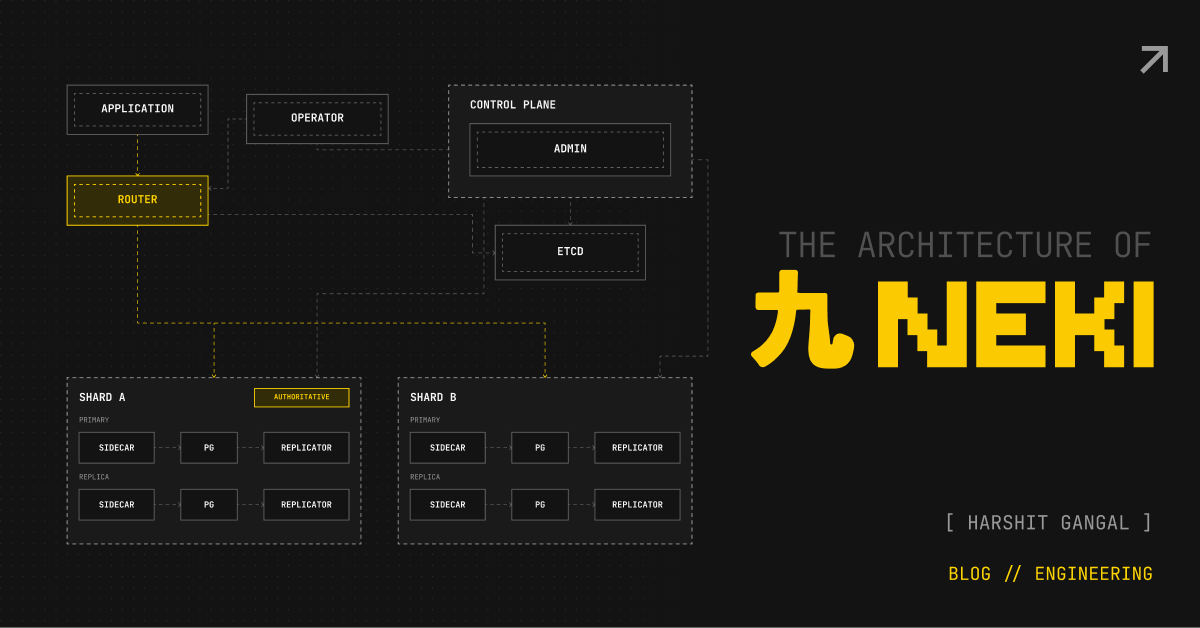
    Neki is PlanetScale’s sharding layer for vanilla PostgreSQL that presents a single Postgres endpoint while routing queries across a fleet of Postgres instances. It does this with a set of tightly‑coupled components—Router, Sidecar, PostgresManager, Admin, Operator, and etcd‑backed Data Topology—each handling a specific piece of the scaling, failover, and query‑planning puzzle.

    PlanetScaleplanetscale.com8 min
  2. Article: Your Next DSL Author Is a Language Model

    Typed Domain Grounding (TDG) embeds a DSL inside a mainstream language the LLM already knows (e.g., Kotlin) and uses the host compiler as an oracle. The author describes five building blocks—embedding, choosing a host language with high training‑data frequency, compiler‑driven type safety, a generate‑compile‑repair loop, and an on‑demand teaching tool—and shows measured results from kUML, a Kotli…

    InfoQinfoq.com18 min
  3. Replica-aware routing public beta

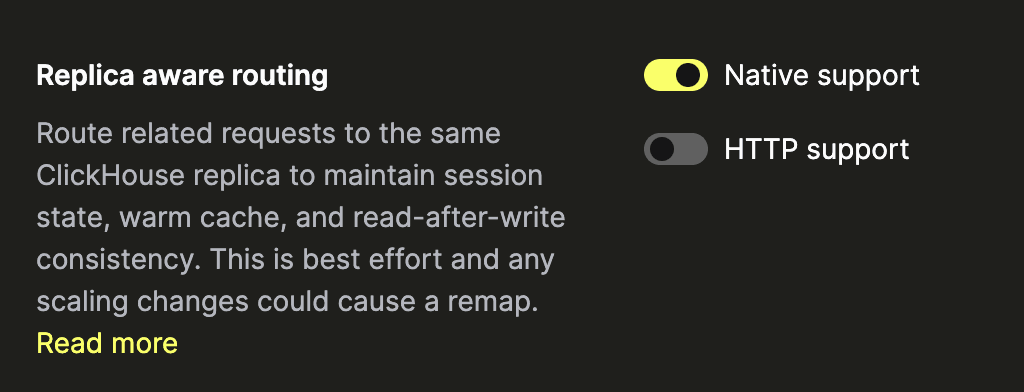
    Replica‑aware routing (public beta) lets ClickHouse Cloud users pin a query stream to a specific replica by sending a custom header (HTTP) or overriding the TLS SNI (native). The proxy (Envoy) hashes the tag and consistently forwards all requests with the same tag to that replica, giving read‑after‑write consistency for temporary tables, session objects, and warm replica caches. Stickiness is bes…

    ClickHouseclickhouse.com6 min
  4. Introducing TIN: full-text search for Postgres

    PlanetScale’s TIN is a new PostgreSQL extension that implements a full‑text search index supporting Boolean, phrase, span, fuzzy, wildcard, regex, case/accent folding, COUNT(*) and BM25 top‑k queries. In a suite of benchmarks on an i7i.8xlarge EC2 instance (8 vCPU, 32 GB RAM), TIN built in 8 min 10 s (50.7 GB index) and outperformed ParadeDB, pg_textsearch and the built‑in GIN index by large marg…

    PlanetScaleplanetscale.com15 minHN20175
  5. Migrating the GitHub Copilot runtime to Rust, using Copilot

    The Copilot agent runtime was rewritten from a 130‑k‑line TypeScript/Node.js codebase into a native Rust library (~830 k lines of Rust) to reduce startup latency, memory use, and improve reliability. The migration was done incrementally (in‑place) across 128 PRs, with AI‑generated code handling most of the work. The new runtime exposes a C ABI for in‑process embedding by all six Copilot SDK langu…

    GitHub Oldgithub.blog65 minHN188