proomt

Search

Search posts, papers, and topics

Hall of Fame

Hall of FameJoel Spolsky200016 min readintro

The Joel Test: 12 Steps to Better Code

Summary

The Joel Test is a 12‑question checklist for evaluating a software team’s development practices, from source control to daily builds and bug tracking. Scoring each item gives a quick health metric, encouraging basics that improve reliability and predictability.

  • Use source control and keep the repository the single source of truth.
  • Automate a one‑step build script that can produce a full shipping build from scratch.
  • Run daily builds to catch breakages early and assign responsibility for broken builds.
  • Maintain a simple bug database with reproducible steps, expected behavior, assignee, and status.

Engineering managers and team leads should care because the checklist highlights low‑hanging process improvements that boost productivity and reduce risk.

4/10

Related reading

  1. How to Review AI-Generated Python Code Efficiently

    A practical five‑step workflow for reviewing AI‑generated Python code, covering intent clarification, automated quality checks (linters, type checkers, security scanners, tests), risk‑first manual reading, a checklist of common AI mistakes, and fix‑verify loops, plus a ready‑to‑use dev‑environment setup.

    Real Pythonrealpython.com26 min
  2. Eliminating AI Code Hallucinations with TypeScript Compiler Diagnostics and TDD Loops

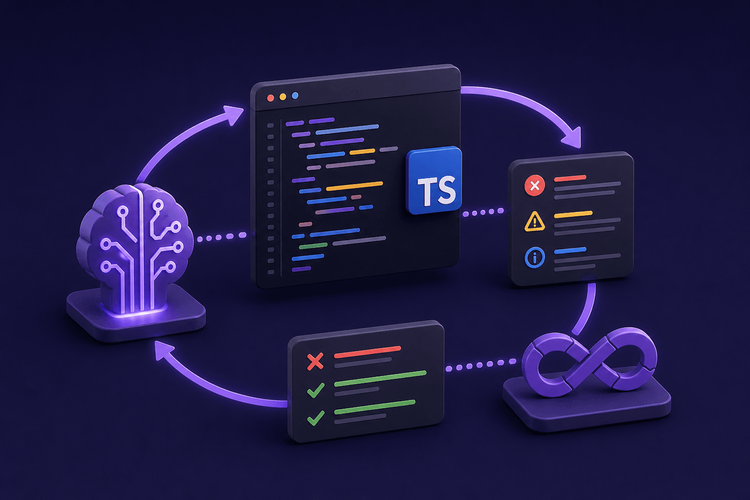
    The article shows how to replace raw TypeScript compiler output with a programmatic JSON feedback loop that merges diagnostics and Vitest test failures, feeding the structured data back to an LLM coding agent for self‑correction. It provides concrete code for extracting, enriching, validating, and de‑duplicating errors, and demonstrates token savings and deterministic iteration until compilation…

    SitePointsitepoint.com15 min
  3. The Flaky Test Confession: “We All Know We’re Ignoring Test Failures”

    Flaky tests silently erode CI reliability, waste compute and developer time, and let real bugs slip into production. The post quantifies the cost (≈2.5 % of developer time, $5.67 per manual investigation vs $0.02 for auto‑rerun) and critiques common band‑aid approaches (retries, quarantine, manual triage). It argues that visibility—detecting flaky tests, predictive test selection, and automated t…

    Codeshipcloudbees.com5 min