Arduino BlogArduino Team2 min readintermediate
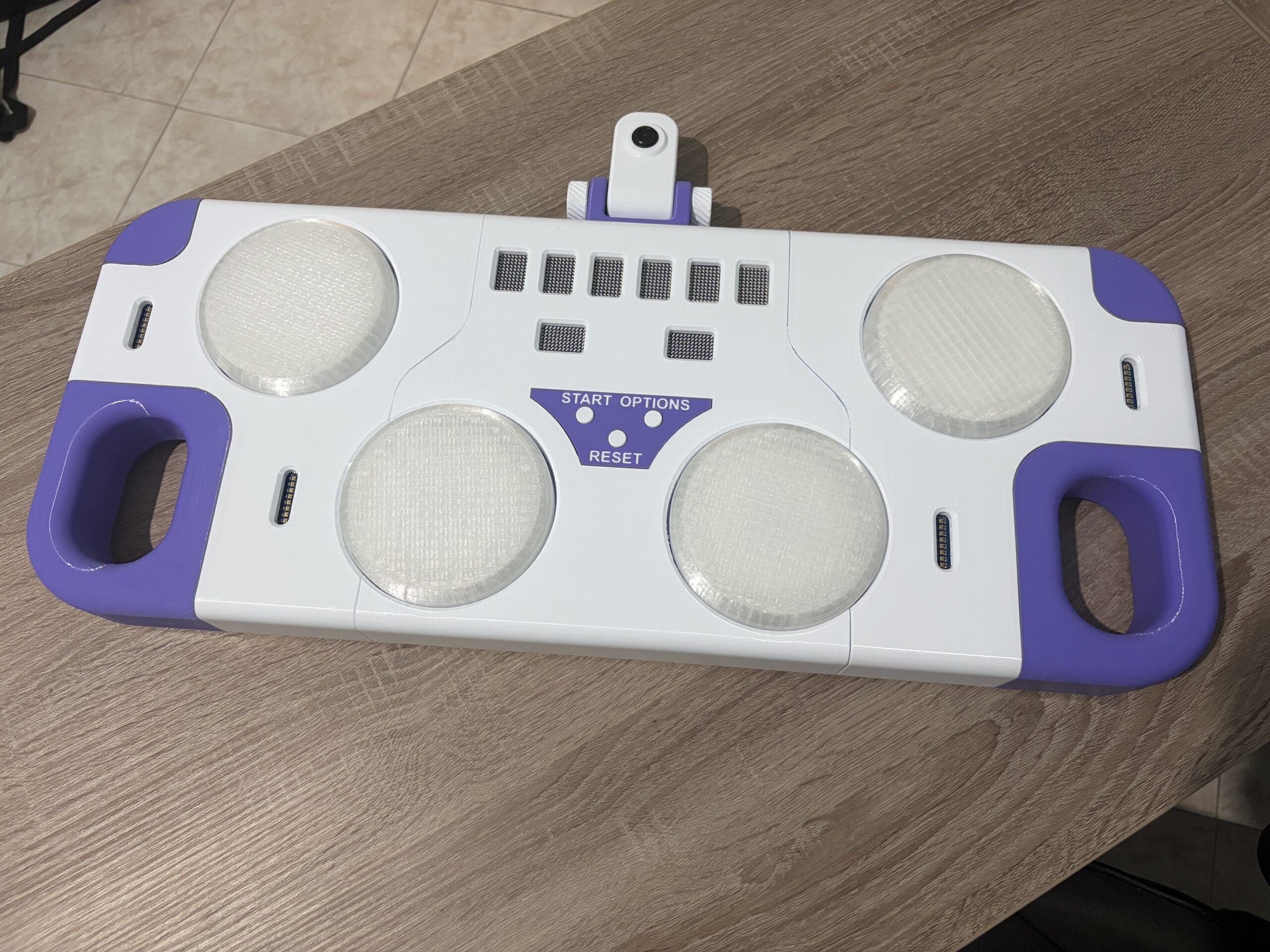
The Reflexes Machine turns a reaction game into an interactive experience
Summary
The article showcases a reaction‑game project built on an Arduino UNO Q that uses its dual‑brain (Linux + real‑time MCU) to run face‑detection via a USB camera and drive 12 Modulino I²C modules (LED matrices, pixels, thermo) plus arcade buttons and sound. It emphasizes the ease of wiring modular blocks together but offers no code, performance data, or deeper design discussion.
- UNO Q’s dual‑brain lets you combine Linux‑level computer‑vision (face detection) with low‑latency MCU control of I²C sensors/actuators.
- Modulino modules communicate over a shared I²C bus; address‑changing utilities allow multiple identical modules on the same bus.
- The project wires a USB camera, LED matrix displays, pixel LEDs, a thermo sensor, and arcade buttons to create a self‑starting reaction timer.
- Implementation details (e.g., CV algorithm, I²C addressing scheme, latency measurements) are omitted; the write‑up is a high‑level showcase rather than a technical guide.
Demonstrates how Arduino’s newer dual‑processor boards can host lightweight vision workloads while still handling real‑time I/O, a pattern useful for interactive kiosks, training rigs, or edge‑AI prototypes. However, without concrete code or performance metrics, the article offers limited actionabl…
3/10