proomt

Search

Search posts, papers, and topics

All posts

Arduino BlogArduino Team2 min readintermediate
Turn Arduino® UNO™ Q into your local 3D printing watchdog

Summary

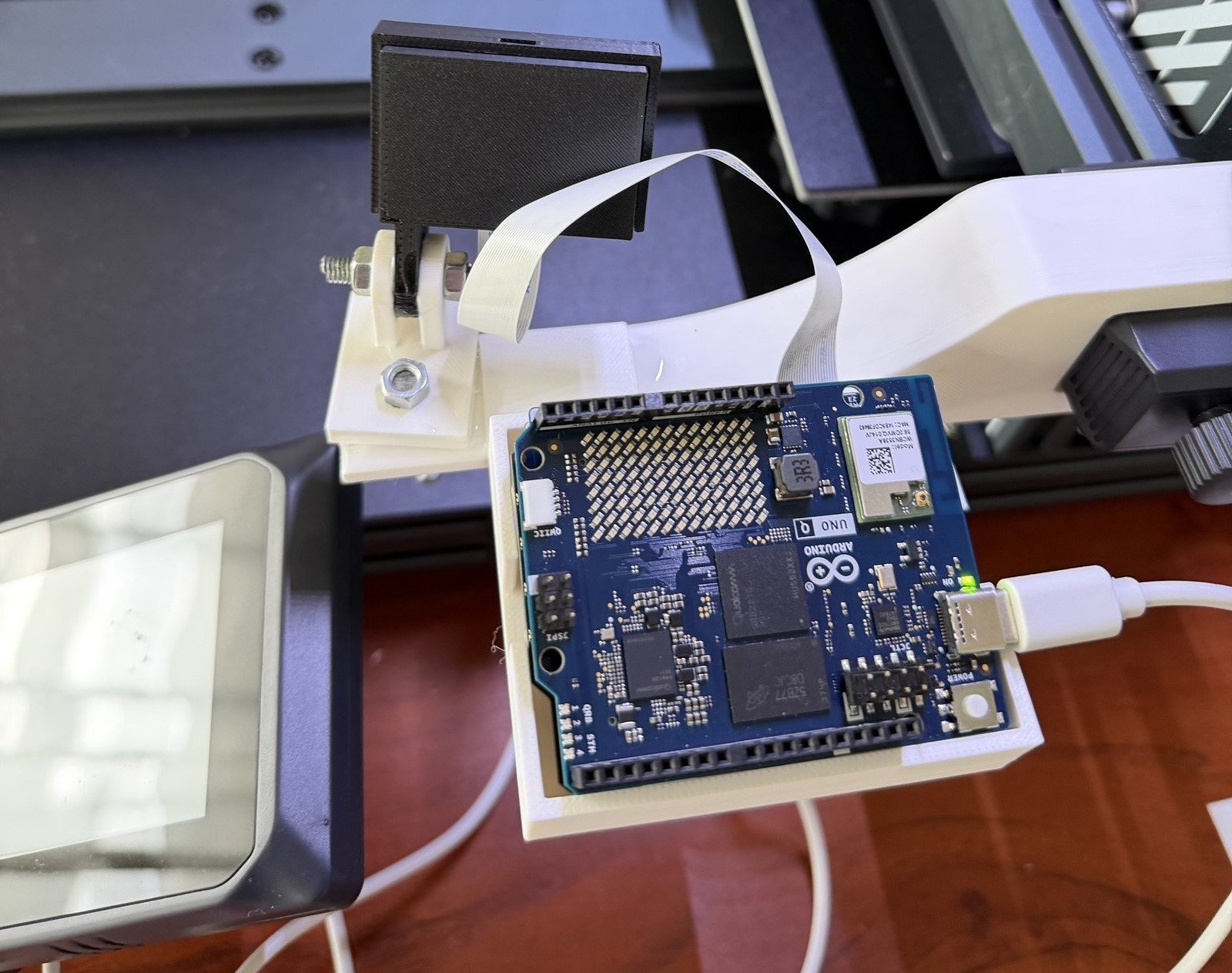
A guide details how to build a local 3D printing watchdog using an Arduino UNO Q and a camera. It leverages Edge Impulse's FOMO-AD model for anomaly detection, pausing prints via Moonraker API without cloud connectivity.

  • The system uses an Arduino UNO Q (4GB) and a V2-style IMX219 camera for monitoring.
  • It employs Edge Impulse's FOMO-AD model to detect general anomalies, not specific print failures.
  • Training only requires images of normal prints, simplifying data collection.
  • Prints are paused via the Moonraker API (for Klipper) only after multiple anomaly detections to prevent false positives.

This project provides an affordable, privacy-preserving solution for adding advanced print monitoring to 3D printers lacking integrated smart features or for users avoiding cloud services.

6/10
Related reading

  1. Digitize analog gauge readings with edge AI

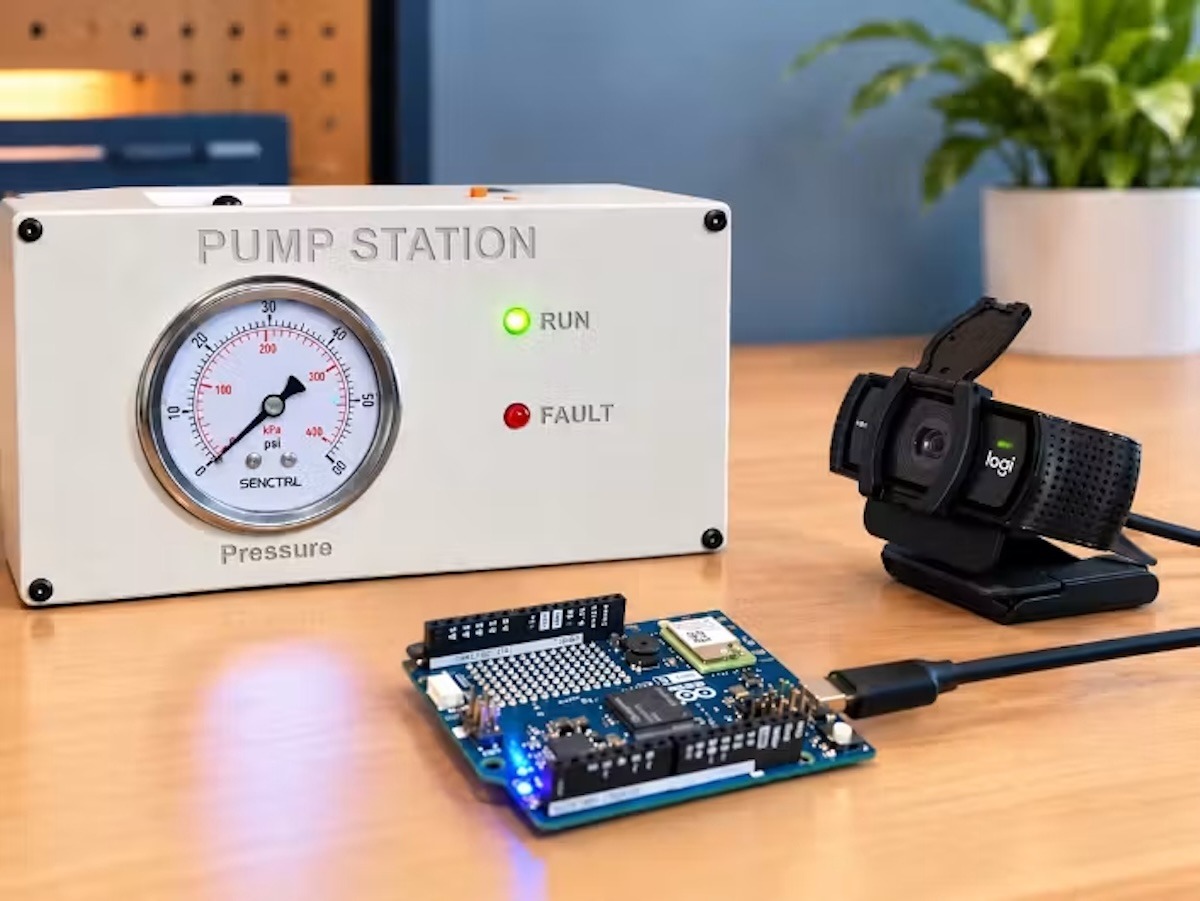
    An edge AI solution uses an Arduino UNO Q and a USB webcam to digitize analog gauge readings without modifying existing industrial equipment. This approach avoids downtime and risks associated with physical alterations, offering a cost-effective way to modernize monitoring.

    Arduino Blogarduino.cc2 min
  2. Building smarter AMRs with the Arduino® VENTUNO™ Q board

    The Arduino VENTUNO Q board combines a Linux‑capable MPU with a real‑time MCU, enabling a single platform for ROS 2 navigation, sensor fusion, and low‑latency motor control in autonomous mobile robots. The post shows how LiDAR, cameras, edge‑AI and an MPU‑to‑MCU communication layer let developers prototype AMRs step by step.

    Arduino Blogarduino.cc7 min
  3. Redesigning a popular robotic arm

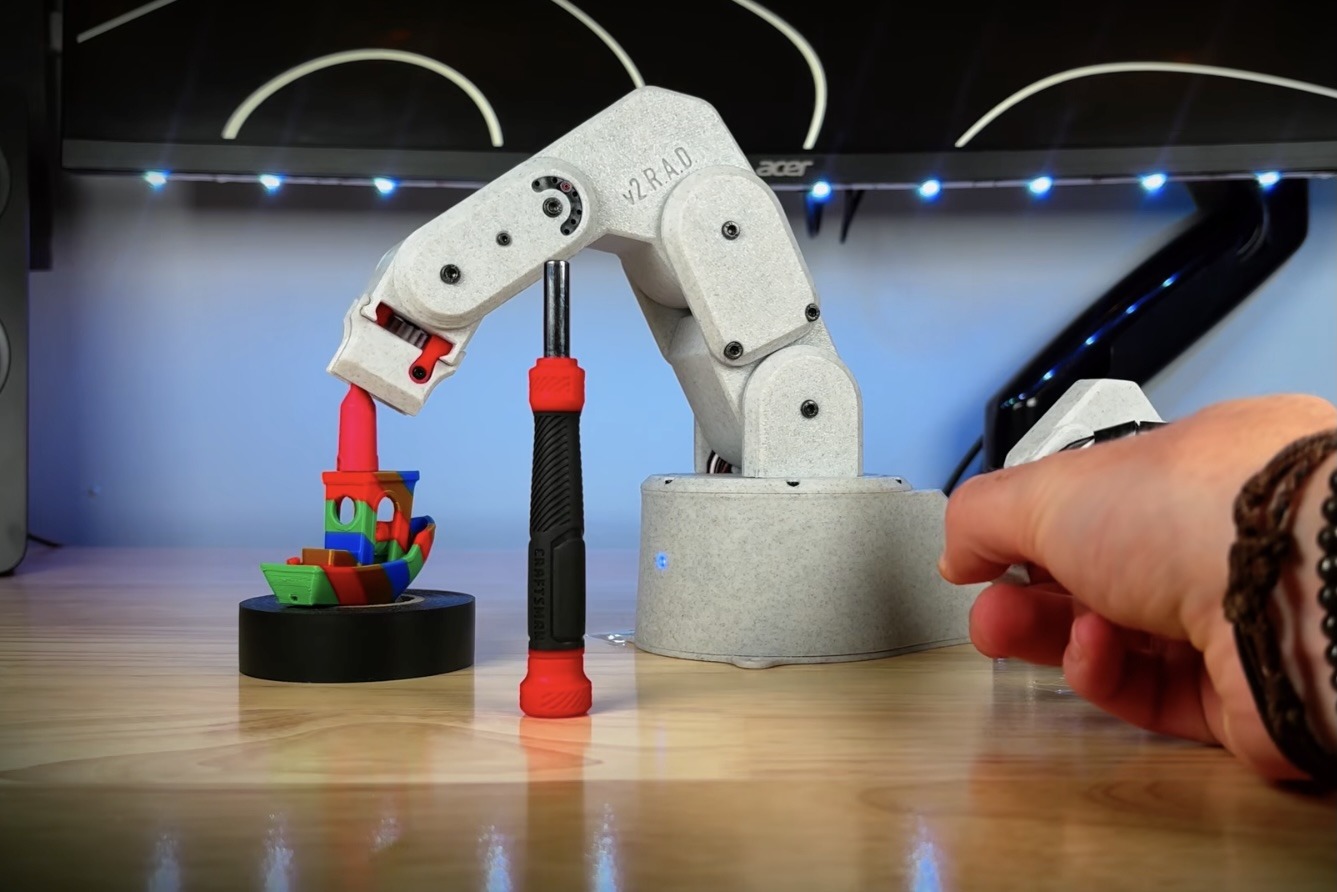
    Arduino’s blog spotlights a community‑built robotic arm that’s been mechanically redesigned for cheaper parts, easier 3‑D printing, and better performance. The arm uses a Nano ESP32 to read potentiometer‑based puppet‑style input and drive servos via a driver board, with belt‑driven wrist and rack‑and‑pinion gripper upgrades.

    Arduino Blogarduino.cc1 min
  4. SNAP3D: Physically Grounded 3D Parts for Assembly from a Single Image

    The paper presents SNAP3D, a physics‑guided pipeline that converts a single image into a set of 3D parts that can be assembled without interpenetration. By using simulation‑driven connector placement and a new physics‑based evaluation, the method yields assemblies that are both geometrically accurate and stable enough for 3D printing.

    Hugging Face Daily Papersarxiv.org1 minpaper