proomt

Search

Search posts, papers, and topics

All posts

DatadogAdam Virani, Sharon Ye4 min readintermediate
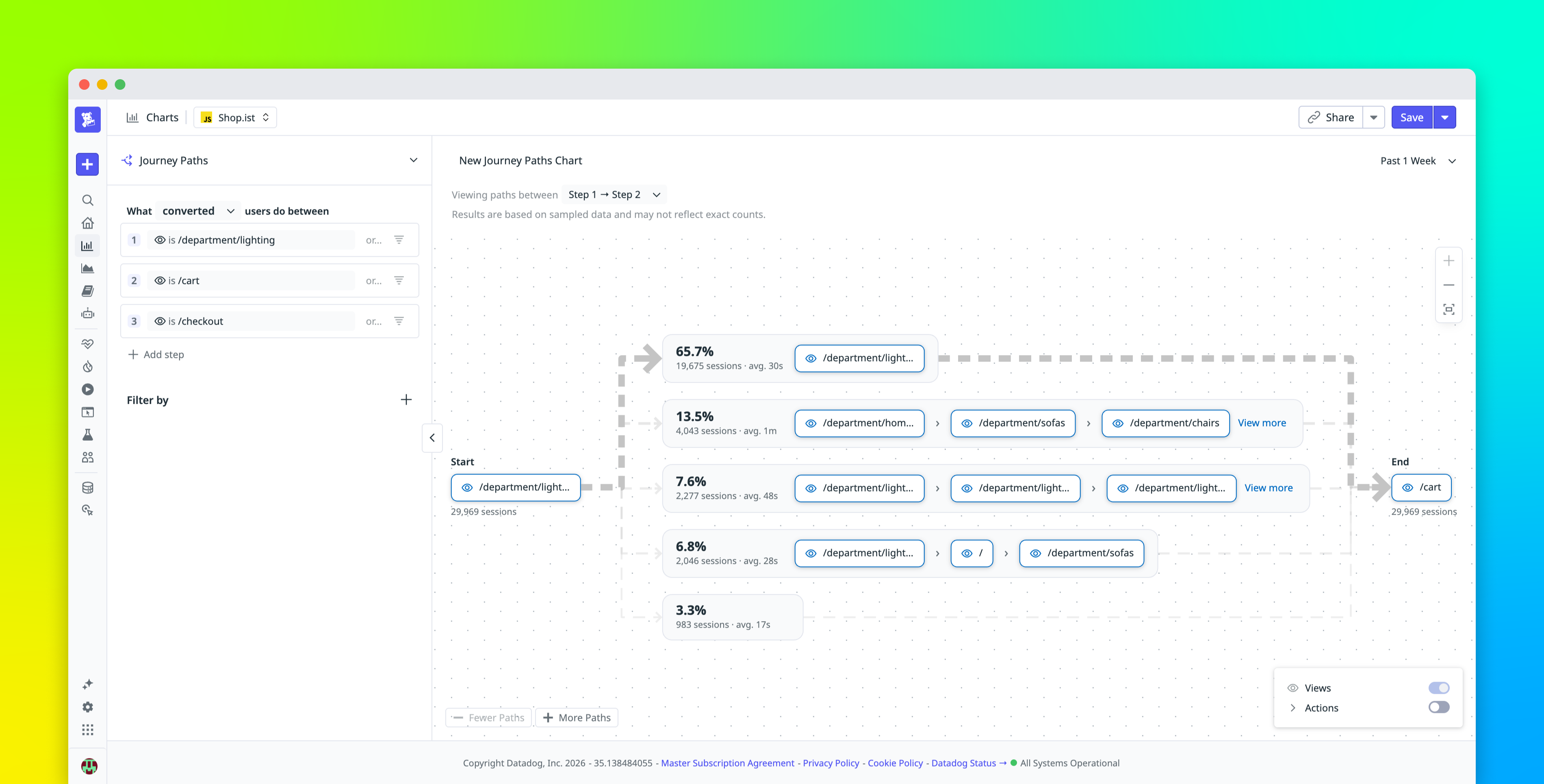
Understand the top paths users take to convert or drop off with Journey Paths

Summary

Datadog’s Journey Paths visualizes the most common sequences users follow through a defined flow, letting you rank converted vs. dropped‑off paths, spot detours or dead ends, and drill into the underlying user segments with Conversion Analysis, Session Replay, and RUM. It’s a UI‑level feature that augments funnel percentages with concrete path data, but the post offers no implementation details o…

  • Journey Paths shows ordered page/action sequences for a funnel and ranks them by frequency.
  • Converted paths highlight inefficient loops (e.g., back‑and‑forth between form steps) even when conversion succeeds.
  • Dropped‑off paths surface dead ends and detours (e.g., users clicking a support link and never returning).
  • Conversion Analysis can correlate paths with user attributes (device, region, etc.) to narrow investigation scope.

Understanding *how* users move through a flow—not just *whether* they convert—helps product and engineering teams prioritize UI fixes, reduce friction, and avoid hidden drop‑off causes that funnel metrics alone miss.

4/10

Related reading

  1. OpenTelemetry everywhere: Migrating a metrics platform at scale

    Atlassian replaced its decade‑old gostatsd‑based metrics pipeline with a fully OpenTelemetry‑based stack by keeping the StatsD‑UDP contract on the client side and swapping in purpose‑built OTel Collector distributions for collection, ingest, aggregation, and forwarding. The migration was done incrementally, saved ~3.9% CPU per service, cut sidecar cost ~30% fleet‑wide, halved aggregation CPU, and…

    CNCFcncf.io6 minHN1
  2. RADAR: Catch gray failures with anomaly detection

    Databricks built RADAR, a four‑stage, metric‑agnostic pipeline that uses streaming anomaly detection (SPOT) to surface gray failures in minutes with >90% precision. The blog shows how to recreate the system on Databricks for any metric, from billing to model drift.

    Databricksdatabricks.com7 min
  3. How Databricks’ marketers use data 3x more with Genie, an AI analytics assistant

    Databricks built Marge, a Genie‑powered conversational analytics assistant on a governed Marketing Lakehouse. By starting with a single high‑value use case (email campaign performance), documenting data, encoding verified answers, teaching business terminology, and embedding the tool in existing ticket workflows, they achieved 85% adoption, 3× higher data usage in decisions, 50% QoQ usage growth,…

    Databricksdatabricks.com10 min
  4. Trajectory as the Teacher: Few-Step Discrete Flow Matching via Energy-Navigated Distillation

    Apple researchers propose Trajectory‑Shaped Discrete Flow Matching (TS‑DFM), a training‑time distillation method that replaces blind stochastic jumps in discrete flow‑matching with an energy‑based compass to select higher‑quality intermediate tokens. On a 170 M‑parameter language model, the 8‑step student outperforms the 1 024‑step teacher by 32 % perplexity while being 128× faster, beating basel…

    Apple Machine Learning Researchapple.com1 minpaper
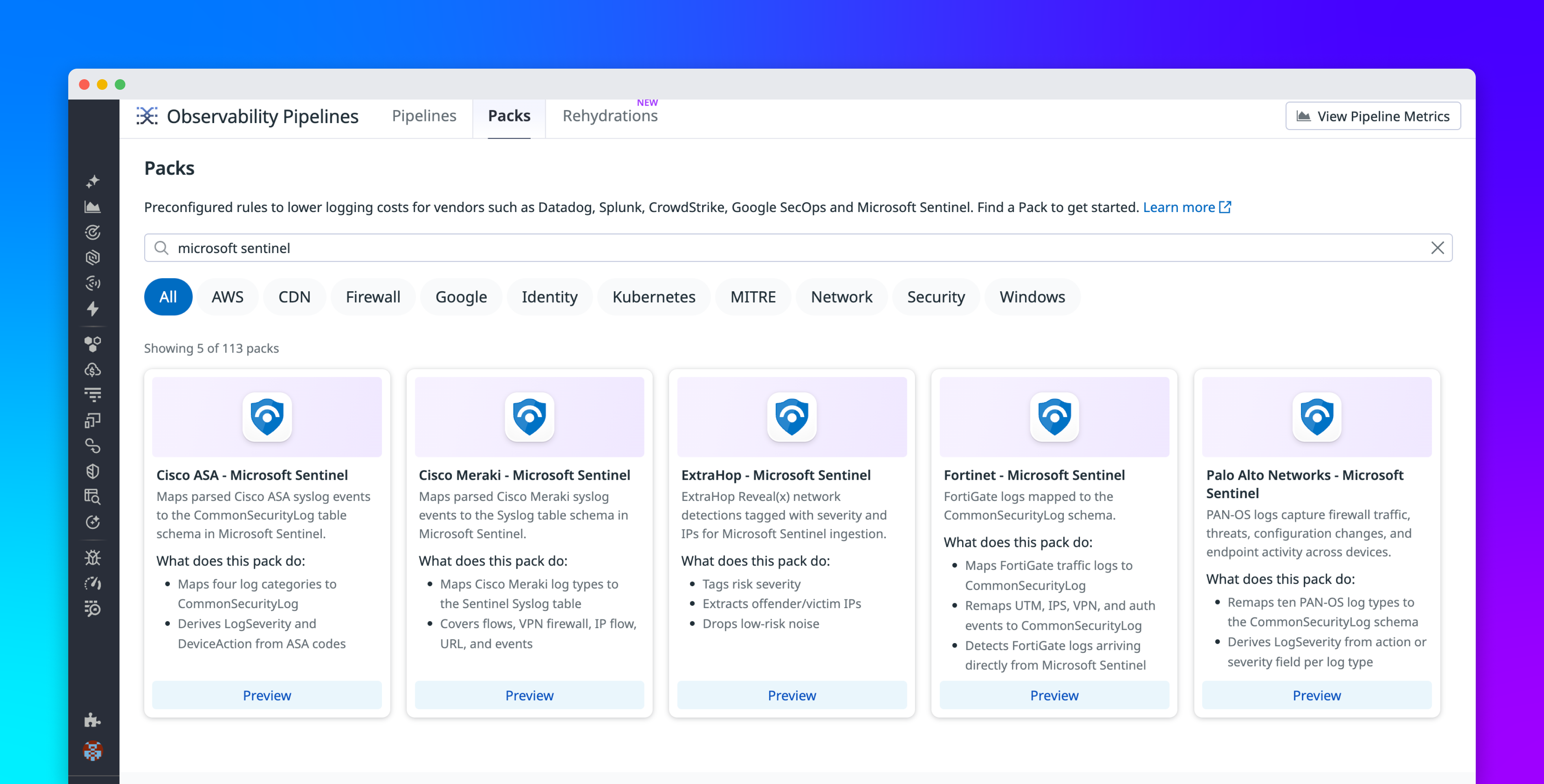
  5. Transform and route security logs to Microsoft Sentinel tables using Observability Pipelines

    Datadog Observability Pipelines now ships pre‑built Microsoft Sentinel Packs that map logs from Palo Alto, Fortinet, Cisco ASA, Cisco Meraki, and ExtraHop into Sentinel’s CommonSecurityLog or Syslog tables. Packs handle field extraction, severity derivation, and device‑action mapping, letting you filter or drop low‑value events before ingest, validate mappings with Live Capture, and reduce per‑GB…

    Datadogdatadoghq.com5 min