proomt

Search

Search posts, papers, and topics

All posts

Google Cloud BlogPiotr Wieczorek4 min readintermediate

The future of orchestration: Pine59’s journey to Airflow 3 on Google Cloud

Summary

Pine59 migrated its large data pipelines to Google Cloud's Managed Airflow (Gen 3) with Airflow 3, achieving significant performance gains and improved MLOps capabilities. This modernization reduced DAG run times by up to 32% and enhanced developer workflows with custom plugins.

  • Migrating to Managed Airflow Gen 3 reduced DAG queue latency and improved overall stability.
  • Daily Foot Traffic pipeline completion time dropped by 32% (from 38 to 26 minutes).
  • MLOps architecture was refined by separating orchestration from ML inference on a dedicated GKE cluster.
  • Custom Airflow 3 plugins, like BigQuery Auto-linkify, improved developer debugging and troubleshooting.

This case study offers practical insights for data engineers and MLOps teams looking to scale their Airflow-orchestrated pipelines on Google Cloud and leverage Airflow 3's new features.

6/10

Related reading

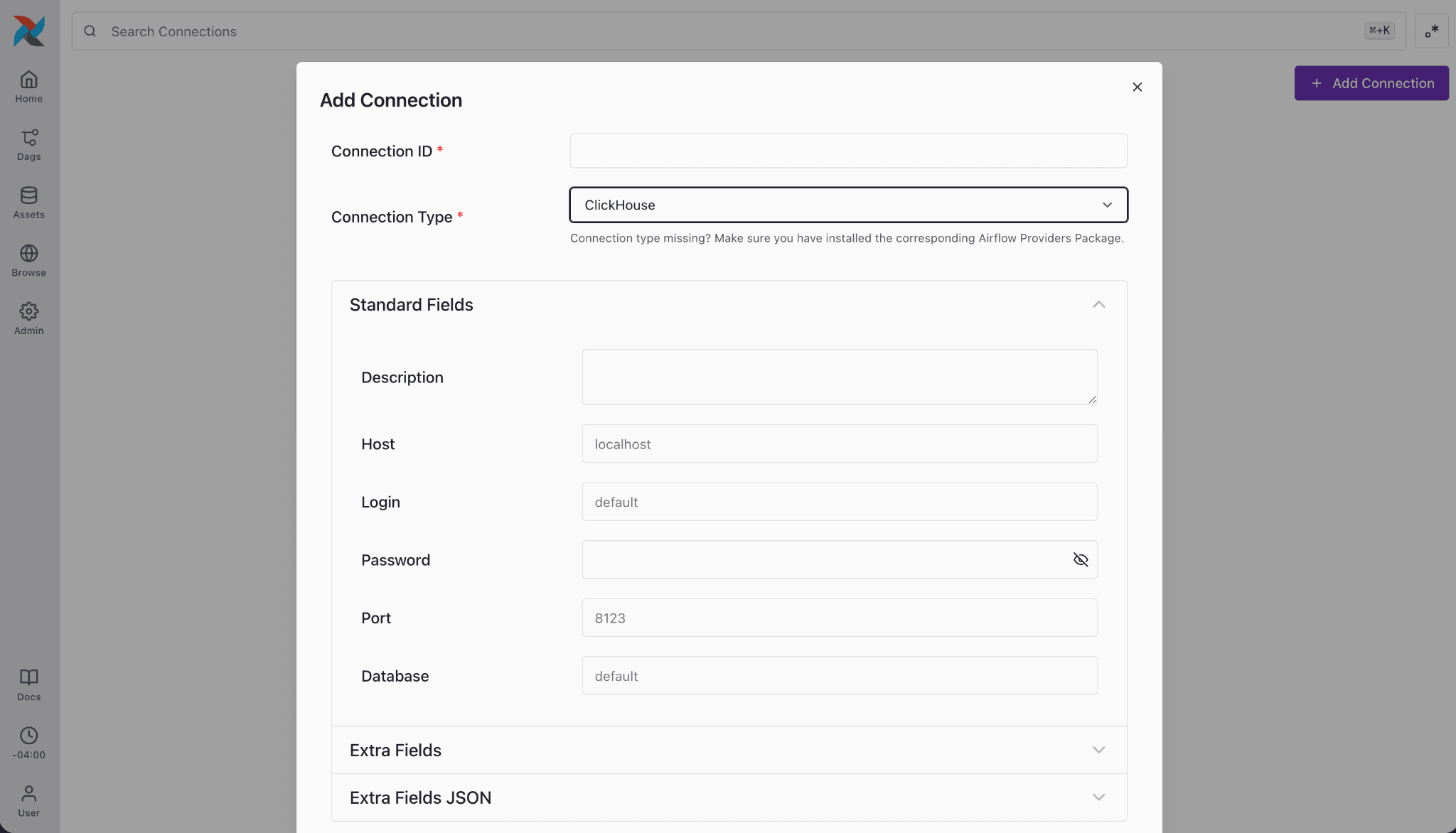
  1. The official ClickHouse provider for Apache Airflow is now available

    The post announces the official ClickHouse provider for Apache Airflow, showing how to install it, configure a ClickHouse connection, and run queries using standard SQL operators or a ClickHouseHook. It includes examples for both self‑hosted Airflow and the Astronomer managed platform.

    ClickHouseclickhouse.com5 min
  2. Microsoft Open-Sources TauGrid to Simplify AI Workload Management on Kubernetes

    Microsoft open‑sourced TauGrid, a Helm‑installable platform that bundles Kueue, KubeRay and other components to schedule, monitor and checkpoint AI workloads on GPU‑enabled Kubernetes clusters. Engineers define jobs in a simple `tau.yaml`, and TauGrid handles queuing, health checks, and observability, simplifying AI workload management.

    InfoQinfoq.com2 min
  3. M4N VM family, now GA: Highest per-core IOPS and throughput for I/O and memory-bound workloads

    Google Cloud’s GA‑available M4N VM family pairs 5th‑gen Intel Xeon CPUs with Google’s custom Titanium offload to deliver up to 1 M IOPS, 25 GiB/s block‑storage throughput, 400 Gbps VM‑to‑VM bandwidth, and a 26 GB/vCPU memory ratio (up to 5.9 TiB RAM). The design targets memory‑bound, I/O‑intensive workloads (Oracle, SAP HANA, vector search, real‑time analytics) and claims >20 % TCO reduction for…

    Google Cloud Bloggoogle.com5 min
  4. Cloudflare Introduces the Agent Development Lifecycle to Replace Traditional SDLC

    Cloudflare’s Agent Development Lifecycle (ADLC) replaces the classic SDLC with an autonomous, event‑driven workflow system that lets AI agents handle code generation, testing, deployment, and maintenance. The platform builds on Cloudflare Workflows and the new @cloudflare/ci library to spin up containers, run headless browsers, and chain steps with caching and credential support. Observability is…

    InfoQinfoq.com2 min
  5. Article: Your Next DSL Author Is a Language Model

    Typed Domain Grounding (TDG) embeds a DSL inside a mainstream language the LLM already knows (e.g., Kotlin) and uses the host compiler as an oracle. The author describes five building blocks—embedding, choosing a host language with high training‑data frequency, compiler‑driven type safety, a generate‑compile‑repair loop, and an on‑demand teaching tool—and shows measured results from kUML, a Kotli…

    InfoQinfoq.com18 min