Related reading
Article: Your Next DSL Author Is a Language Model
Typed Domain Grounding (TDG) embeds a DSL inside a mainstream language the LLM already knows (e.g., Kotlin) and uses the host compiler as an oracle. The author describes five building blocks—embedding, choosing a host language with high training‑data frequency, compiler‑driven type safety, a generate‑compile‑repair loop, and an on‑demand teaching tool—and shows measured results from kUML, a Kotli…
InfoQinfoq.com18 minArticle: Architecting Secure and Scalable Facial Verification Systems
A real‑world post‑mortem of a high‑volume face verification service that moved from a naïve synchronous API to an async, layered pipeline (edge validation, preprocessing, decoupled detection/verification, decision engine) to achieve 8.5k rpm, p99 < 1.8 s, 30 % cost savings, and strict privacy controls.
InfoQinfoq.com15 minServer Monitoring in the age of AI: What static thresholds miss and how adaptive monitoring fixes it?
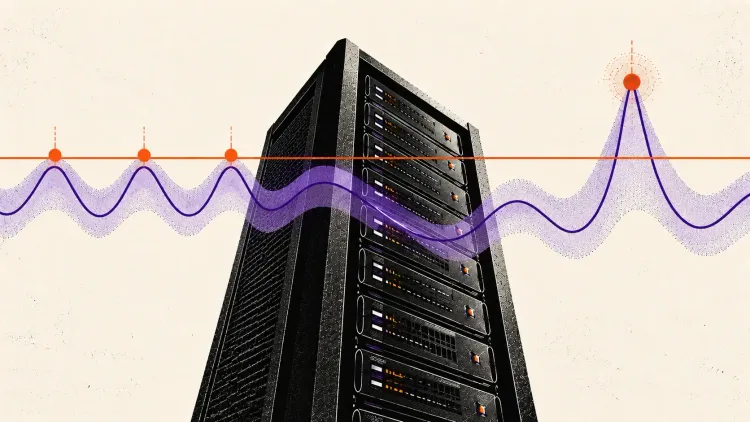
Static CPU/memory thresholds generate noise because workloads vary by time‑of‑day, day‑of‑week, and long‑term trends. Adaptive monitoring learns per‑server baselines (using simple ML on historic metrics) and creates dynamic thresholds plus anomaly alerts. ManageEngine OpManager’s Zia engine is presented as a turnkey AIOps solution that auto‑learns baselines, lets you set sensitivity, and adds ale…
SitePointsitepoint.com6 minLies, Damn Lies and Benchmarks
Codename One engineers dissect why benchmark numbers can be misleading, then share concrete work on GC tuning, proper weak/soft references, and a new probing sequence for their open‑addressed HashMap that cuts miss‑probe counts from >16 k to ~1.5 per lookup.
CodeName Onecodenameone.com20 min