proomt

Search

Search posts, papers, and topics

All posts

Hacker News front page3 min readintermediate
Vectorized and performance-portable Quicksort (2022)

Summary

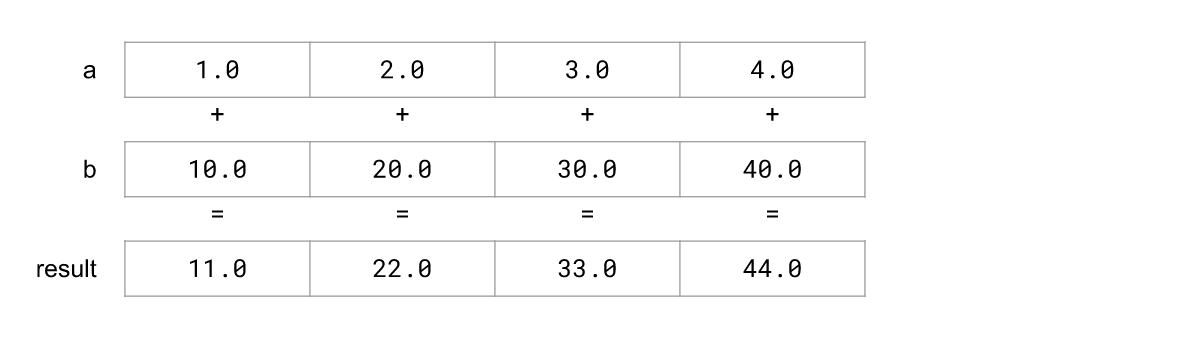
Google’s Highway library now includes a fully portable SIMD‑vectorized quicksort that runs 9‑19× faster than C++ std::sort. By using compress‑store (or permute‑based emulation) for partitioning, the same C++ code targets AVX2, AVX‑512, NEON, SVE and RISC‑V V. Benchmarks show 0.5 GB/s on an Apple M1 and >1 GB/s on a 3 GHz Skylake, beating prior architecture‑specific sorts. The implementation and a…

  • Vectorized quicksort built on Highway’s portable SIMD primitives; no per‑arch code‑gen needed.
  • Uses hardware compress‑store when available, otherwise emulates it with permutes – the key to fast partitioning.
  • Achieves 9‑19× speedup over std::sort on 32/64/128‑bit integers, with 0.5‑1.1 GB/s throughput on a single core.
  • Supports six instruction sets across x86, Arm and RISC‑V, handling 16‑128‑bit element types.

Sorting is a core primitive in columnar databases and analytics workloads. A portable, SIMD‑accelerated quicksort that delivers >1 GB/s per core can dramatically reduce query latency and enable new in‑memory processing patterns without vendor‑locked code.

7/10

Related reading

  1. M5 Ultra Mac Studio Review

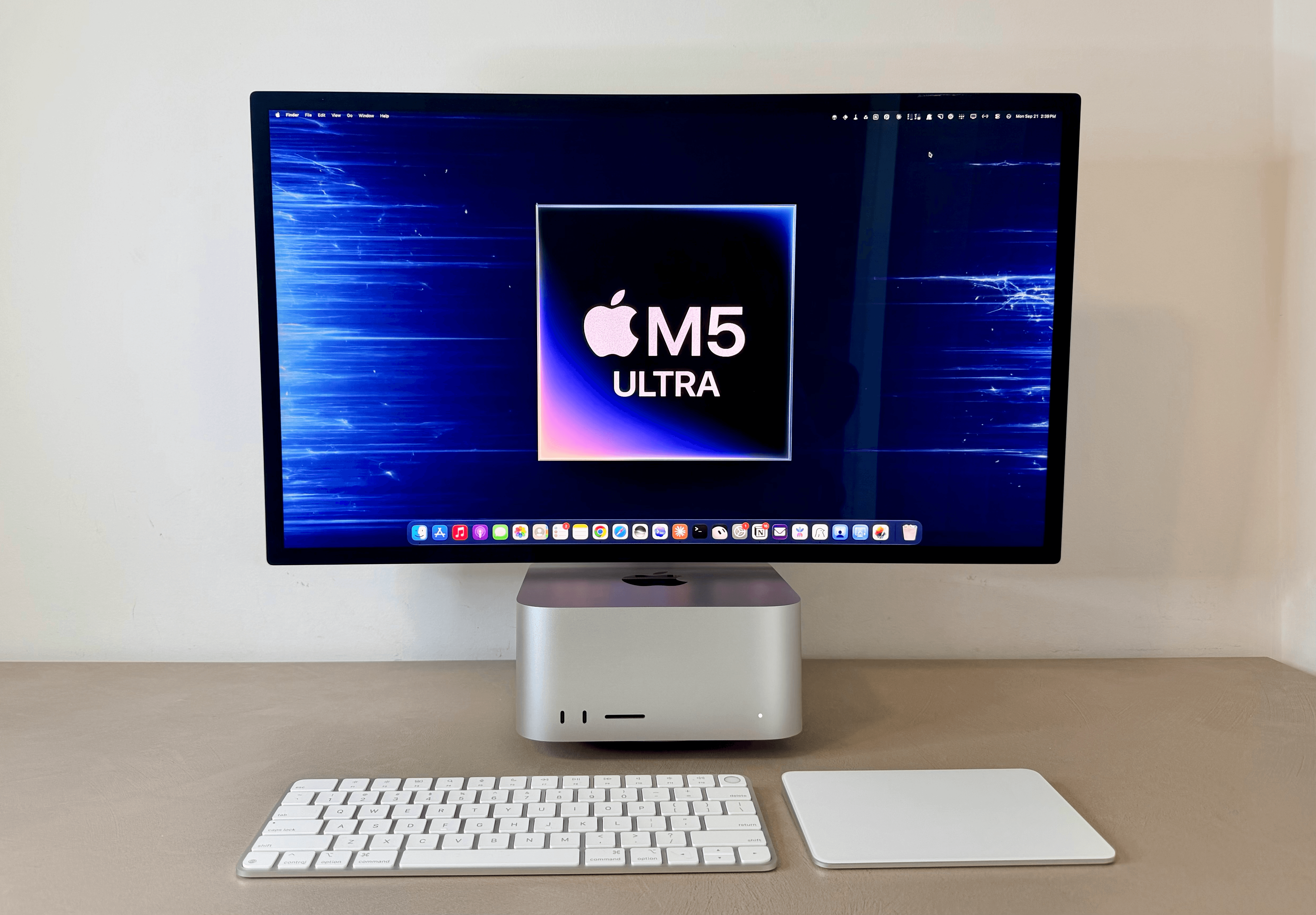
    The M5 Ultra Mac Studio (256 GB RAM) uses a quad‑die M5 Max architecture with an 80‑core GPU and 1.2 TB/s memory bandwidth, delivering ~70 % faster prompt‑to‑first‑token and token‑generation rates than the M3 Ultra. In the author’s tests Qwen3.8‑Flash‑Next hits 100 tokens/s on short prompts and 60‑85 tokens/s with 64‑256 KB context, making local AI agents (Open Minis, Hermes, Codex) feel snappy a…

    Hacker News front pagemacstories.net39 minHN191174
  2. M4N VM family, now GA: Highest per-core IOPS and throughput for I/O and memory-bound workloads

    Google Cloud’s GA‑available M4N VM family pairs 5th‑gen Intel Xeon CPUs with Google’s custom Titanium offload to deliver up to 1 M IOPS, 25 GiB/s block‑storage throughput, 400 Gbps VM‑to‑VM bandwidth, and a 26 GB/vCPU memory ratio (up to 5.9 TiB RAM). The design targets memory‑bound, I/O‑intensive workloads (Oracle, SAP HANA, vector search, real‑time analytics) and claims >20 % TCO reduction for…

    Google Cloud Bloggoogle.com5 min
  3. 1 points

    Saving another 100TB of RAM with math (and Rust)

    Cloudflare reduced the memory footprint of its Pingora Backend Router by re‑examining the consistent‑hashing implementation in the pingora‑ketama library. By increasing the number of virtual hash points per server from the default 1 to the standard 160 (and applying weighted hashing based on disk capacity), they cut the per‑node overhead enough to reclaim >100 TB of RAM across the fleet. The post…

    Hacker News front pagecloudflare.com13 minHN478120lobste.rs33
  4. SiliconBench: Speed, Memory, and Fidelity for LLM Serving on Unified-Memory Desktops

    SiliconBench benchmarks nine Apple‑Silicon LLM serving engines on unified‑memory desktops, measuring speed, memory usage, and output fidelity across Qwen3, Qwen3.5, and Gemma‑4 models. It finds vllm‑metal doubles throughput at modest concurrency, memory budgets often fail to preserve headroom, and only three stacks satisfy all fidelity and model‑coverage requirements, with tensor‑parallel scaling…

    Hugging Face Daily Papersarxiv.org1 minpaper
  5. MilleMiglia: A realistic instance generator for middle-mile logistics

    MilleMiglia is an open‑source C++ generator that creates realistic, privacy‑preserving middle‑mile logistics instances (space‑time graphs with fixed schedules, throughput limits, and synchronization constraints). It uses data‑driven spatial, demand, and rotation distributions, serializes with protobuf, and ships small files for small‑toy to continent‑scale problems, enabling both exact/heuristic…

    Google Researchresearch.google7 min
  6. Accelerating the borderless Lakehouse: Announcing preview of cross-cloud caching

    Google Cloud previewed cross‑cloud caching for its Borderless Lakehouse. The feature caches sub‑file Parquet blocks in Google Cloud, encrypts them with GMEK, isolates cache per tenant/region, and validates freshness via metadata checks. In tests it can reduce cross‑cloud data transfer to <5% of the original size, lowering query latency and cost for Iceberg tables stored in other clouds. BigQuery…

    Google Cloud Bloggoogle.com3 minrelease